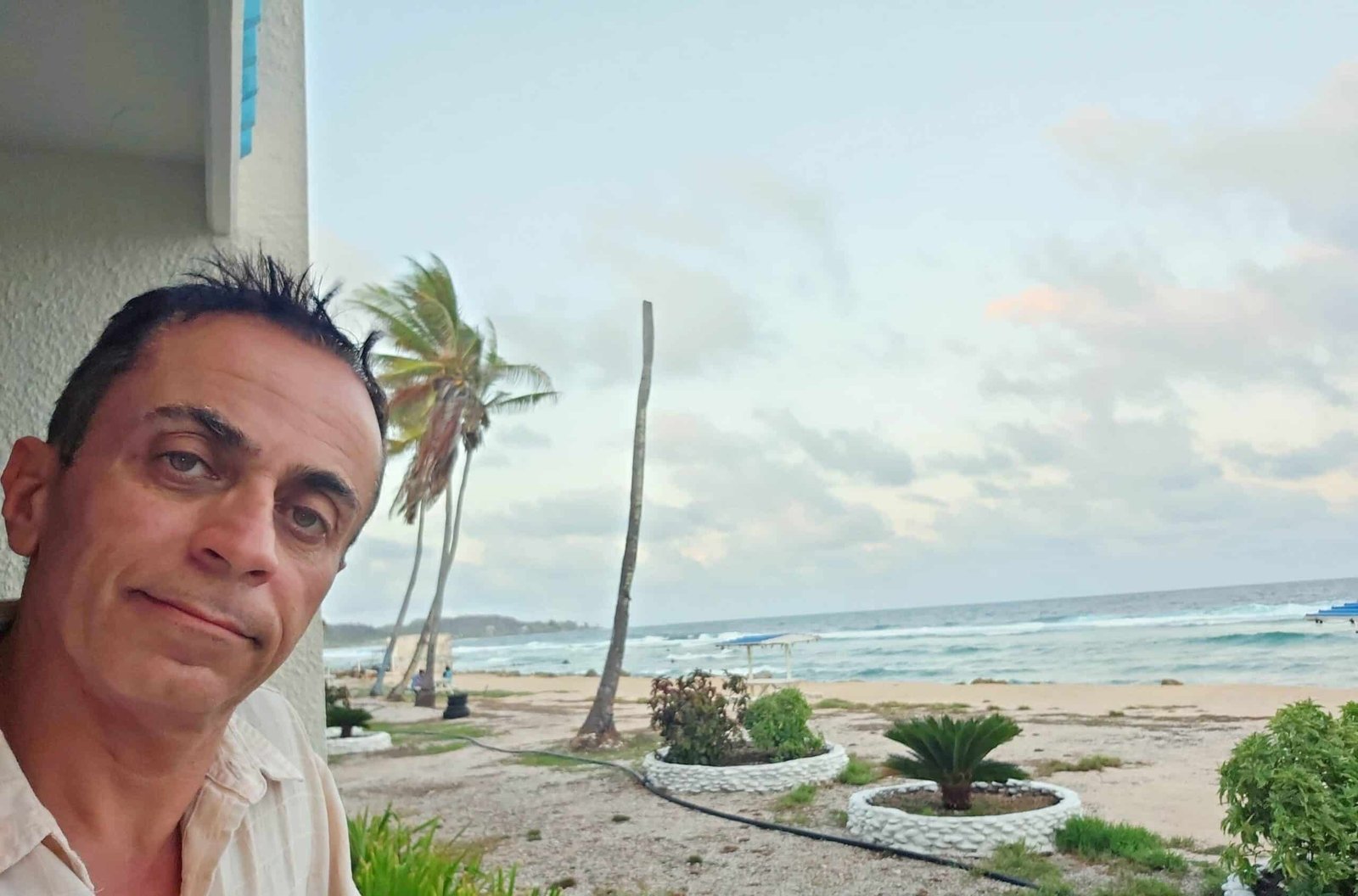

As it faces rising sea levels caused by climate change, the tiny Pacific island nation of Nauru is pursuing an unconventional way to raise funds for adapting to an uncertain future: offering citizenship by investment.
Launched early last year, the “golden passport” scheme has attracted interest from people seeking greater freedom of travel as well as stateless individuals seeking legal recognition.
But it has also drawn scrutiny over whether citizenship can be adequately protected when it is offered in exchange for money.
READ: Pacific microstate Nauru sells first passports to fund climate action
The country officially changed its name to the Republic of Naoero this week.
Nauru’s government says the program is designed to help fund a major climate adaptation effort, including the relocation of 90 percent of families and infrastructure to higher ground, while providing a pathway to nationality for people who lack citizenship.
Nauru, a small island ringed by coral reefs in the remote southwestern Pacific Ocean, is one of the world’s smallest countries, with just 21 square kilometers of land.
Once heavily mined for its rich phosphate deposits, much of the island’s interior has been left uninhabitable, with the vast majority of the population and infrastructure concentrated in low-lying coastal areas.
Sea levels around Nauru have risen faster than the global average in recent decades, contributing to an increase in the intensity and duration of king-tide events, according to analysis by the U.S. National Aeronautics and Space Administration’s Sea Level Change Team.
READ: Nauru sells citizenship to fund climate change mitigation
As sea level rise accelerates, Nauru’s government has set a goal of moving 90 percent of families and infrastructure to higher ground.
With the first phase of the relocation project estimated to cost more than $60 million, according to the Australian Broadcasting Corp., the government introduced the citizenship program as a way to help fund the undertaking.
Under the scheme, applicants who pass a four-stage screening process can obtain citizenship through a contribution of $90,000 for a single applicant, discounted from $115,000 until the end of the year.
After obtaining a passport, citizens can enjoy visa-free travel to over 85 destinations, including Singapore and Hong Kong, according to the program’s website.
However, citizenship does not grant the right to purchase land in Nauru, which remains restricted to native Nauruans.
The scheme has faced criticism over potential security risks. Britain introduced a visit visa requirement for Nauruan nationals in December, removing Nauru from the list of countries whose citizens are eligible to apply for an Electronic Travel Authorization (ETA). The move followed concerns over the risks associated with the citizenship-by-investment program.
READ: Nauru and its investment program should serve as cautionary tale for the Philippines
The current scheme includes additional safeguards, with applicants subject to background checks and continued monitoring. Citizenship can be revoked if individuals are found to have engaged in criminal activity.
The measures were introduced after Nauru’s previous citizenship-by-investment program in the early 2000s was discontinued following reports that suspected terrorists had been found carrying Nauruan passports.
Program administrators have defended the current screening process as a safeguard against a repeat of past problems, while saying the scheme can provide a pathway to citizenship for those who lack a nationality.
Despite the controversy, the program has continued to attract interest, with more than 120 citizenships granted since its launch.
Among the early applicants was Reuben Zadeh, an American man who said the opportunity to obtain a passport from a peaceful and neutral country was an additional appeal.
The climate angle was also a draw for Zadeh, who said in a video shared by the program’s office that he felt he was contributing to efforts to make Nauru more resilient to climate change.
For others, however, the program has offered something more fundamental: a nationality.
Siimo Kaasik, who was born in Estonia under the former Soviet Union, was recently granted Nauruan citizenship after decades without a nationality.
“After enough years spent explaining yourself across counters, interviews and fluorescent waiting rooms, you stop chasing grand ideas. You just want one country willing to say, ‘Yes, we know who you are,’” Kaasik said in a media release shared by the program’s administrators.
“More than anything, I am looking forward to introducing myself without a footnote attached to the sentence,” he added. /dl