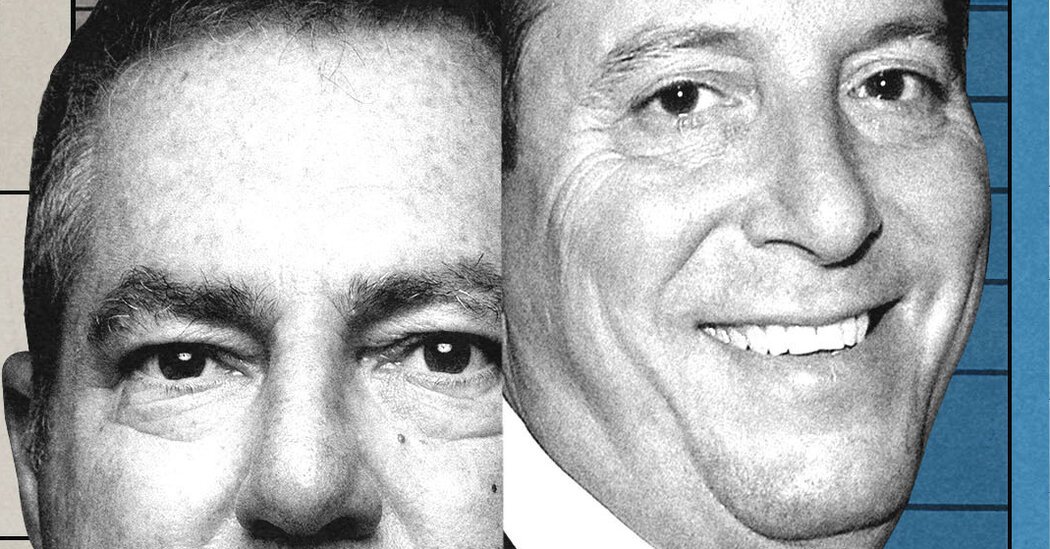
On his desk at the law firm Paul Weiss, Brad Karp keeps a framed picture of a young girl and her father embracing after they had been separated at the border by the immigration policies of the first Trump administration. It is a reminder of one of the firm’s proudest moments — when Mr. Karp, as chairman, led its lawyers to fight the administration in court and undertake the painstaking work to reunite families.
“It was a call to arms,” Mr. Karp said later.
But two months into the second Trump administration, when the president came for Paul Weiss with an executive order imposing crippling sanctions, Mr. Karp did not just lay down arms. He rushed to the White House to surrender.
The legal and political worlds were shocked. Paul Weiss was a titan in the legal business, known for its stable of elite litigators and for its history of standing up to the government and championing progressive causes going back to the civil rights movement. But sitting in the Oval Office in March 2025, Mr. Karp bent without a fight to an executive order that was widely seen as illegal.
Four law firms that fought similar executive orders won quick injunctions from incensed judges, making Paul Weiss’s capitulation particularly consequential for President Trump’s retribution campaign against an array of perceived enemies. Eight other firms followed Paul Weiss in making deals with the White House, agreeing to perform a total of nearly $1 billion in free legal work for causes Mr. Trump supported.
“They’re just saying, ‘Where do I sign?’” Mr. Trump bragged. “No one can believe it.”
But behind the public disbelief was a deeper story of an institution that had slowly come loose from its roots. That story, pieced together in a New York Times investigation, reveals that Paul Weiss’s bow to the White House was the culmination of a reordering of power and finances behind the scenes at the firm for years.
The shift had begun when Mr. Karp decided years earlier to develop a more robust corporate practice alongside Paul Weiss’s litigation work. The wealthy firm became even wealthier, partly by riding the growth of private equity and the lucrative legal work generated by the rapid buying and selling of companies.
But the Times reporting, based on extensive interviews with current and former lawyers at the firm, access to internal documents and communications, and detailed accounts of firm meetings, shows there was a cost. The pursuit of Wall Street business in service of higher profits per partner — a key metric for law firms — was at odds with its social justice principles. When Mr. Trump took aim at Paul Weiss, in part because of its activist history, the firm’s long-simmering identity crisis became an existential crisis.
At the center of the conflict were two dominant and very different figures — Mr. Karp and Scott Barshay, whom Mr. Karp had hired to supercharge the corporate practice.
Mr. Karp, described by colleagues as the consummate people pleaser, sometimes to a fault, tried to keep happy both the socially conscious litigators and the increasing crop of corporate lawyers. Mr. Barshay, the colleagues say, is a driven dealmaker, aggressive to the point of being abrasive. As his power grew with the revenue he generated, he worked to curtail the social justice litigation at the core of the firm’s culture, viewing it as bad for business because it could alienate clients.
Mr. Barshay particularly clashed with a young rising star at Paul Weiss, its first openly transgender partner, The Times found.
The lawyer, Lex Korberg, decided to leave Paul Weiss after Mr. Barshay pushed against the social justice work. But Mr. Barshay had told other firm leaders that after Mx. Korberg — who uses they/them pronouns — transitioned, he did not want them dealing with his clients. He said a transgender lawyer could hurt business by making clients uncomfortable, according to two people who heard Mr. Barshay make those remarks and two others who were told about them at the time.
To insulate the firm, Paul Weiss struck a secret $3.5 million deal in 2023, never previously revealed, under which Mx. Korberg agreed not to sue or disparage the firm.
While Mr. Barshay was changing the firm’s culture, Paul Weiss continued to oppose Mr. Trump, even more aggressively when he was out of office. In an unusual arrangement, the firm paid associates to work for the Manhattan district attorney’s office, helping build a criminal prosecution against Mr. Trump.
Once Mr. Trump won re-election, the firm scrambled to avoid his ire. It stopped representing a drone manufacturer that was suing the Pentagon, partly out of concern about tangling with the administration, according to three people with direct knowledge of the matter. It also started scrubbing its websites of content that might draw the attention of Mr. Trump and his aides.
When Mr. Trump issued his executive order against Paul Weiss, leaders at the firm were convinced they could beat it in court. But they feared opposing the president would hurt the firm’s finances and its clients. And after the deal was struck, when a top partner wanted to bring a reproductive rights case as a show of independence from the administration, she was shut down by Mr. Barshay and Mr. Karp.
As a sign of how skittish the firm had become, an email exchange reviewed by The Times documents a heated discussion among partners about how — or whether — to alter a website that recounted the firm’s work against white supremacists and the rioters of Jan. 6, 2021. Some even proposed checking with the administration to see whether the website would anger the White House. Another partner warned that “there likely won’t be a next time” for Paul Weiss “if we get hit by the administration again.”
In response to questions about its deal with the White House, a Paul Weiss spokeswoman, Laura Van Drie, said that “any assertion that our independence has been jeopardized is completely false.”
Most pointedly, Ms. Van Drie said that Mx. Korberg had been “a highly valued partner” and that Mr. Barshay had been “happy” for Mx. Korberg “to work for his clients.”
While Ms. Van Drie said that Paul Weiss’s pro bono work had continued to increase, the firm did not provide any examples of work it had done opposing the second Trump administration.
In addition, the firm declined to make Mr. Karp and Mr. Barshay available for interviews.
Meanwhile, the firm’s transformation has altered the trajectories of both of their careers.
In pursuit of new business clients, Mr. Karp landed the private equity giant Apollo Global Management in 2011. Through Apollo’s then-chairman, Leon Black, Mr. Karp met Jeffrey Epstein and later offered the sex offender free legal advice. When the extent of his ties to Mr. Epstein emerged early this year in a trove of Justice Department documents, Mr. Karp was forced to step down as chairman of Paul Weiss.
His replacement? Mr. Barshay.
Doing Well and Doing Good
In the fall of 1982, Ted Sorensen visited Harvard Law School to interview candidates for Paul Weiss’s class of summer associates. Mr. Sorensen was a prominent Democratic lawyer who had served as an adviser to President John F. Kennedy and helped write his 1961 Inaugural Address. After the Kennedy assassination, Mr. Sorensen became head of Paul Weiss’s international practice, counseling corporations and heads of state.
One ambitious student Mr. Sorensen met that day was Brad Karp, a liberal Long Island native. As a top student, Mr. Karp had many options for summer work, but he was swayed by Mr. Sorensen’s pitch. Like its competitors, Paul Weiss offered an opportunity to make a good living advising the world’s most important people and corporations. But Paul Weiss had an unmatched record supporting diversity, Democratic politics and social justice litigation.
Paul Weiss had fashioned itself as the firm of firsts — the first major law firm to name a female partner, the first to hire Black associates, and a pioneer among New York firms in having Jews and non-Jews practice together.
It had represented the “Scottsboro Boys”— Black Alabama teenagers falsely accused in 1931 of raping two young white women — in a case that ultimately led to establishing the right to counsel. In the 1950s, the firm assisted Thurgood Marshall, then counsel for the N.A.A.C.P., in the Brown v. Board of Education school desegregation case.
The future liberal justices Ruth Bader Ginsburg, Elena Kagan and Sonia Sotomayor were all summer associates.
During the second half of the 20th century, the firm was steered by two revered figures: Simon H. Rifkind, a former federal judge, and Arthur Liman, a former federal prosecutor. In 1963, Judge Rifkind wrote what became the firm’s credo, a “Statement of Firm Principles” stressing a commitment to diversity, excellence and responsibility not only to the legal profession but to “a free democratic society.”
By the late 1990s, both Judge Rifkind and Mr. Liman had died, leaving leadership of the firm to a staid tax lawyer. While the firm flourished, many partners felt it needed to adapt to an increasingly competitive landscape.
In 2008, Mr. Karp was elected chairman after establishing himself as a top litigator and an indefatigable networker who had helped land clients like Citigroup.
Mr. Karp was determined to enhance the story the firm told of itself, the story of doing well and doing good that originally had attracted him.
He made a two-pronged plan. The first was to publicly embrace Paul Weiss’s pro bono work, partly to help recruit young talent by distinguishing the firm from competitors that were more focused on the bottom line.
The second part of Mr. Karp’s plan was to focus on the bottom line. At the time, Paul Weiss partners made about $2.5 million annually. The firm was thriving thanks to banking clients that were navigating the fallout from the financial crisis.
But Mr. Karp envisioned that work eventually slowing. The rise of private equity offered a lucrative line of legal work assisting in mergers and acquisitions. That highly competitive area of corporate law was different from Paul Weiss’s specialty — handling complex, long-running litigation. Mr. Karp decided that maintaining and increasing the firm’s robust profits required pivoting hard to corporate work.
Over the next decade and a half, Mr. Karp would drive his firm and himself to new heights of power and prominence. But decisions he made during that period set the stage for the eventual dislodging of Paul Weiss from its deep roots and for Mr. Karp’s own eventual tumble.
A Corporate Turn
Mr. Karp scored an early victory in his campaign to increase corporate business when he landed the private equity firm Apollo, which would become its highest-paying client.
But he needed a bona fide rainmaker who would telegraph that Paul Weiss had come to play in a different arena. He found his man in Mr. Barshay, a partner at Cravath, Swaine & Moore, a top Wall Street law firm, where over two decades he had built an impressive record of generating corporate work, particularly in mergers and acquisitions.
Mr. Karp — along with Paul Weiss’s head of corporate law, Robert Schumer, the brother of Senator Chuck Schumer of New York — wooed him over drinks and dinner at Le Bernardin, the Michelin-rated restaurant near Paul Weiss’s Midtown Manhattan offices.
To seal the deal, Mr. Karp agreed to pay him millions of dollars more a year than he earned at Cravath — and more than many veteran Paul Weiss partners.
Announcing Mr. Barshay’s hiring in April 2016, Mr. Karp called Mr. Barshay “one of the nation’s leading M&A lawyers, if not the leading M&A lawyer.”
Mr. Karp said elite firms needed strength in four areas of practice — mergers, private equity, litigation and white-collar defense — and “we believe, especially with Scott’s addition, that we are the only firm that has market-leading practices in all those areas.”
But there was unease among some at Paul Weiss. Partners and associates learned from lawyers at Cravath that some people there were not unhappy to see Mr. Barshay go. His ego made him difficult to work with, the Paul Weiss lawyers were told.
“There was a worry that he was going to change the culture,” said Elizabeth Grossman, a former Paul Weiss associate.
Mr. Karp and Mr. Schumer reassured wary colleagues. Mr. Barshay said he just wanted to grow the firm’s business and had no interest in being part of leadership. Besides, they reasoned, Paul Weiss had a well-established culture.
At the end of every year, the firm held a dinner where new partners offered heartfelt remarks about what Paul Weiss’s values meant to them. The year Mr. Barshay joined the firm, Mr. Karp splurged, renting out the blue-whale room at the American Museum of Natural History.
Beneath the 94-foot model whale, partners and their spouses drank and ate. When it came time for Mr. Barshay’s remarks, he used the opportunity to slip in some criticism of his former Cravath colleagues, according to three people who were present. It was a brief episode, but it raised eyebrows among some Paul Weiss partners.
The Legal Resistance
Roughly a month after that dinner, Mr. Trump was sworn in, ushering in his first-term blizzard of norm-breaking, law-challenging actions. True to its history, Paul Weiss positioned itself as the leader of the legal resistance.
When Mr. Trump restricted travel to the United States from seven predominantly Muslim countries, Mr. Karp jumped in. He sent roughly 100 Paul Weiss employees, including dozens of lawyers, to airports to provide free legal services to stranded travelers and sued the administration over the ban.
The next year, when the administration began separating migrant children from their parents at the southern border, Mr. Karp tapped his legal and political network to organize a campaign against the policy. He persuaded 33 other law firms to help and deployed Paul Weiss lawyers to find the children, leading to about 250 reunifications.
It was a moment of pride for the firm. One lawyer memorialized the number of families reunited with a tattoo. The Financial Times gave Mr. Karp a special achievement award for “standing up to the White House.”
“Senior lawyers can be reluctant to speak in public about controversial issues,” the publication wrote in an article. “With Brad Karp, not so much.”
That was just one measure of how the firm’s ethos was different then. In 2019, firm leaders looking to hire a high-powered litigator identified a Washington lawyer, according to one current and two former Paul Weiss partners. But an impassioned debate followed after Paul Weiss lawyers learned he had done legal work for groups that opposed abortion, and he was not hired.
In another snapshot of that era, Mr. Karp came under attack on his left flank after announcing Paul Weiss’s class of 2019 partners: 11 white men and one white woman. Nearly 200 legal officers of major corporations — including Heineken USA and Booz Allen Hamilton — warned Mr. Karp in a letter that they would take their business elsewhere if Paul Weiss failed “to reflect the diversity of the legal community.”
Privately, Mr. Karp was irate that the firm’s values were being questioned. Publicly, he was contrite.
“I wish I could be Superman and fly backward and make time go back and make sure that we had special individualized mentoring for every single female associate and associate of color,” Mr. Karp said at the time. “But we didn’t do that. And we’ve learned very valuable lessons.”
As the firm assembled the next year’s partner class, one associate was a perfect candidate, a young litigator who seemingly embodied everything Paul Weiss valued: Mx. Korberg.
A Progressive Litigator
Mx. Korberg was a third-year law student at Yale in 2011 and working at the American Civil Liberties Union when they heard that Paul Weiss needed junior associates to work on the case of Edith Windsor, which helped lead to the recognition of same-sex marriage in the United States.
Mx. Korberg went to work for Roberta Kaplan, who was leading the litigation at Paul Weiss.
Mx. Korberg’s work quickly stood out, and they logged hundreds of hours on the case. On the day the Supreme Court ruled in 2013, Mx. Korberg was by Ms. Windsor’s side as Paul Weiss was hailed as a leader for progressive legal causes. This was the signature pro bono work Mr. Karp wanted to trumpet, and in the following years, the firm promoted its work on the case to lure clients and fresh talent.
By 2018, Mx. Korberg was one of the lead lawyers representing Jackson Women’s Health Organization in Mississippi — in the Dobbs case that led the Supreme Court to overturn the federal right to abortion.
Mx. Korberg also proved they could generate revenue as a litigator of complex business disputes. The lawyer said in a podcast that they had envisioned a career devoted exclusively to liberal causes but had come to embrace Paul Weiss’s dual track.
“I love that in the morning I’m representing the last abortion clinic in Mississippi and in the afternoon I’m representing the board of directors of CBS,” they said.
While Mx. Korberg was a year shy of the eight years usually needed for associates to be made partners at Paul Weiss, Mr. Karp elevated Mx. Korberg, given their stature and the pressure for diversity after the uproar over the 2019 partner class.
If Mx. Korberg was emerging as the new face of the firm’s historical values, Mr. Barshay was the face of the new Paul Weiss. The American Lawyer named Mx. Korberg a “Young Lawyer of the Year” in 2021, two years after the publication named Mr. Barshay “Dealmaker of the Year.”
Starting in the early 2020s, the corporate work Mr. Barshay had been hired to enhance accounted for 65 percent of the firm’s revenue, dwarfing its litigation work, according to a copy of Mr. Karp’s 2023 annual address to partners.
By then, Mr. Barshay, who had initially said he had no interest in leadership, had joined the “Deciding Group,” which manages the firm and determines annual compensation.
The firm had always been the domain of litigators, who by reputation are experts in the intricacies of the law and writers of well-argued briefs. Now, the firm was becoming dominated by corporate lawyers, whose expertise was making deals for titans.
Mr. Barshay’s power was ascending, threatening Mr. Karp and the firm’s culture. Mx. Korberg was caught in the middle.
Partners and Rivals
It began with the classic pandemic-era workplace dispute: the return-to-office policy.
In 2021, Mx. Korberg was appointed to lead the committee on in-office work and pushed for three days in the office after surveying employees. Mr. Barshay pushed for five, mirroring the financial institutions that he and his corporate group were serving.
In a phone conversation on Mother’s Day 2021, Mr. Barshay lashed out at Mx. Korberg, insisting on the five-day requirement, according to four people familiar with the call. (The firm’s spokeswoman said Mr. Barshay recalled a “robust but respectful discussion.”)
Mx. Korberg prevailed, but news of the call spread through the firm.
In 2022, Mr. Barshay started asking partners about Mx. Korberg’s billable hours, suggesting they were doing too much pro bono work, according to two people briefed on the matter. Those questions concerned some partners, because the head of corporate law was questioning the work of a high-performing litigator. But fearing Mr. Barshay’s questions could not be ignored, they arranged for Mx. Korberg to brief him on their work.
At a dinner with young litigators the next year at Marea, a fancy Italian restaurant on Central Park South, Mr. Barshay belittled the litigators, saying that they were soft and didn’t know how to bring in business, according to a current Paul Weiss partner and three former partners. Some sent what amounted to S.O.S. texts to colleagues who weren’t there, said two of the former partners, who received them.
When someone asked Mr. Barshay if he eventually wanted to replace Mr. Karp as chairman, he said he was essentially running the firm already, with Mr. Karp more as a puppet. He said he liked the arrangement because he could wield power without attending to the tedious tasks of the firm’s daily operations.
When word of the dinner got back to Mr. Karp, he confronted Mr. Barshay, telling him he could never behave like that again, according to one of the partners.
In response to The Times’s reporting, the firm provided a statement signed by 10 lawyers who had attended the meal, saying that The Times “completely mischaracterizes the dinner” and that “over the course of the evening, we had a candid, mutual and constructive exchange of views on various topics related to law firm practice.”
In closed-door leadership meetings, Mr. Barshay pushed his view that lawyers were too focused on pro bono work and that the firm needed to operate as a business and recruit more aggressive associates, not soft, idealistic lawyers interested in social justice cases.
It was clear that Mr. Karp was feeling the heat. In a conversation with one lawyer, Mr. Karp tearfully acknowledged he was losing control to Mr. Barshay, according to a person with direct knowledge of the encounter. Mr. Karp said that he was trying to protect the firm’s culture and employees from Mr. Barshay, the person said. (In a statement released by the firm, Mr. Karp said: “That story is false. I have enormous respect for Scott, and we have always been the closest of colleagues.”)
But Mr. Barshay’s influence and the shifting political winds were pressing on Mr. Karp. In his annual address to partners in May 2023, Mr. Karp lauded Paul Weiss’s pro bono work as having “made our country more fair and equitable and helped burnish the firm’s reputation and profile over several generations,” according to a copy of the speech reviewed by The Times.
But while “this unique aspect of our history attracted many of you to Paul Weiss,” he said that as the firm had grown, it had recruited lawyers “with divergent political sensibilities.”
“We are, after all, a commercial law firm, and not a public interest advocacy organization,” Mr. Karp said. He proposed that the firm continue its “core pro bono work” but “be sensitive as to which matters we publicly promote.”
“We need to recognize that there is a woke, anti-woke, blue-state, red-state war in our country and being embroiled in that war is not good for business,” he said.
Weeks later, the issue came to a head.
Idaho had passed a law making it a felony to give gender transition care to minors, threatening doctors with up to 10 years in prison. The A.C.L.U. and Paul Weiss — with Mx. Korberg taking the lead — sued to stop the law.
Typically, Paul Weiss promoted its involvement in such cases. But when Mr. Barshay learned the firm would be mentioned in the A.C.L.U.’s news release, he demanded that its name be deleted, according to five people with direct knowledge.
Going forward, firm lawyers were told, Mr. Barshay would have to approve all such releases.
The Idaho case was the breaking point for Mx. Korberg, according to the people, and they told Mr. Karp they wanted to leave.
Mr. Karp tried to appease Mx. Korberg. Though the news release had already gone out, Mr. Karp had Paul Weiss’s name added to the post on the A.C.L.U.’s website and his own name as a lawyer on the case.
But Mx. Korberg was not swayed. In addition to what they saw as a retreat from progressive causes, Mx. Korberg confided to a senior partner, they felt that Mr. Barshay was unfairly singling them out for scrutiny and that the only difference between them and their colleagues was that they were trans.
Top partners were concerned that Mr. Barshay had treated Mx. Korberg differently after they had transitioned in 2021. Four people with direct knowledge of what occurred inside the firm said that once Mx. Korberg transitioned, Mr. Barshay said behind their back that he considered them a liability because of how clients might react.
Although Mx. Korberg never threatened to sue, partners feared they could go public, harming the firm and Mr. Barshay, according to one of the people.
While Paul Weiss had become a go-to firm during the #MeToo era for internal investigations of other institutions, including Fox News, it never thoroughly investigated how Mx. Korberg was treated, according to three people with knowledge of the matter.
Instead, firm leaders began negotiating an exit with Mx. Korberg.
Ultimately, Mx. Korberg agreed not to sue or disparage the firm or even reveal the existence of a deal. In exchange, Mx. Korberg remained at the firm for another year, working mostly on pro bono cases and mentoring, and received about $3 million in compensation, according to four people familiar with the arrangement.
On top of that, Mx. Korberg was given another year’s salary, roughly $3.5 million. While the money was substantial, they would have made many millions more had they remained at the firm for years.
Paul Weiss’s spokeswoman strenuously insisted that Mr. Barshay had nothing but respect for Mx. Korberg. The firm provided The Times with an internal email exchange from April 2023 in which Mr. Barshay said he was “totally comfortable” with either Mx. Korberg or two other lawyers staffing a matter for one of his clients.
The exchange indicates Mx. Korberg was not assigned to work on it.
A 2024 news release about their exit from the firm and their new job at Her Justice, a legal advocacy group for impoverished women, cast the move as Mx. Korberg chasing a dream.
“I have loved my time at Paul Weiss, and I am so grateful to the firm for its unwavering commitment to social justice,” Mx. Korberg said, adding, “In these exceptionally challenging times, I feel called to commit myself full time to public service.”
Mr. Karp said that Mx. Korberg “is a brilliant lawyer and wonderful colleague who has made an indelible contribution to Paul Weiss’s long legacy of social impact.”
The War With Trump
As Mr. Trump returned to office last year, Mr. Karp’s initial strategy for the firm was paying off big time. A Bloomberg Law News article in mid-February declared, “Paul Weiss Climbs Deals Chart to Challenge Wall Street M&A Elite.”
“Paul Weiss, long known as a top-tier litigation law firm, has surpassed storied New York rivals to also become a mergers and acquisitions behemoth,” the article said. By that point, the firm had doubled in size under Mr. Karp’s chairmanship to well over 1,000 lawyers. Mr. Barshay and Mr. Karp were each making more than $20 million a year, according to three people with direct knowledge of their compensation, and the average partner was making $8 million.
During the years Mr. Trump had been out of office, Mr. Karp had held true to Paul Weiss’s public interest strategy by waging legal and political war against the once and future president.
In 2022, the firm deployed two associates — paid by the firm — to work on a criminal investigation of Mr. Trump being led by a former Paul Weiss partner, Mark F. Pomerantz, for the Manhattan district attorney’s office. Another Paul Weiss lawyer, who had worked on Robert S. Mueller III’s special-counsel Russia investigation, sued the Proud Boys and Oath Keepers for their role in the Jan. 6 Capitol riot.
Ms. Van Drie, the spokeswoman, said it was typical for firms to send associates to work for “clients, public interest organizations and government agencies.”
As Mr. Trump rebounded politically, Mr. Karp headlined a fund-raiser for President Joseph R. Biden Jr. One of the firm’s top lawyers, Karen Dunn, led Vice President Kamala Harris’s debate prep. Overall, Paul Weiss partners gave more money to Democrats in 2024 than any other firm.
In November 2024, Mr. Trump, who had campaigned on a promise of exacting revenge on his enemies, won re-election. Now, Paul Weiss had a lot to lose financially and was an even bigger target politically. Mr. Karp told a senior partner that the firm would not be able to take on the administration as it had during Mr. Trump’s first term, according to the partner.
The firm went into a defensive crouch even before Mr. Trump was sworn in.
In October, Paul Weiss had sued the Defense Department on behalf of the Chinese drone manufacturer DJI, challenging its designation by the Pentagon as an arm of the Chinese military, which could undercut its business. But after Mr. Trump was re-elected, Mr. Barshay argued on a heated call with a number of lawyers that Paul Weiss should not be in an adversarial position with the government and said he had concerns about the company more generally, according to two people with direct knowledge of the situation. In December, Paul Weiss withdrew from the case. Ms. Van Drie said the decision “would have been made regardless of which political party was in office.”
Amid the tension over Mr. Trump’s impending return, Mr. Karp had a heart attack four days before the inauguration. He had led the weekly Tuesday partner lunch just before and returned to lead the next Tuesday’s lunch, fearing that the firm would be thrown into turmoil if he appeared to be ailing.
The next month, Paul Weiss’s leaders noticed that Elon Musk, then a top Trump aide, had posted on X: “Which law firms are pushing these anti-democratic cases to impede the will of the people?”
Paul Weiss began scrubbing its website of references to public interest work that might conflict with Mr. Trump’s war on “wokeness.” The page highlighting its efforts to find “parents deported by the Trump administration and to reunify families” vanished, as did mention of its work on L.G.B.T.Q. issues.
In March, Mr. Trump started signing executive orders targeting law firms.
One of the first was Perkins Coie, which had represented the Clinton campaign in 2016 and played a role in assembling a dossier of allegations about Mr. Trump’s ties to Russia.
The executive order leveled a string of financially devastating punishments — ending federal contracts, stripping lawyers of security clearances and restricting access to federal buildings.
Lawyers at Paul Weiss took nervous note of a side comment Mr. Trump made to an aide at the public signing of the Perkins Coie order.
“You’re looking at about 15 different firms?” Mr. Trump asked.
“That or more, sir, yes,” the aide responded.
Mr. Karp told colleagues that the Perkins Coie action was one of the greatest attacks on law firms in his lifetime. He said that even if a judge halted it, he did not believe a firm could survive such a vindictive administration, because most legal actions and clients intersect with some federal agency that reports to the president.
Underscoring the vindictiveness, Mr. Trump’s ally Stephen K. Bannon said on his podcast that Mr. Trump would destroy firms that opposed him. “They’re not going to be walking around making 4 and 5, 6 million bucks a year, because he’s going to put those law firms out of business,” Mr. Bannon said.
While Mr. Karp, like leaders of other major firms, remained publicly quiet, he tried to reprise his role during the first Trump administration and rally the legal community. But he found little support.
When Perkins Coie sued, a U.S. District Court judge, Beryl Howell, said the executive order “sends little chills down my spine” and issued an injunction. She later wrote that the message was clear: “Lawyers must stick to the party line, or else.”
Undeterred, Mr. Trump signed an executive order titled “Addressing Risks From Paul Weiss” on March 14. Asserting that law firms had played a role in “the destruction of bedrock American principles,” the president’s bill of particulars against Paul Weiss included its association with Mr. Pomerantz, its choice of pro bono cases and unexplained allegations of employment discrimination.
Like the Perkins Coie order, the punishments were potentially devastating for the firm and its clients. Companies represented by the firm could lose federal contracts, and more than three-fourths of the firm’s clients had government contracts.
Mr. Karp received messages of support from lawyers and clients. But some clients made clear they would have a fiduciary duty to sever ties with the firm if the order remained or if the firm were at odds with Mr. Trump, according to emails reviewed by The Times. Mr. Barshay reiterated that point in private conversations with firm leaders, according to a Paul Weiss partner.
The pressure mounted. Several lawyers on Mr. Barshay’s team blamed Mr. Karp and his public-facing work opposing Mr. Trump for putting a target on the firm. They said they were receiving overtures from rival firms. Top partners feared that if a major corporate lawyer like Mr. Barshay left, others were likely to follow, according to three former and one current Paul Weiss partner.
Mr. Karp, meanwhile, was expressing conflicting reactions.
To a wide group of partners, he signaled an intention to fight, saying the order was unconstitutional and directing the firm’s litigators to draw up a lawsuit demanding that a judge halt the executive order. Mr. Karp hired a prominent Washington lawyer, Bill Burck, to file it.
The lawyers were in a race against time. To obtain a temporary restraining order from a judge, Paul Weiss needed to prove that it was being irreparably harmed. Any delay in filing would undercut its argument.
But to a much smaller group of top partners, he said that even if the firm won in court, it would still have problems representing clients before an administration stocked with loyalists. He imagined the Justice Department simply refusing to deal with Paul Weiss lawyers. He and Mr. Barshay privately concluded that the only way out was to cut a deal with the president.
Yet getting a meeting with the president was daunting, especially for Mr. Karp, who was so closely identified with Democrats. Mr. Karp worked his network and found an unlikely Trump ally to help in his attempted Hail Mary: the New England Patriots owner Robert Kraft.
Cutting a Deal
About a dozen years earlier, Mr. Karp and Paul Weiss had become legal advisers to the National Football League. The firm led its investigation into the “Deflategate” scandal — in which the Patriots and the quarterback Tom Brady had been accused of deflating footballs to make them easier to throw.
The investigation and the punishment of the Patriots and Mr. Brady turned the team and its owner against Paul Weiss. But Mr. Karp rebuilt his relationship with Mr. Kraft, who told Mr. Karp to call if he ever needed a favor.
That’s just what Mr. Karp did. He floated for Mr. Kraft a possible deal involving Paul Weiss doing free legal work for the administration. Paul Weiss had done work for previous administrations, including during the financial crisis in the Obama years.
Mr. Kraft, a friend of Mr. Trump, vouched for Mr. Karp with the president, who had Mr. Kraft give Mr. Karp his cellphone number.
At the same time, Mr. Karp asked Mr. Burck, initially hired to fight the executive order, to explore whether the president would entertain a deal, according to four people with knowledge of the matter. Even White House officials seemed surprised that Paul Weiss might give in, according to one of the people.
It took two days of Mr. Karp leaving messages before Mr. Trump called back. He told Mr. Karp that in addition to Mr. Kraft, Marc Rowan, the head of Apollo, had vouched for him. They agreed to meet the next morning at 8 a.m. in the Oval Office.
Mr. Karp arrived alone. In the Oval Office was the president’s personal lawyer Boris Epshteyn. Another one of Mr. Trump’s personal lawyers, Robert Giuffra, was dialed in.
For Mr. Karp, Mr. Giuffra’s presence was likely to be unnerving.
Mr. Giuffra is a fierce rival of Paul Weiss as co-chairman of Sullivan & Cromwell, and he was handling Mr. Trump’s appeal of his criminal conviction in the Manhattan district attorney’s case involving Stormy Daniels. Now, Mr. Giuffra appeared to be helping the president bring Paul Weiss to heel.
The meeting lasted several hours. Mr. Trump complained that Paul Weiss had wronged him. He raised the fact that E. Jean Carroll, the woman who won a civil judgment against him for sexual abuse, was represented by Ms. Kaplan, a former Paul Weiss partner, at a trial overseen by a judge who was also a former Paul Weiss partner.
Mr. Karp refused one demand from the White House: that Mr. Karp commit to help re-litigate the 2020 election and that Paul Weiss say it had been part of weaponizing the justice system against Mr. Trump.
Among the leadership of Paul Weiss, there was enthusiasm for resolving the executive order, according to multiple people involved. Even Ms. Dunn, who had helped the Harris campaign, pushed to finalize the deal.
“Let’s get this done!!!!” Ms. Dunn wrote to Mr. Karp and other senior leaders in an email reviewed by The Times.
When Mr. Karp presented the framework of the deal at a meeting of the firm’s partners on March 20, no one objected. He said that Paul Weiss would perform $40 million in free legal work for causes that both Mr. Trump and the firm backed.
The text of the agreement, reviewed by The Times, also said that the firm would show no political favoritism in choosing clients, that its pro bono work would represent “the full spectrum of political viewpoints,” and that it would hire “experts” agreed upon with the administration to review the firm’s hiring practices.
Still, Mr. Karp assured partners that Paul Weiss would maintain its independence.
But that evening, when Mr. Trump announced the deal on Truth Social, he put his own twist on the agreement. He said that Paul Weiss had agreed to “not adopt, use, or pursue any DEI policies.” At the same time, the White House put out a statement declaring that Mr. Karp had “acknowledged the wrongdoing of former Paul, Weiss partner, Mark Pomerantz.”
Mr. Karp was floored. “I cannot believe this,” he wrote to partners in an email reviewed by The Times. “He changed the agreement, added a no-DEI provision, and came up with a completely false quote saying I acknowledged things I never said. My god.”
Still, Mr. Karp never publicly rebutted the White House, and told colleagues that he thought he would be praised for striking an agreement that could be a model for other firms confronted by the White House. But once it was made public, the mere fact that the firm had capitulated in any form drew intense outrage.
A public letter to Mr. Karp signed by more than 100 of the firm’s alumni called the decision “a craven surrender to, and thus complicity in, what is perhaps the gravest threat to the independence of the legal profession since at least the days of Senator Joseph McCarthy.”
Even the granddaughters of Judge Rifkind, the author of the firm’s guiding principles, wrote a scathing letter about the decision. “It is plain to us, as it would have been to our grandfather, that taking action to stay off an enemies list does not advance the rule of law,” Amy and Nina Rifkind, both lawyers, wrote in the letter.
Inside the firm, 43 associates who had no say in the decision emailed Mr. Karp asking to discuss the “firm’s commitment to longstanding principles,” according to a copy of the note reviewed by The Times.
Pressure grew from rivals as well. A partner at a competitor, Wachtell Lipton, mistakenly copied Mr. Karp on an email discussion about trying to poach Paul Weiss lawyers.
Mr. Epshteyn bragged that he now had leverage over Mr. Karp, according to “Regime Change,” a book by the Times reporters Maggie Haberman and Jonathan Swan. Mr. Epshteyn told a friend: “I’m in a pretty good place now. I’m the chairman of Paul Weiss.”
The War Within
Two days after the deal was announced, Mr. Karp wrote a letter to the firm, hoping to calm the backlash. He insisted the White House arrangement would “have no effect on our work” and said the firm would “continue our proud, century-long legacy of courageously standing up for fundamental rights and liberties.”
But an internal debate captured in an email exchange among partners and confirmed by four people shows how sensitive the firm was about rankling the White House. At issue was Paul Weiss’s website for the Center to Combat Hate, which highlighted its work against the organizers of a 2017 racist rally in Charlottesville, Va., as well as the Proud Boys, some of whose leaders had been convicted of seditious conspiracy in the Jan. 6 Capitol riot.
After taking down the site around the time of the White House deal, top partners scrambled to edit it, navigating between the sensitivities of the Trump administration and the record of the work the firm had proudly pursued, according to the four people. News outlets inquired about the missing website, intensifying the internal debate.
Ms. Dunn, who had helped secure a $26 million judgment against the Charlottesville organizers, wrote in the exchange with colleagues that she wanted the site returned unchanged.
“The problem is putting back a website with any changes from where it was,” Ms. Dunn wrote. “The compare will be a huge problem.”
Ms. Dunn proposed checking with Bill Burck — the Washington lawyer representing the firm — to ensure that it would not be an issue with the administration.
One of Mr. Barshay’s top deputies, Angelo Bonvino, wanted the site restored but with major changes.
“We are poking the bear if we leave the website as is,” he wrote. “What is Bill going to do, ask Boris or Miller to read it. Really — is that better than an article where a few people are unhappy that we changed around the website.” (“Boris” and “Miller” are apparently references to Mr. Epshteyn and Stephen Miller, a deputy chief of staff.)
“Last week was miserable for all of us and our firm was saved from the brink of disaster,” Mr. Bonvino wrote. “Our firm should not be taking any risks. There likely won’t be a next time if we get hit by the administration again.”
Ms. Dunn wrote that she had spoken with Mr. Karp, who said the site should be restored with minimal changes.
“I strongly disagree with this approach and have all day,” Mr. Barshay replied. “I don’t care about the internal audience or the press.” He added that having endured the stress of the executive order he would not go “through that again.”
Ultimately, the website went back online, though it no longer mentioned suing the Proud Boys and Oath Keepers over their role in Jan. 6.
In the days following the deal, as the howl of criticism grew, Ms. Dunn urged other firm leaders to sue the administration as a sign that it had retained its independence. She had been looking for a potential client, including talking to an abortion rights group that was considering a lawsuit. She raised it with Mr. Karp. He was lukewarm. Mr. Barshay said he was strongly opposed, given the risk of angering Mr. Trump anew.
Paul Weiss never took on the case.
That decision caused a rift between Ms. Dunn and Mr. Barshay.
In May, an exodus of partners from the firm began as Ms. Dunn left along with Jeannie Rhee, a former prosecutor in Mr. Mueller’s investigation, and two other litigators in the Washington office to form their own firm. Over the next year, other top litigators — including Kannon Shanmugam and Andrew Ehrlich — departed.
With Ms. Dunn and Ms. Rhee’s departure, the firm’s Deciding Group was heavily slanted toward corporate lawyers.
Mr. Karp personally weathered the storm and Paul Weiss’s profits continued to flourish. By the summer of 2025, Paul Weiss was doing free legal work for the Commerce Department, and unlike in the first Trump administration, it was not publicly associated with any action against the White House.
But then came another twist.
In January, the Justice Department released a trove of more than three million documents involving its investigation into Jeffrey Epstein. Mr. Karp had been assuring senior partners that his name was in the files only because of his longstanding legal relationship with Leon Black, the Apollo co-founder and private equity billionaire, who had become Mr. Epstein’s primary source of income in the later years of his life.
But as the news media sifted through the documents, emails surfaced suggesting Mr. Karp’s relationship with Mr. Epstein had been more extensive than Mr. Karp had claimed, according to three senior lawyers with direct knowledge of the matter.
Among the documents was a March 2019 email in which Mr. Karp weighed in on a legal filing responding to some of the women who had accused Mr. Epstein of abusing them as minors.
“The draft motion is in great shape. It’s overwhelmingly persuasive. Truly,” Mr. Karp wrote to Mr. Epstein. “I particularly liked the argument that the ‘victims’ lied in wait and sat on their rights for their strategic advantage, knowing you were in prison, before they came forward,” Mr. Karp added.
Mr. Karp, the email showed, was advising Mr. Epstein, who was not a client of the firm, on something that did not relate to Mr. Black. Some senior partners felt that Mr. Karp’s leadership had become a liability, according to the three lawyers.
Top partners convened the Deciding Group without Mr. Karp. The group met over several days. Some lawyers conveyed how disappointed they were in Mr. Karp. Others shared that they were hearing from irate clients. They decided that Mr. Karp had to step down as chairman. Mr. Barshay was named the new chairman. His first task was to inform Mr. Karp.
The transformation of Paul Weiss was complete.
Reporting was contributed by Jonah E. Bromwich, Matthew Goldstein, Benjamin Protess and Aric Toler.