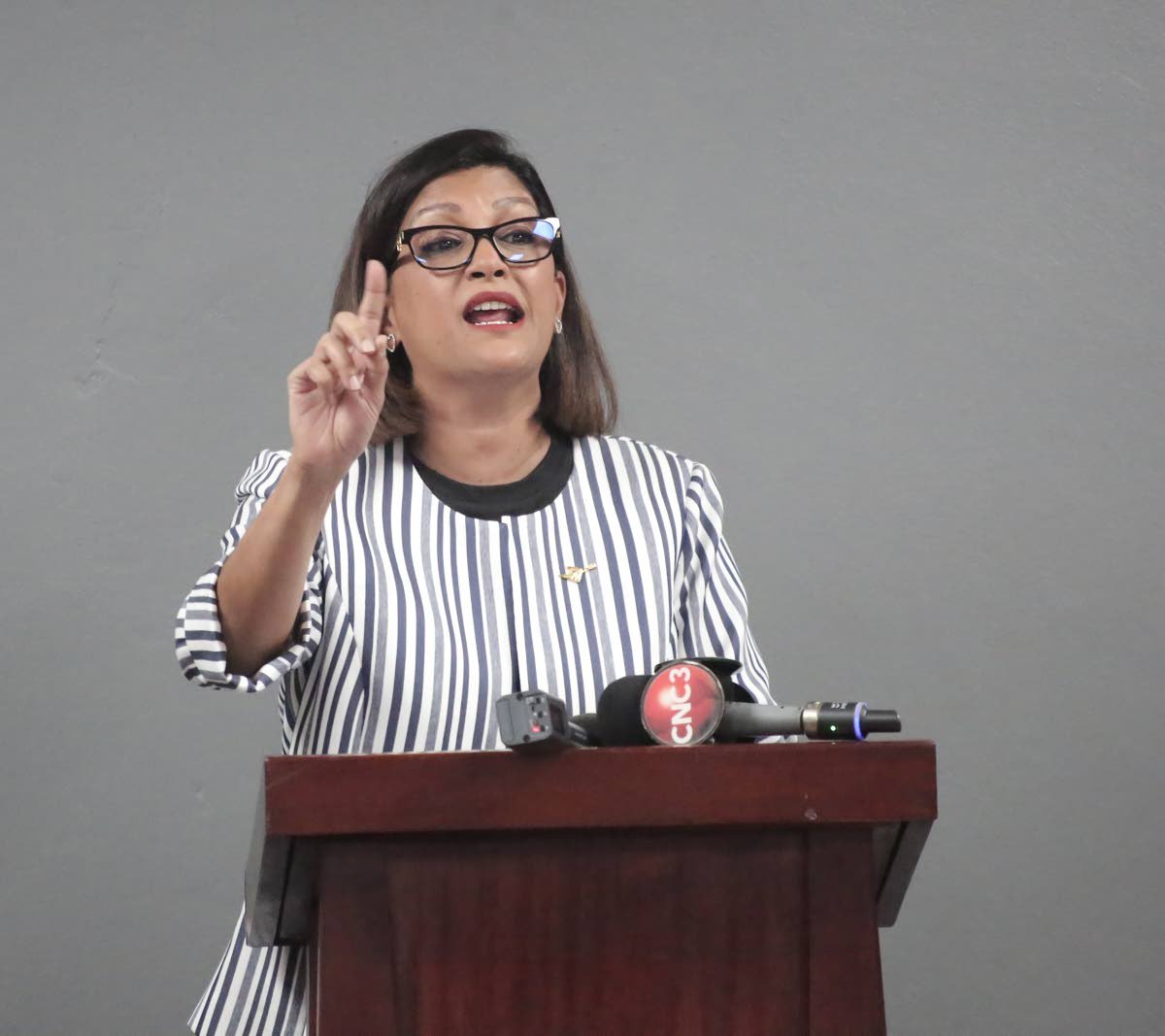
Patriotic Front Political Leader Mickela Panday has accused Prime Minister Kamla Persad-Bissessar of failing to live up to her election promises and using divisive rhetoric to deflect criticism of her administration.
In a Facebook post, Panday questioned why the Government continues to compare its performance with that of the former People’s National Movement administration, despite campaigning on a promise to deliver better governance.
“Prime Minister, your Government came to office promising change. Yet, increasingly, it is embracing the very politics it asked the country to reject,” Panday wrote.
She argued that if the PNM had “failed Trinidad and Tobago for 9½ years,” it should not now be used as the benchmark for judging the current administration’s performance.
“Did you not ask the people to elect you because you promised to do better? So what changed?” she asked.
Panday also criticised the Government’s handling of concerns over the State of Emergency, Preventive Detention Orders and the exercise of State power.
She said that instead of responding to what she described as legitimate questions, the Prime Minister had accused critics of attempting to “stoke hatred between the two major ethnic groups” and dismissed them as “social media trolls,” “deranged commentators” and “race grifters.”
According to Panday, such language was unbecoming of the country’s highest political office.
“Prime Minister, this constant resort to inflammatory and derogatory language diminishes the Office of Prime Minister and undermines the national unity you say you are committed to building,” she wrote.
Panday further alleged that governments facing difficult questions often seek to shift public attention by raising issues of race instead of addressing criticism directly.
“When governments run short of answers, they too often reach for the oldest trick in politics, race. It is easier to create division than answer for your record. But what may have worked in the past will not work today,” she stated.
She ended the post by asserting that while governments are free to criticise their opponents and attempt to shape public debate, they cannot avoid accountability.
“Governments can attack their critics. They can label them. They can try to change the conversation. But they cannot escape the difficult questions they must answer,” Panday wrote.