Trinidad and Tobago’s placement on a list of countries set to face increased tariffs from the United States on Thursday has led to a blame game between the Government and the Opposition.
T&T is among 17 countries facing new 10 per cent US tariffs as the Trump administration imposed fresh duties on imports from 60 trading partners, after it stated that the countries had not adequately enforced a ban on goods produced with forced labour.
T&T, along with its Caricom neighbours The Bahamas and Guyana, are among those affected.
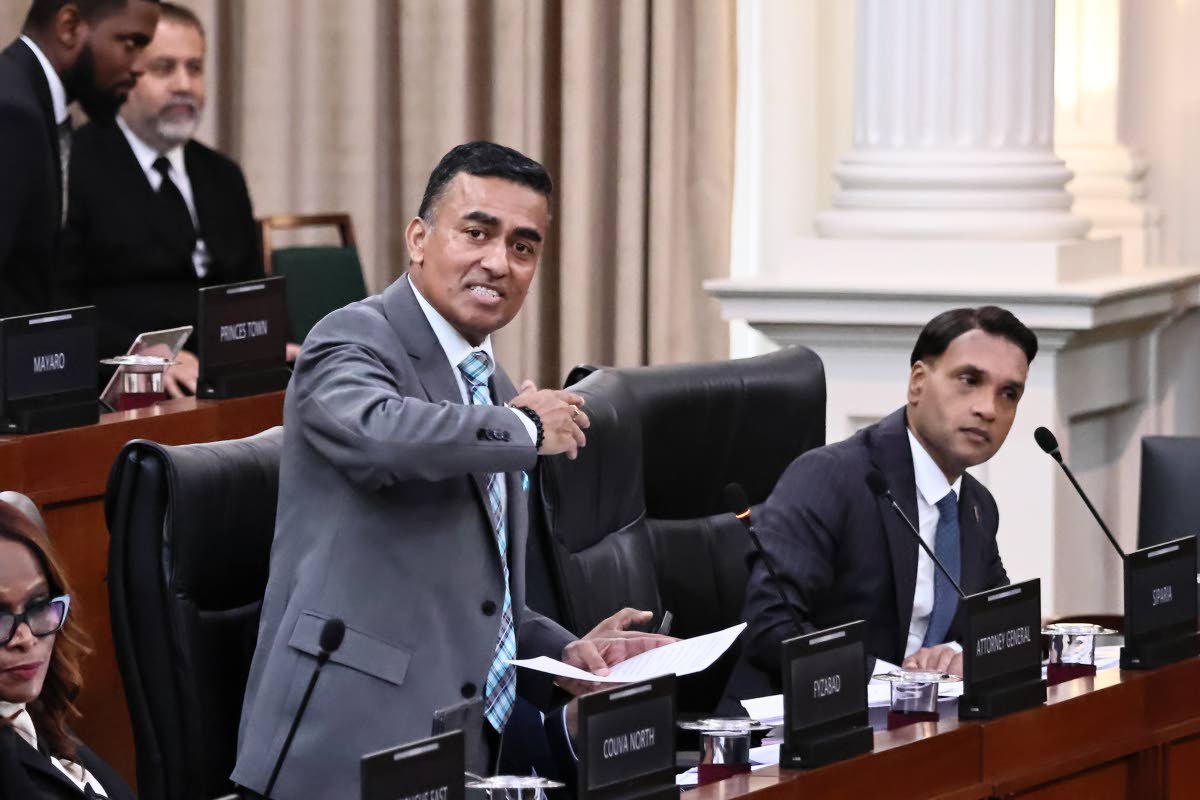
Contacted on the issue yesterday, Finance Minister Davendranath Tancoo said Government was in talks with the US concerning the tariffs. However, he pointed out that Government did try to address the forced labour issue through legislation.
“This and other matters form the basis of our continued discussions with the Government of the United States. I leave those discussions in the capable hands of our Honourable Prime Minister Kamla Persad-Bissessar and the Minister of Foreign and Caricom Affairs, Mr Sean Sobers,” Tancoo said.
He added, “Suffice it to say that this issue was considered in the Finance Bill 2026, passed by the Government but which was not supported by the PNM.”
Tancoo then pointed out an excerpt from the Finance Bill under the heading ‘TRADE STANDARDS AND FORCED LABOUR GOODS’.
The excerpt stated, “Clause 24 amends the Customs Act. It prohibits the importation of goods produced, in whole or in part, by forced labour, when designated by the Minister with responsibility for trade. Trinidad and Tobago must not allow our market to become a destination for goods produced in conditions that violate human rights. This clause places the law on the side of ethical trade and aligns our customs regime with global efforts to combat forced labour.”
When the measure was debated in the Senate in June, Trade, Investment and Tourism Minister Satyakama Maharaj said it was intended to prevent the country from becoming “a destination and dumping ground for goods produced through coercion, human trafficking, debt bondage, child labour, or other forms of forced labour.”
He said the legislation would protect legitimate businesses, promote fair competition and strengthen ethical trade, while preventing unfairly produced goods from entering the local market.
Responding to Tancoo’s comments yesterday, however, Opposition MP and former Finance minister Colm Imbert expressed confusion over Tancoo’s attribution of blame to his party.
“How? The UNC has a huge majority in Parliament and the Bill was passed, and assented to long ago,” Imbert said in relation to Tancoo blaming the PNM for the issue.
He added, “It is therefore impossible for anyone in the UNC to logically or legitimately claim that the PNM’s objection to the recent Finance Bill is responsible for the imposition of tariffs. That is a form of madness. We are not in government and will not be until 2030 unless an early election us called. The sitting Government passed the Finance Bill and it has been law since June 25th, 2026. One month ago!”
Also commenting on the issue, Opposition MP Brian Manning, a former minister in the Ministry of Finance, said the Opposition did not support the Finance Bill because of the forced labour provisions.
“The Finance Bill 2026 was not supported because it concentrates sweeping amendments across more than thirty laws into a single bill, making it difficult for citizens, businesses and even legislators to fully comprehend the wide-ranging implications. While framed as modernisation, the bill significantly increases penalties, expands regulatory powers, and alters tax treatment in ways that may raise compliance burdens without clearly demonstrating proportional economic benefit or adequate public consultation,” said Manning.
“If this UNC Government didn’t attempt to commingle so many disparate issues under the umbrella of a single bill then maybe it would have been supported by the Opposition.”
He continued, “They take an otherwise sensible and straightforward piece of legislation and then insert dangerous clauses, such as Section 34, of which they know the Opposition could never support. They only have the poor drafting of their own reckless legislation to blame.”
CEO and technical director of the Caricom Private Sector Organisation (CPSO) Patrick Antoine also raised concern about the matter when contacted yesterday.
He said, “Caricom continues to be extremely concerned about the impact of the tariffs on our economic performance, on our intersectoral linkages, on our export thrust, because the US is one of our key markets.”
Antoine said the issue was worrying for the Caribbean private sector, which he said is “facing substantial economic pressures at this time,” especially given the fact that the United States is one of the region’s major trading partners.
Ministry: T&T got lowest rate and exemptions
The Ministry of Foreign and Caricom Affairs is dismissing reports that Trinidad and Tobago has been placed on a list of countries facing higher tariffs on exports to the United States, saying the country instead secured the lowest tariff rate imposed under a major US trade investigation.
In a statement last night, the ministry said T&T has not been subjected to a 12.5 per cent tariff by the US. Instead, it said the tariff applicable to local exports has been reduced from 15 per cent, announced in August 2025, to 10 per cent following months of engagement with US officials.
The clarification came amid reports that T&T was among countries facing increased tariffs under a United States Trade Representative (USTR) Section 301 investigation.
According to the ministry, the US launched the investigation on March 12, 2026, into its 60 largest trading partners to examine whether their laws and practices adequately prohibited the importation of goods produced with forced labour. While T&T was not specifically targeted, it was required to participate because it falls within the top 60 US trading partners.
The ministry said the USTR initially proposed imposing tariffs of up to 12.5 per cent on goods from each of the countries under investigation before inviting submissions and holding public hearings earlier this month.
It said Foreign and Caricom Affairs Minister Sean Sobers participated in what it described as highly technical discussions with the USTR between May and July, including meetings in Washington, DC on May 14 and July 16.
The ministry also pointed to legislative action taken by Parliament on June 12, when amendments to the Customs Act were passed to prohibit the importation of goods produced through forced labour. The legislation was piloted by Finance Minister Davendranath Tancoo.
According to the ministry, US President Donald Trump announced on July 23 that T&T would be among a group of countries subject to a 10 per cent tariff, while a separate list of countries would face the higher 12.5 per cent rate.
The ministry said T&T received the lower rate because of measures taken to prohibit the importation of goods produced with forced labour.
It added that the USTR also agreed to exempt several major T&T exports from the tariffs altogether. Those products include crude petroleum, liquefied natural gas, anhydrous ammonia, urea, urea ammonium mixtures in solution and iron pellets. The ministry said those products account for more than 85 per cent of T&T’s exports to the US and will continue to attract a zero per cent duty.
The ministry maintained that the outcome reflected Government’s proactive engagement with US authorities during the Section 301 process.