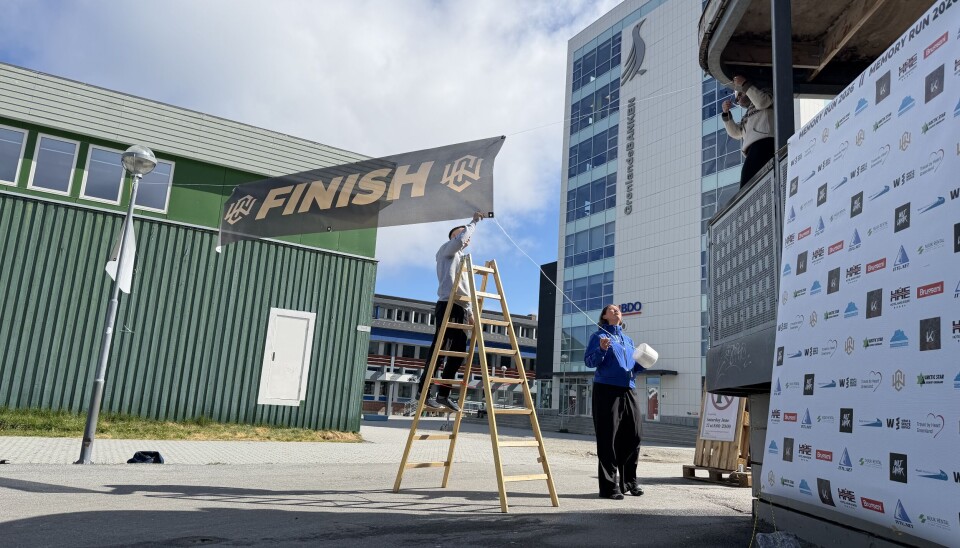
In the parking lot in front of Daddy’s in Nuuk, Mala Broberg is on her way up a stepladder.
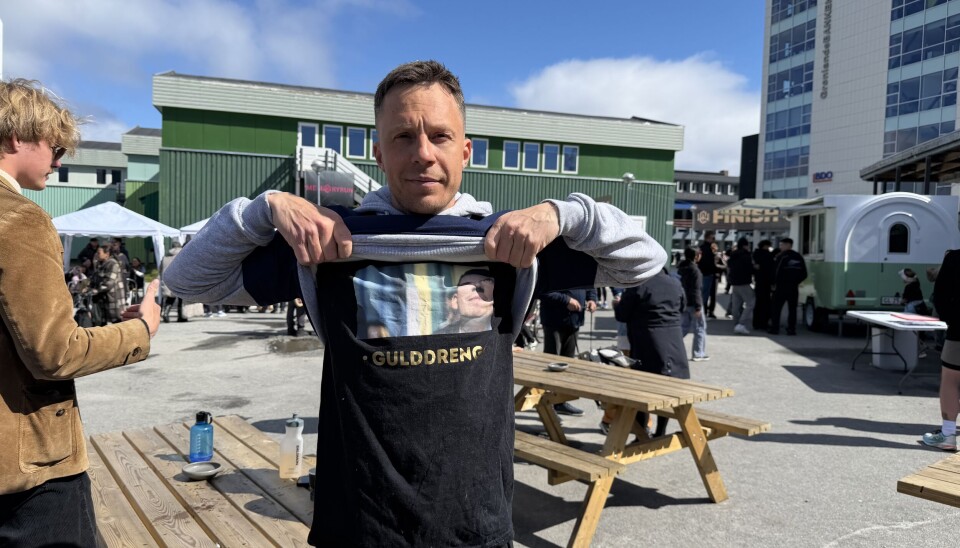
He is wearing a gray sweatshirt. But underneath it, he wears something that you can’t immediately see: a black t-shirt with a picture on it and the text “GOLD BOY”. It is a picture of Simon, a friend he lost when he was trapped in an avalanche in 2017.
This is the third time the Memory Run has been held, and is a day dedicated to remembering those you have lost. An exercise run that focuses on grief – but which also exists to create new memories for those who are left behind.
Mala Broberg has signed up as a volunteer, and together with two others, he is in the process of hanging up the start and finish line. From the top step of the ladder, he reaches out and lashes a white plastic rope. In it hangs a black banner with the inscription “FINISH”.
Actually, he mostly helps for his own sake, he says.
– You know, men and feelings…
From a cloudless sky, the sun shines down on the participants who are slowly arriving.
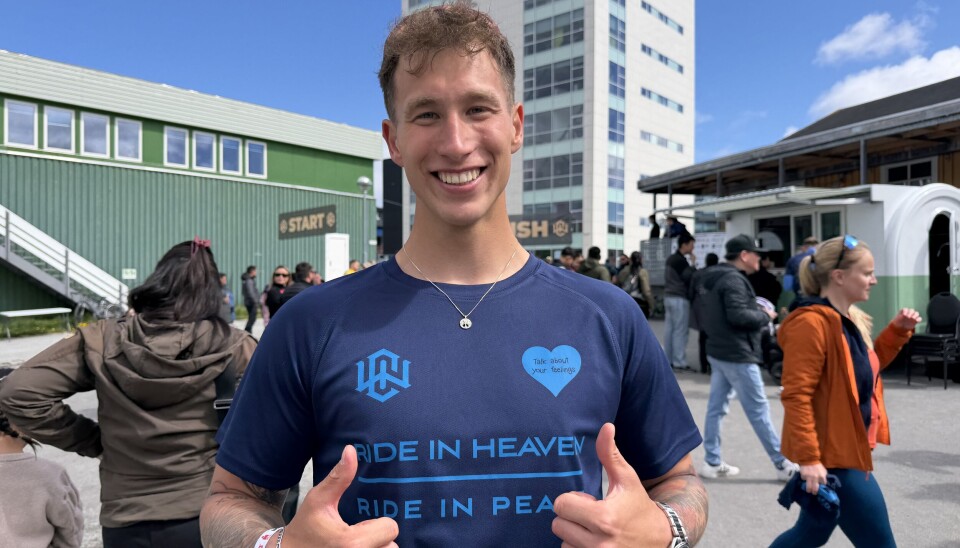
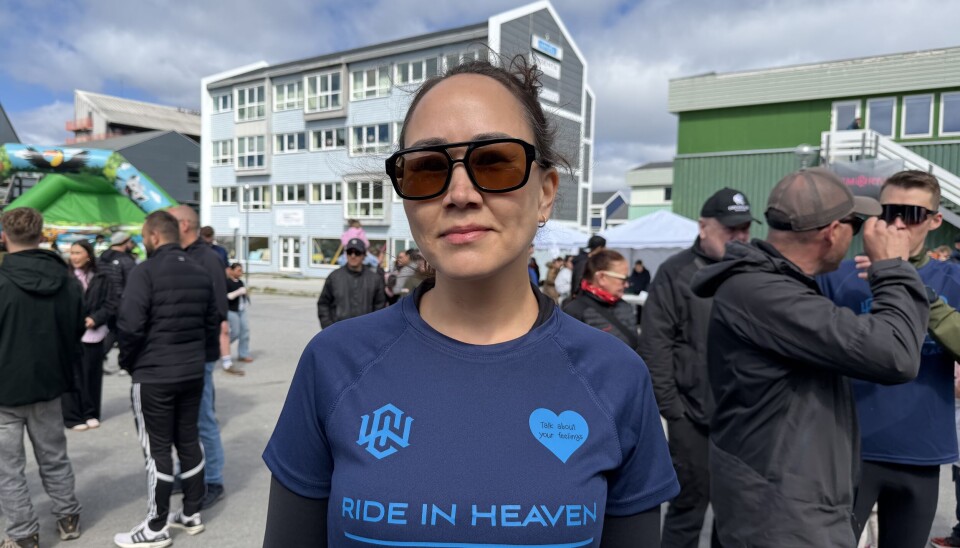
Many of them are wearing blue t-shirts. They originate from the first Memory Run in 2024, and so they are also sold today. On the chest of them is written “Talk about your feelings”.
A message that is important to the initiator behind the Memory Run, Niclas V. Sørensen.
For all who have lost
The day before the race, I meet Niclas V. Sørensen in Travel By Heart, where he has borrowed an office space.
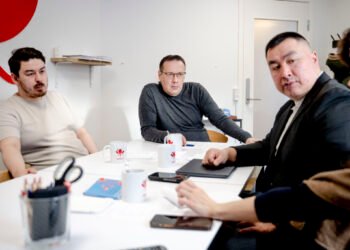
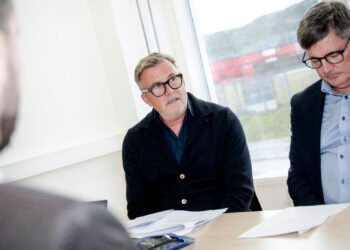
An energy drink is open in front of the computer screen, and his phone buzzes and buzzes: The last details must be in place before tomorrow, and in a little while a handful of the volunteers will come by for an information meeting.
For a while he settles into a blue sofa arrangement and begins to tell how the idea for the race arose out of a deep sadness two years ago.
– We lost William and Christian, he says.
The two young men lost their lives in a snowmobile accident in February 2024.
Niclas V. Sørensen soothed the grief with fairy tales. Something had to happen all the time so that he didn’t feel too much. That’s how it went, until he – with the help of a coach and psychologist – found that he had to learn to take responsibility for his own feelings.
– Taking responsibility for one’s feelings also means saying them out loud to others so that they can help you, he says.
On Instagram, he saw that several of his friends had started running, and that gave him an idea.
– I thought, wouldn’t it be great to gather us, run past the cemetery and then go to the families?
It was to be their first Christmas without their sons and siblings.
– That time must have been hard for them, and then we could stop by and wish them a merry Christmas.
Back then, the route was approximately 12 kilometres, and then it was about remembering William and Christian, says Niclas V. Sørensen.
You know, men and feelings…
– Now it’s about being something for all those who have experienced a loss.
High pulse and lots of sunshine
When they ran for the first time in 2024, it was -20 degrees. On this June day, a cloudless sky hangs over the parking lot, where people are wearing running shoes in all the colors of the rainbow.
The atmosphere is as warm as the sun’s rays when Niclas V. Sørensen stands up to welcome.
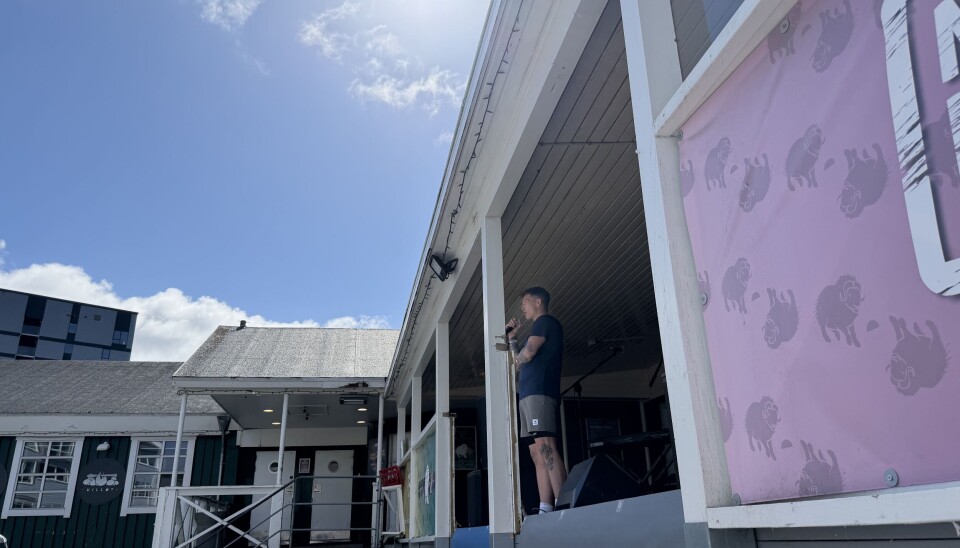
– It is great to see so many people, he says and explains why they are gathered:
– The race today is for those who have left a mark on our lives and to create new memories, he says into the microphone.
– It’s not about coming first, it’s about being together.
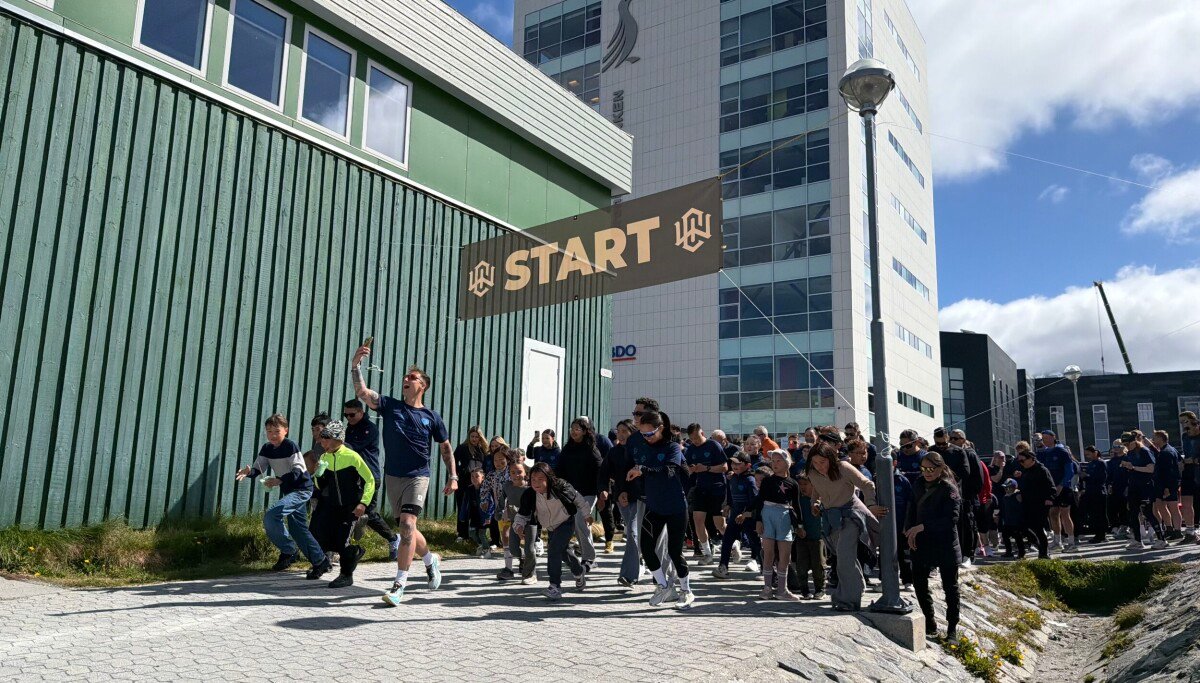
When he has thanked for the floor, a long line of people line up behind the starting line.
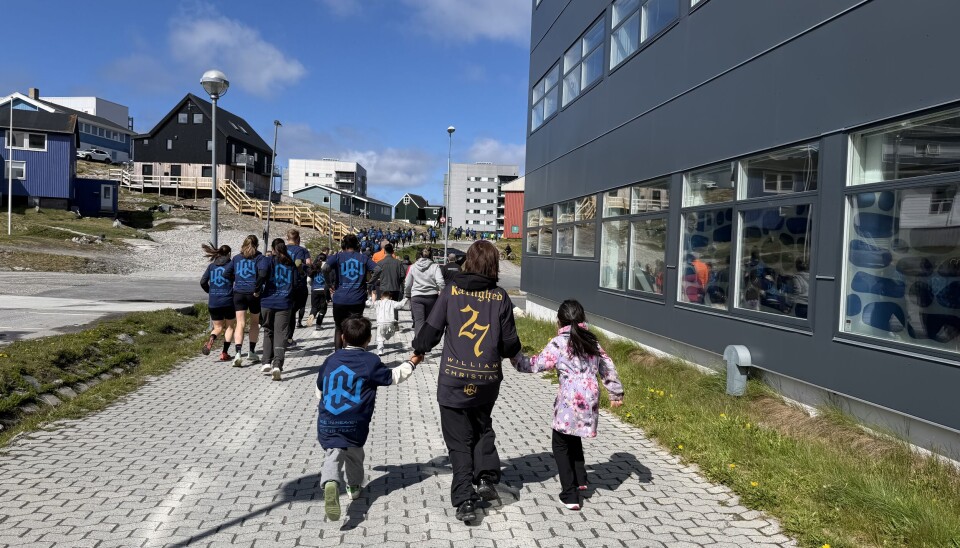
Conferences Angajo Lennert-Sandgreen counts down and at his signal the snake moves towards Intaleep Aqqutaa. When the snake turns the corner at HJ Rinksvej, it is no longer a snake. Now the many runners are spread like blue confetti over the center of Nuuk.
Before the race, the participating runners were given a green wristband. When they reach the finish line, they exchange it for a lunch plate with grilled reindeer meat and spiced butter.
Standing near the grill is Randi Christensen, who has helped Niclas V. Sørensen get the Memory Run up and running.
She is William’s sister. Niclas V. Sørensen reached out to her in his time to ask the family for permission to come by in connection with the first Memory Run.
– I immediately asked if I could help with anything, she says.
Ever since then they have been a bit of a mates.
They would probably be 10-20 people, Niclas V. Sørensen had estimated then in 2024. But 80 came.
– I remember that I was very surprised when they all started to show up at my parents’ house, says Randi Christensen.
What does it mean to you that it has become a recurring tradition?
– It’s nice. You feel so alone when you lose someone. So that someone wants to keep the memories alive with you, that’s huge.
When William’s friends get together, I can feel him through them, she says.
Open up a conversation
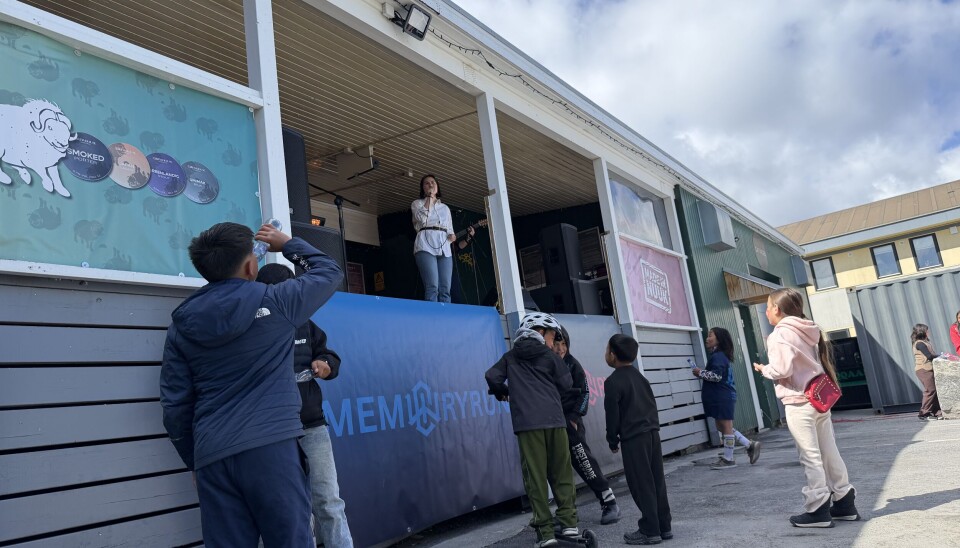
In addition to the races, one of approximately 2 kilometers and one for children who walk around the dental clinic, there is also face painting, a bouncy castle and concerts during the day with Arnarissoq, Jens Kleist, Andachann, Tûtu and Naja P.
It’s not just those who have lost friends and family in snowmobile accidents who have come forward.
In the square in front of Daddy’s, over a hundred people have gathered. Among them are runners from the city’s running clubs.
Benedikte Dahl Nielsen is one of them. She is also a member of Qamutit, the snowmobile club in Nuuk.
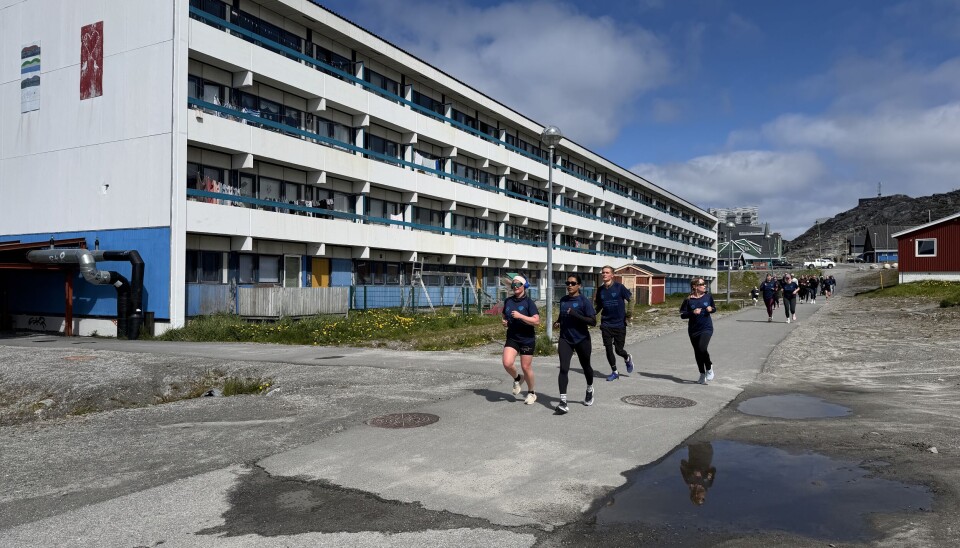
– I run because I think it’s a great way to give attention to a vulnerable subject, she says.
– An event like this can open up to talk about grief in other ways.
When I talk to Niclas V. Sørensen and Randi Christensen, this is also what motivates them to want to continue organizing the Memory Run in the future.
Niclas V. Sørensen exemplifies it like this:
– If someone is asked what they did on Saturday, they might say that they were at the Memory Run and why they were there, he says when we talk the day before the race.
– That way can be the first step to the first conversation. This is what we would like to provoke in a gentle way – with t-shirts and running as a gateway.
At the barbecue, Randi Christensen looks out over the crowd.
– Many more have come than we had dared to hope for, she says touched.
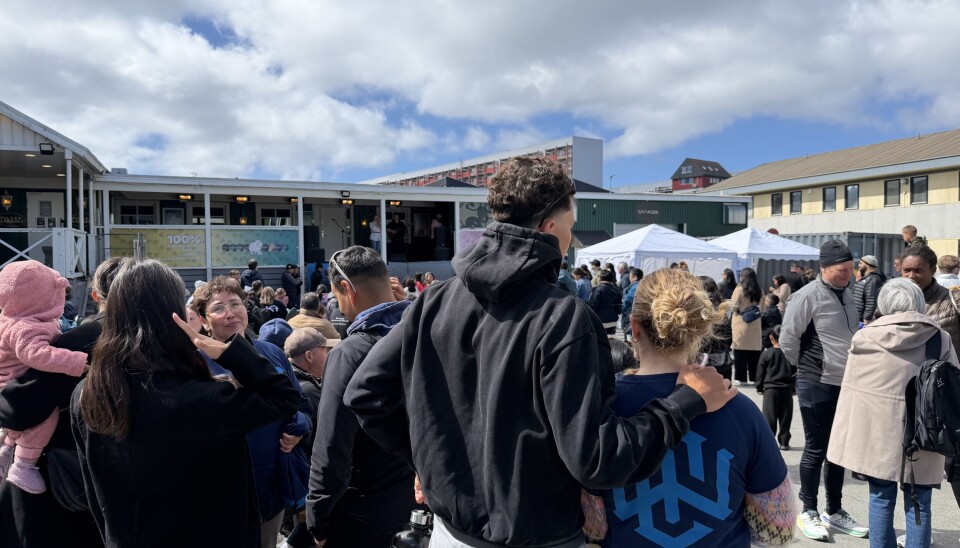
– Because we often come to the cemetery, we know who else has lost, she says and adds:
– It is nice to see that they are also coming.
People smile, talk and hug all around.
– It shows somewhere that we are doing the right thing, she says.
Eventually, they hope to be able to hold the Memory Run in other cities.
They are among us
As the event draws to a close, Kim Ringsted-Godtfredsen takes the stage. Twelve weeks ago, he and the family lost Kristian in an avalanche accident.
– All of us who have lost know very well that they are still among us, said his father from the stage.
He also took part in the race, and it was “really nice”, he says after the speech.
It gave a sense of being together about the unthinkable, having lost loved ones tragically.
– It is difficult to describe what feeling it is, as a human being and as a father and mother. But it just gives a lot when someone comes and empathizes with us. It gives renewed energy, even if there are some difficult and hard days once in a while.
At the end of the speech, he sent a greeting to Kristian and two of the other young men who are missing.
– If they had still been alive, they would have thought this was the coolest thing.
We miss with our eyes as we look up to wave at them.
The strong light blinds us.