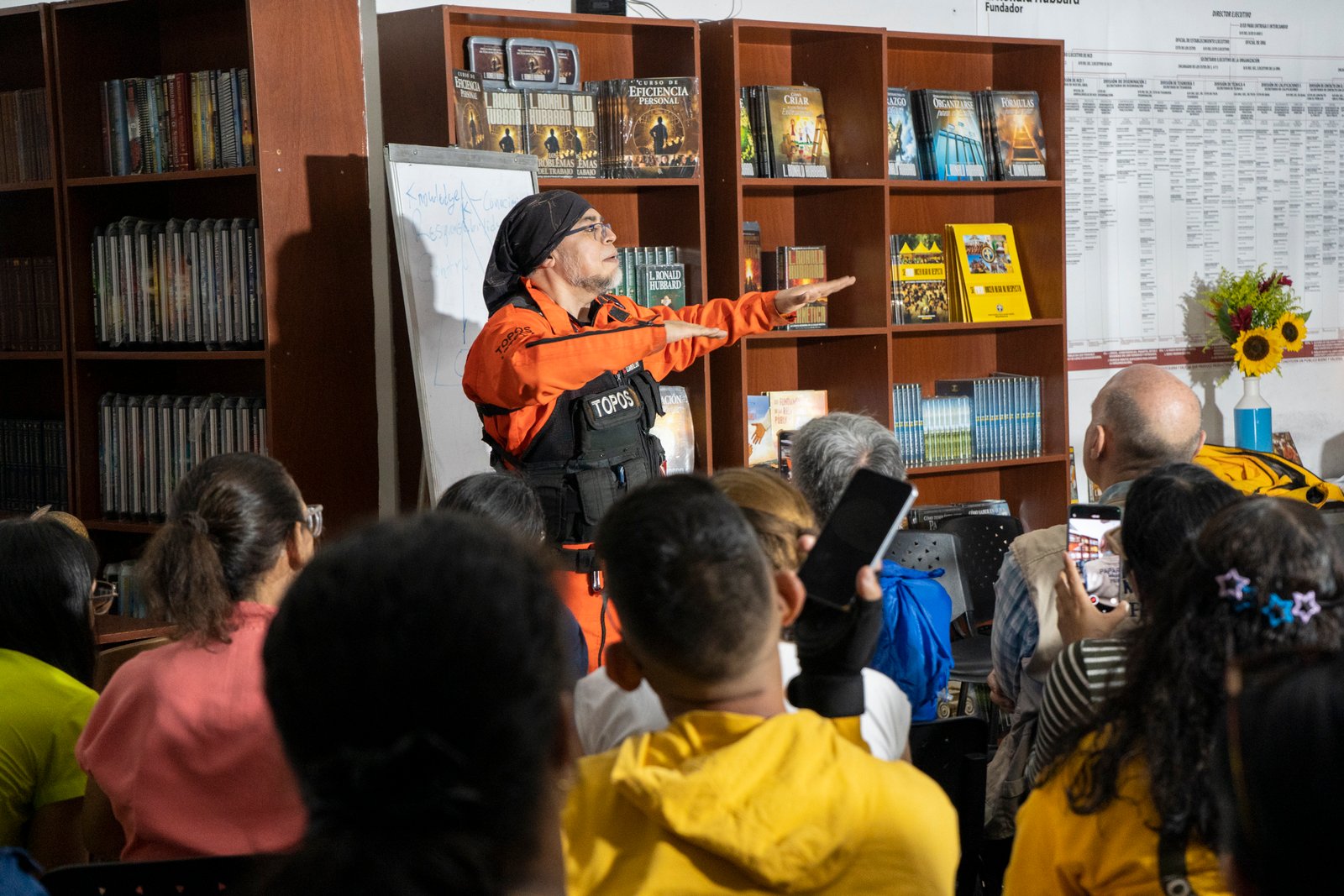
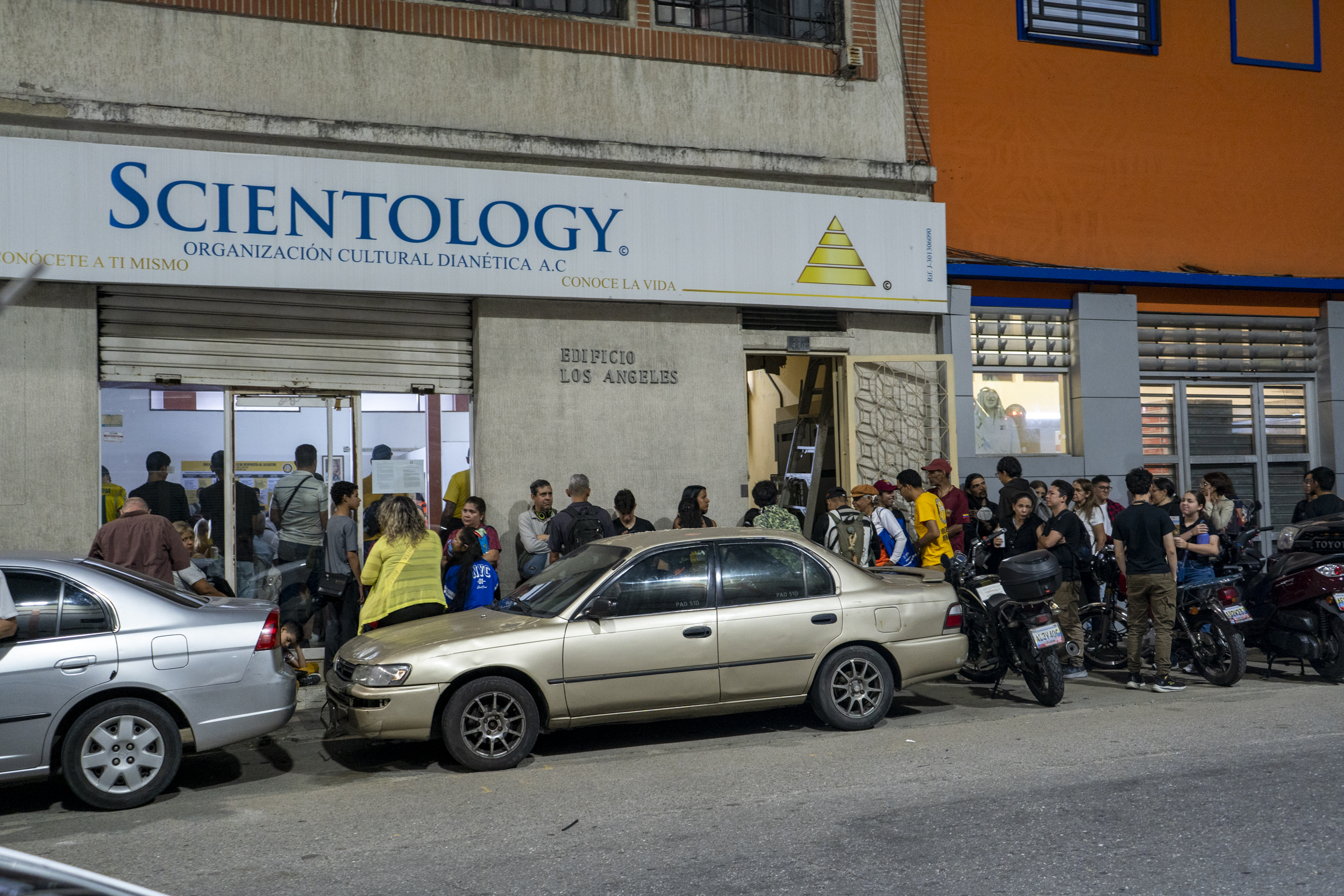
At 8:00 pm on a Friday, very far from the usual Caracas nightlife, it was Norima Correa crying inconsolably in front of the doors of the headquarters Scientology Caracas. For her, the aftermath of the double earthquake of June 24 They are not a statistical figure or a distant memory. His boss’s niece has been trapped under one of the collapsed buildings for almost a month. This personal drama, added to an unresolved fear, was the driving force that drove her to attend the free workshop open to the public. “What to do during an earthquake?”
Correa personified the uncertainty of the citizens who filled the facilities: about 160 people occupied the main hallwhile a similar group waited outside with the same urgency to obtain technical recommendations in the event of an earthquake.
The urgency of adapting to seismic zones
The person in charge of the training was the mole Alex del Llano, member of the international rescue brigade Aztec Topos of Mexico. The specialist began with a premise aimed at combating misinformation on digital platforms: “There is still no technology that can predict an earthquake”. Del Llano argued that, by living in a seismic zone, The population must adapt their behaviors and properties to that realityin the same way that “communities at the North Pole prepare for extreme cold or desert dwellers ration water.”
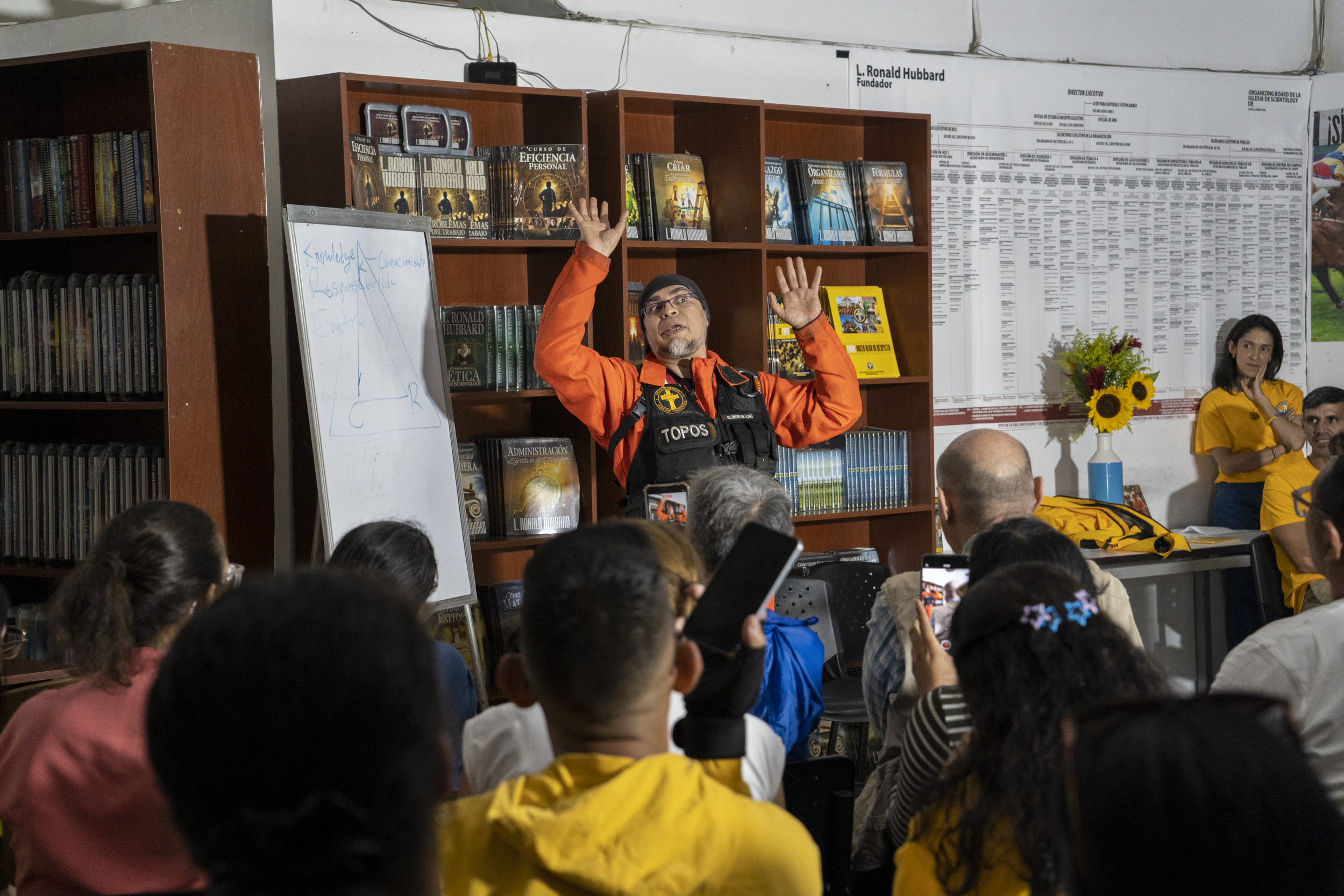
The mole concentrated a good part of his time on dismantling the evacuation myths that have been in force since the middle of the last century, which, according to the rescuer, are today obsolete and dangerous. Del Llano explained that the traditional recommendations to take shelter under tables or in door frames corresponded to the architecture of the 1960s, when these structures were built with solid wood, stone or reinforced steel. In contemporary constructions, the widespread use of lightweight materials such as drywall or MDF turns these points into high risk areas for crushing or cuts.
The “triangle of life” technique
Replacing these old methods, the brigade member explained the lowest risk area techniquepopularly known as the “triangle of life. For Norima Correa, a retired educator and resident of Guatire, this technical data represented a fundamental break in her perception of security.
“The most important thing I rescue is something I didn’t know: the triangle of life. I didn’t know that standing on the side of the bed could save my life. Before, I thought I should stand next to a column. It is very important to know those tips, what to do, because if you don’t have time to go out, you will die because you don’t have the knowledge and responsibility,” Correa commented upon leaving the training, where he found a bit of calm amidst so much anguish and uncertainty.
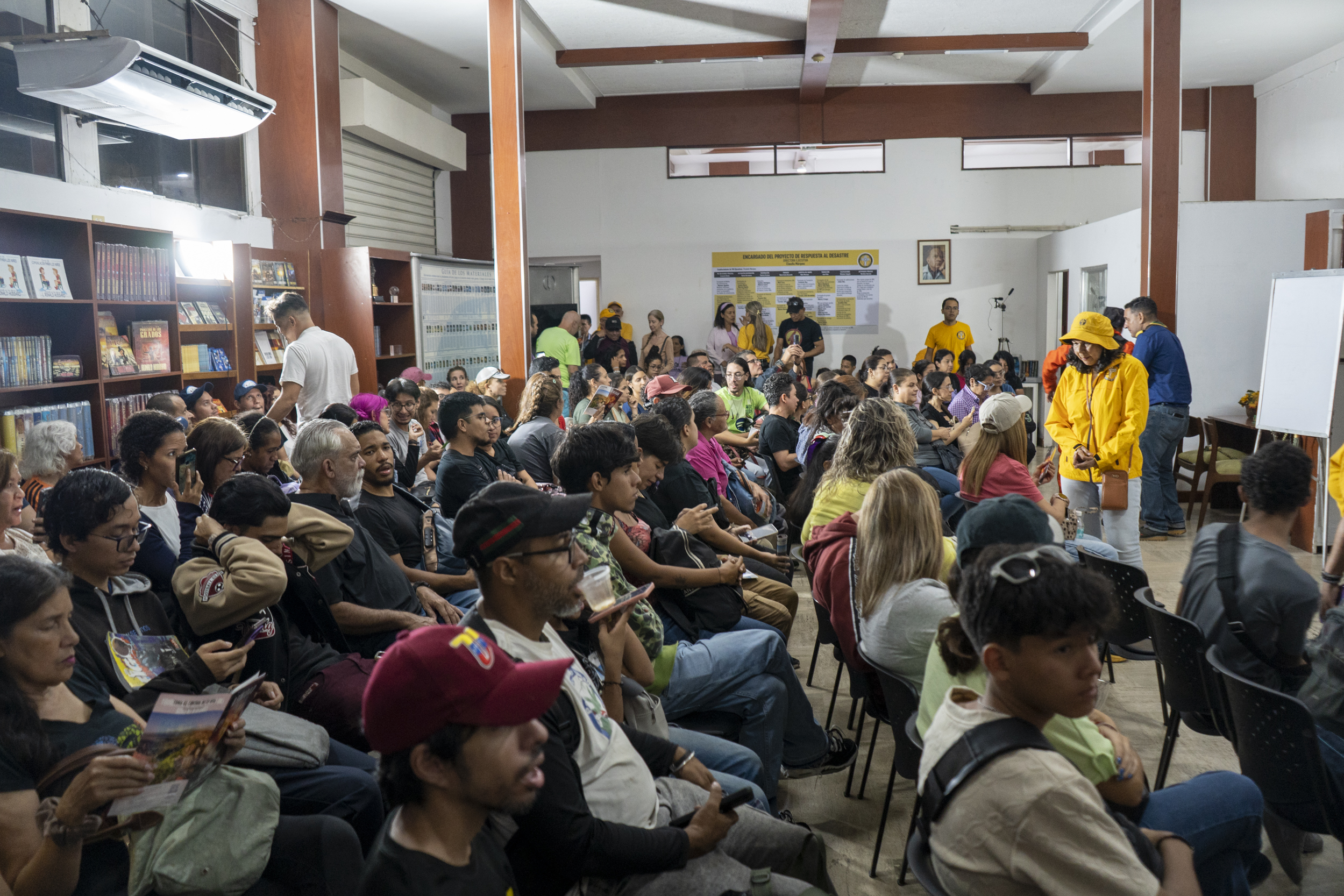
Through practical demonstrations on the floor of the venue, Del Llano illustrated that the correct position consists of Lie on your back next to an object of high structural strength, such as beds, heavy sofas, washing machines or refrigerators. Staying face up, unlike the fetal position, exposes the citizen to the roof detachments and would allow react in fractions of a second. The only exception to this rule occurs if the evacuation is carried out to a rooftop, where the person must position themselves face down with their limbs extended, simulating a starfish, to avoid rolling into the void in the event that the property suffers a lateral displacement or a loss of verticality.
High floors and stairs: why you should not always evacuate
The specialist also recommended that The inhabitants of the ground floor and the first three floors must leave the property immediately. From the fourth floor onwards, evacuation is only advised if the journey to the outside takes less than 30 seconds under normal conditions. Otherwise, the citizen he must remain within the department and adopt the triangle of life.
This guideline responds to the technical danger of the collapse of stairs due to resonance waves, a mechanical phenomenon critically observed in the 1985 Mexico City earthquake. The mole explained that the simultaneous and disorderly descent of hundreds of people in a high-density building generates a dynamic overload and vibration that the stairs, due to their design, cannot tolerate, causing them to directly collapse even though the rest of the building remains standing.
Humanitarian response after the emergency
Behind the event was Scientology Caracasa religious organization focused on the spiritual improvement of each individual, according to its representative and director of the disaster response project, Claudia Márquez. Since it is not based on the worship of a specific God, the institution allows the participation of people of any faith who seek personal development, he explains.
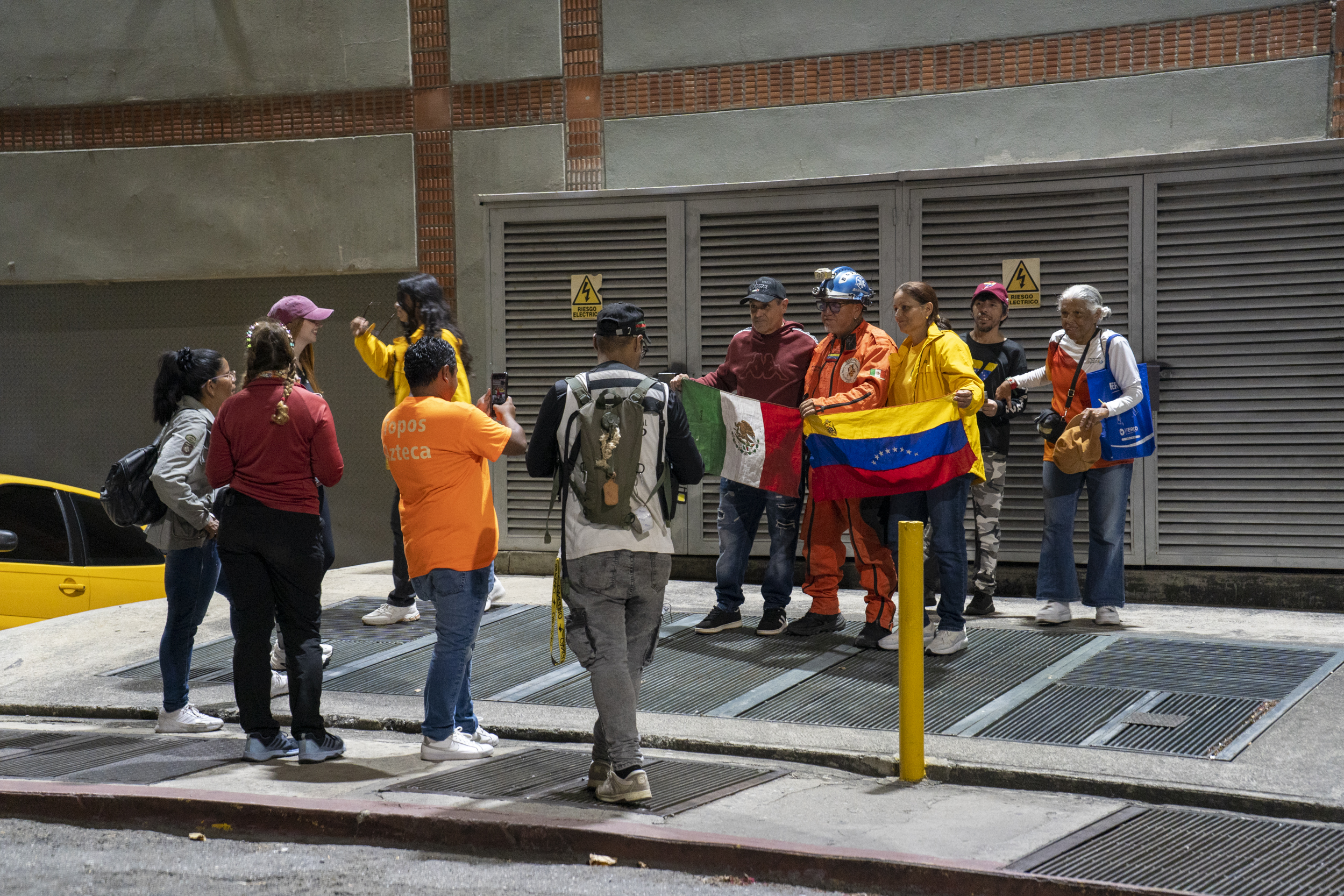
Márquez said that the organization coordinates humanitarian aid campaigns and assumed an active operational role since the beginning of the contingency on June 24, establishing its headquarters as a collection center. It was precisely this organization that was in charge of managing the transfer and logistical support of international rescuers, in particular the Aztec Topos of Mexico and the SNAT personnel of Colombia. Currently, in addition to the work to recover bodies in capital structures such as the Petunia building, the organization deploys technical assistance and humanitarian support teams in critical points of the state of La Guaira, in the communities of Coral Beach and Los Cocos.
Given the volume of citizens who could not enter the first training session, the organizers scheduled a second immediate conference at the same facilities. Márquez pointed out that The Aztec Topos technical training schedule will move this week to the city of Valenciato then open new training dates in the capital, in order to consolidate a culture of civil protection based on knowledge and community control.