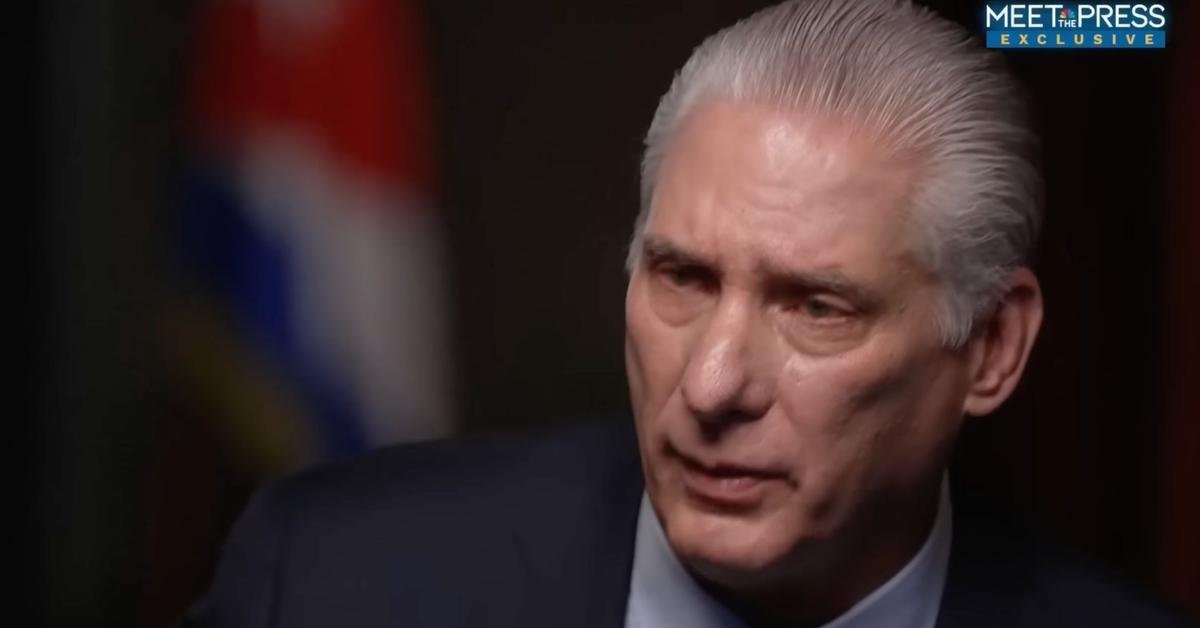
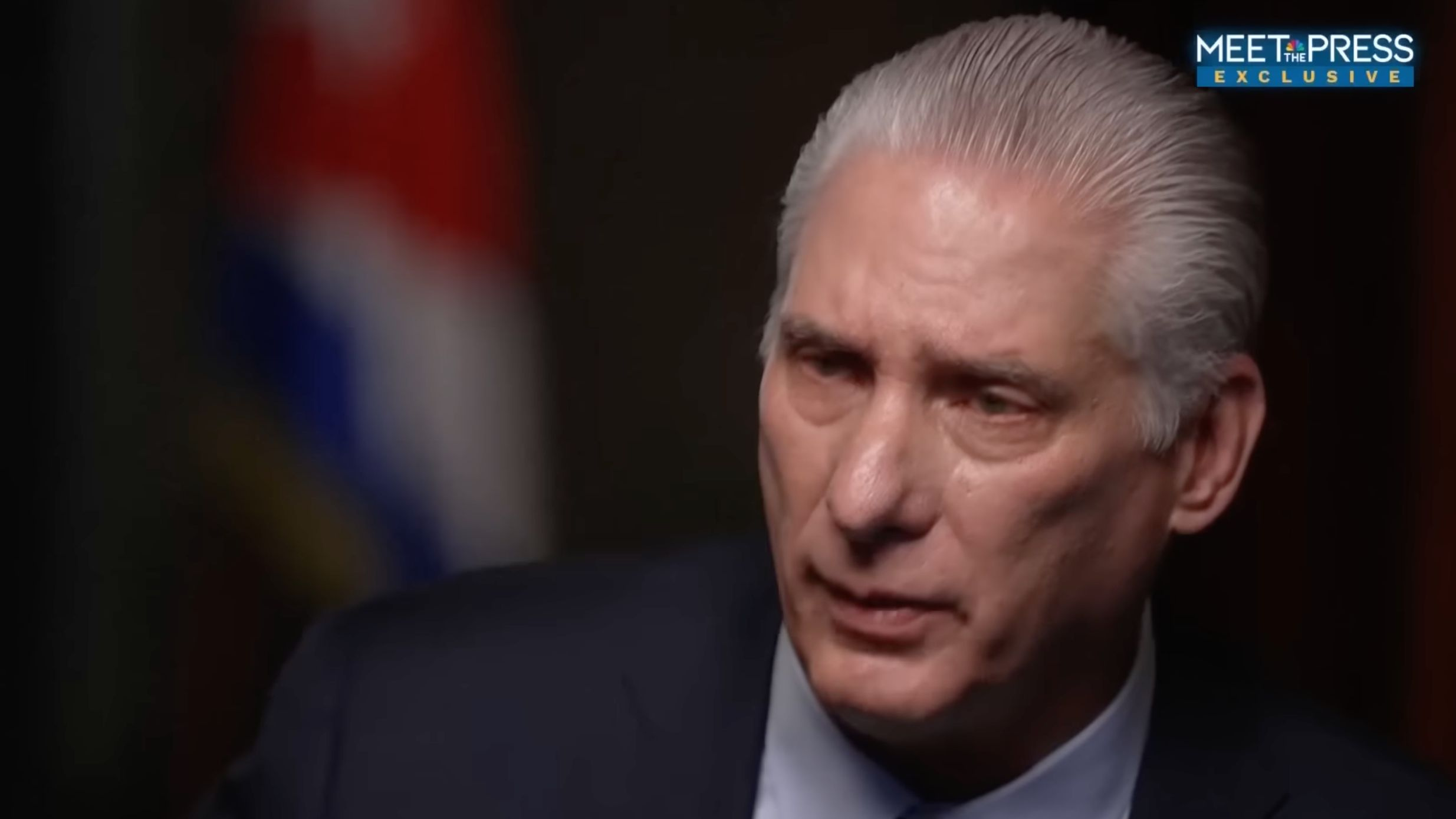
Madrid/Miguel Díaz-Canel has responded to the report published this Monday by the US State Department attacking. The president accuses its owner, Marco Rubio, of being “one of the most corrupt officials of the current administration, with proven ties to drug traffickers and terrorists in Florida,” in a more than obvious reference to anti-Castroism. “The thief believes that everyone is of his condition,” he snapped.
The leader reviews, in a thread of X, a series of “criminal episodes, including plagues and diseases introduced into Cuba,” expressly citing the case of dengue hemorrhagic fever in 1981, when a hundreds of children died because of the virus, spread by an Asian strain that is rare on the continent. There has never been evidence that the disease was artificially introduced, but the ruling party resorts to those facts from time to time. In addition, he reviews the explosion of the Barbados flight, “the bombs in hotels, the assassination attempts or the psychological war.”
The State Department accuses Cuba of, among other things, effectively crafting “a new model for a long war of attrition, organized around espionage, infiltration, sabotage, networks of covert agents and an infrastructure designed to pit the United States against itself.” Díaz-Canel responds to this, stating that “if one country has spied on and attacked another at obscene levels, it has been the United States against Cuba.”
The Cuban leader alleges that “the million-dollar sums that are allocated annually to regime change programs in Cuba are public, appealing to both subversion and terrorism.”
The Cuban leader alleges that “the million-dollar sums that are allocated annually to regime change programs in Cuba are public, appealing to both subversion and terrorism.” It refers to the money that the National Security Appropriations Law allocates each year to “programs that promote democracy and strengthen civil society on the Island through the National Foundation for Democracy (NED), including support for political prisoners,” as well as financing the Office of Transmissions to Cuba. This yearthose items that the regime considers aimed at undermining the Revolution, amount to 75 million dollars.
Díaz-Canel denounces that to all this we must add “the blockade and the genocidal dimension that it acquires with the current reinforcement and energy siege. There is no greater act of subversion against a State, conceived and officially described by the United States to exhaust the people and crack their support for the Revolution.” In this context, the president maintains, the only thing Cuba has done is “defend itself from these successive and endless aggressions, by legitimate right.”
Díaz-Canel claims that “he has never acted to harm the American people, nor has he proposed to affect the national security” of that country, but attributes this “lie to generate pretexts on which to sustain aggressions against Cuba and restrict civil liberties in the United States” to the “transnational neo-McCarthyism that is being reinstated in the United States, from a clearly fascist current.”
In this case, the leader refers to the entire part of the report aimed at blaming Cuba for carrying out “a revolution against Western civilization itself, waged, in part, through the novel and malicious method of persuading the children of the West to rebel against their own heritage.” In the opinion of the document, the only thing that Castroism has done well is to export its ideology until it was introduced into the United States, so that it attributes not only a relevant role in the Latin American guerrillas of the 60s and 70s, where the links are clear, but also participation in any anti-racist or anti-fascist protest that may take place on its soil.
In addition, it considers the Island the closest node of a network formed by Russia, China and Iran, and reiterates that there are Russian and Chinese signals intelligence facilities on the Island, as well as links with terrorist groups such as Hezbollah. Beijing also referred to this matter this Tuesday, to defend that its relations with Cuba are “legitimate and transparent.”
Beijing has also referred to this matter this Tuesday, to defend that its relations with Cuba are “legitimate and transparent.”
Chinese Foreign Ministry spokesman Lin Jian said in a press conference that the ties between both countries “do not allow rumors or slander” and that “China will continue to firmly defend national sovereignty and oppose external interference.”
The Cuban Foreign Minister, Bruno Rodríguez, It has been much more synthetic in his statements, reduced to a single message in which he describes the State Department report as a “fallacy.” It is, he affirms, “a pretext to sustain his cruel and criminal economic war that punishes every Cuban family, and his aspiration to militarily attack Cuba, for which he desperately seeks the support of American citizens.”
The Minister of Foreign Affairs adds in his post that the document is nothing more than another evidence “of the macabre plan that this American politician from South Florida has designed, which only satisfies the interests of those who have always paid him.”
Besides, Cubadebate publishes this tuesday an extensive analysis that attempts to disprove most of the claims in the US report. The media concludes that the State Department resorts to a kind of deductive method that leads it to assume that the presence of contacts, ideological affinities or historical antecedents demonstrates, by itself, the existence of a centralized, continuous conspiracy directed by the Cuban State.
The analysis does not deny appointments, meetings, trips or contacts, particularly regarding past events, but considers it meaningless that these events are associated, presented as an organized network, every individual action is attributed to a State, connected with proposals outside the country and these individuals are sanctioned. “To support the broader statements, command documents, instructions, transfers, secret communications, confessions or operational patterns would be necessary that verifiably link contemporary organizations with a Cuban state leadership. The report does not provide that type of evidence for the actors it places under suspicion,” the media notes.
“The result is not only a biased reading of the past. It is a category sufficiently elastic to criminalize legitimate political and social activities in the present”
Furthermore, the analysis confronts some of the accusations with official documents from Washington in order to deny that the text’s own conclusions are those that the United States has historically maintained. “The result is not only a biased reading of the past. It is a category sufficiently elastic to criminalize legitimate political and social activities in the present,” states the long text.
From the other side of the ideological trench, the Cuban writer living in Spain, Jorge Ferrer, has also commented the report, of which he questions the strongest arguments, but which in his opinion has a different purpose than that considered by the regime.
“Composed of a lot of historical material, it maintains such enormous hyperbole as that Cuba ‘is less a nation-state than an intelligence operation,’” he considers. However, more than to sanction his own citizens, the intellectual considers it an order to go ahead with a short-term action. “The report (…) substantiates and endorses a military operation against the Cuban State. The resounding nature of its conclusions indicates that this operation may be imminent, given that the SD (State Department) considers it urgent (…). Taking into account the plot and the timing of its appearance, I would say that, paraphrasing Díaz-Canel, ‘the order of combat is given.'”