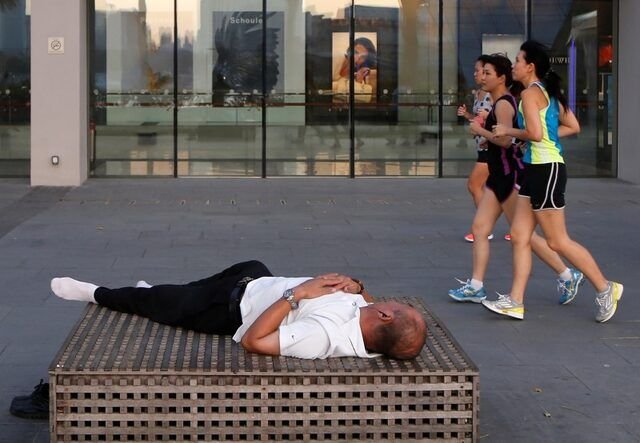
SEOUL: More Koreans are suffering from sleep disorders, with the number of patients increasing by more than 20 per cent over the past four years, data showed Monday.
A total of 1,346,196 Koreans were treated for sleep disorders last year, up about 24 per cent from 1,088,038 in 2021, according to the Health Insurance Review and Assessment Service.
Sleep disorders include chronic insomnia, which makes it difficult to fall or stay asleep for at least three months, as well as sleep apnea.
People in their 60s accounted for the largest share of patients at 321,219, followed by those in their 50s with 257,424 and those in their 70s with 244,138.
What stood out was the rise among children and adolescents. The number of patients under 10 climbed 67.5 per cent to 3,726 over the same four-year period, while the number of teenage patients increased 32.6 per cent to 11,633.
Koreans are among the world’s most sleep-deprived people.
A 2024 survey by the Korean Sleep Research Society, an academic organisation of sleep medicine experts including neurologists, found that the average Korean slept just 6 hours and 58 minutes a night last year, 18 per cent below the OECD average of 8 hours and 22 minutes.
Experts pointed to mounting academic pressure and increased screen time as key factors behind the growing number of sleep disorder cases.
“Many children and teenagers are staying up late because they can’t put down their phones after watching short-form videos or because they are busy with homework. Sleep problems that start at a young age can increase the risk of depression and cause behavioural problems later in life,” Kim Ji-hyun, a neurology professor at Ewha Womans University Seoul Hospital, said in an interview with a local news outlet.
The rise of around-the-clock services, including overnight deliveries and 24-hour convenience stores, is also contributing to the increase in sleep disorders.
According to the Korea Labour Institute, about 2.17 million people worked night shifts between 10 p.m. and 6 a.m. on weekdays in 2024, accounting for 14.2 per cent of the total workforce.
The figure was down 401,000 from 2.57 million in 2019, but the number of weekend night workers increased by 359,000, from 817,000 in 2019 to 1.18 million in 2024.
“Insufficient sleep not only worsens depression and anxiety but also increases the likelihood of developing serious illnesses such as dementia and cardiovascular disease. Policy efforts should focus on expanding access to sleep evaluation and treatment,” the KSSM said.- Korea Herald/ANN