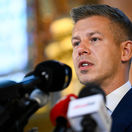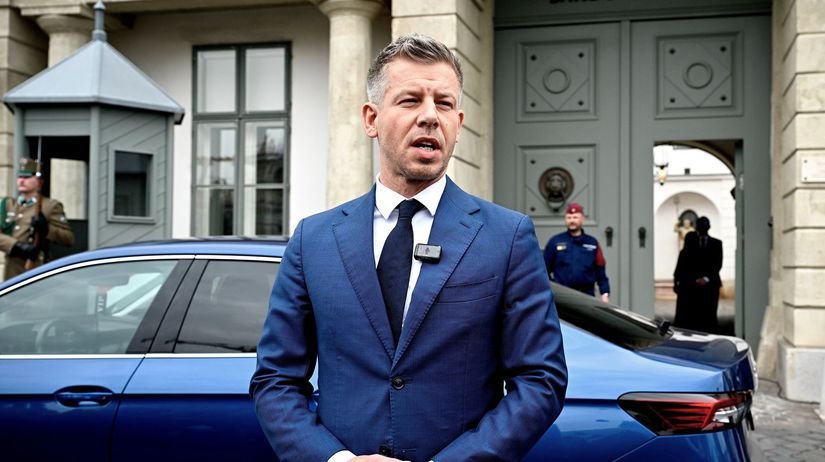
The future Prime Minister of Hungary, Péter Magyar, is planning a fundamental turn in his country’s foreign policy and wants to strengthen the cooperation of Central European states. As reported by the Polish website onet.pl, his ambition is to create a regional block modeled after the Benelux, which would increase the influence of the countries of the region within the European Union.
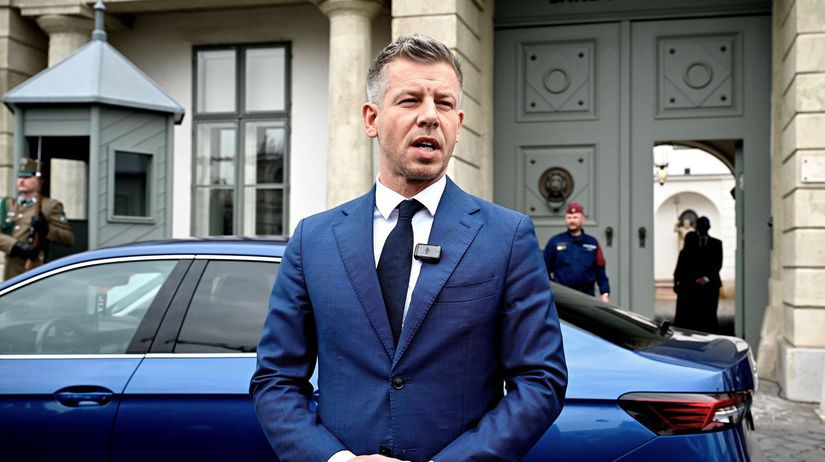
Photo: SITA/AP, Robert Hegedus
Future Hungarian Prime Minister Péter Magyar
Magyar, who defeated longtime Prime Minister Viktor Orbán in the elections, announced that his first foreign trips would be to Warsaw and Vienna. He considers Poland and Austria to be key partners in building closer regional cooperation.
The basis of his vision is to link existing formats, such as the Vyšehrad Group, which unites Hungary, Poland, the Czech Republic and Slovakia, with the so-called Slavkov format, which includes Austria, the Czech Republic and Slovakia. The goal is to create a stronger block of countries with common economic and cultural interests.
One of the main priorities of the new government is at the same time the restoration of relations with the EU and the unblocking of billions of euros from European funds. Magyar wants to be inspired by the experience of Polish Prime Minister Donald Tusk, who, after returning to power, took steps to strengthen the rule of law and release seized funds.
According to experts, closer cooperation between the states of the region could bring greater political and economic influence. Austrian diplomats suggest that a similar model of cooperation has an “internal logic” as they are countries of comparable size with similar interests.
The idea of a regional bloc is not new – similar efforts existed after the fall of communism, but they ran into concerns about the dominance of stronger states. Today, however, the situation is changing and countries such as Poland and Hungary are economically and politically more self-confident.
Magyar’s project can thus mean a new attempt to redefine cooperation in Central Europe. The question remains whether he will be able to overcome historical mistrust and transform an ambitious vision into concrete political reality.