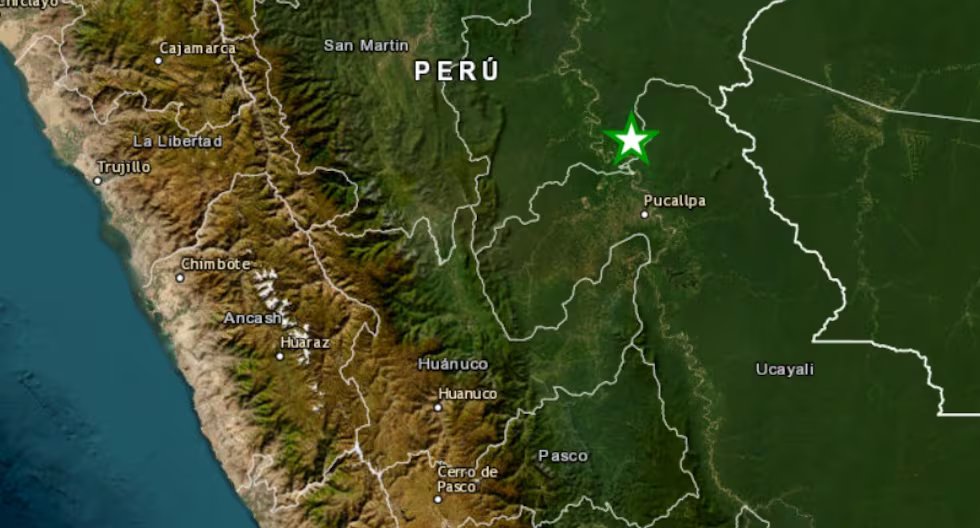

A 4.0 magnitude earthquake was recorded on the night of this Sunday, July 12, in the region Ucayalias reported by the Geophysical Institute of Peru (IGP).
According to the report of that entity, the earthquake occurred at 8:50 pm and its epicenter was located 52 kilometers southeast of ContamanaUcayali – Loreto.
SEISMIC REPORT:
IGP/CENSIS/RS 2026-0436
Local Date and Time: 07/12/2026,20:50:10
Magnitude: 4.0
Depth: 152 km
Latitude: -7.70
Length: -74.70
Reference: 52 km SE of Contamana, Ucayali – Loretohttps://t.co/vlAHh6fRiP— National Seismological Center (@Sismos_Peru_IGP) July 13, 2026
The organization also indicated that the earthquake had a depth of 152 kilometers, so it could be perceived slightly by the population.
Peru is part of the so-called Pacific Ring of Fire, a region characterized by high seismic activity that exposes the country to earthquakes of different magnitudes. Given this, the Civil Defense Institute (Indeci) recommends the following preventive measures organized in three stages;
Identify and secure those decorative elements fixed to walls or ceilings that could come loose and cause injuries, such as pictures, mirrors and lamps.
Actively participate in drills organized by the State with the objective of accurately recognizing exit routes and internal and external security zones.
READ MORE: Tremor in Peru: 5.2 magnitude earthquake shakes Huarmey after previous earthquake in Lurín
Assemble a basic emergency backpack that includes bottled water, non-perishable food, warm clothing, flashlight, battery-powered radio, whistle, and a first aid kit. This luggage must be within reach and easy to access upon departure.
Remain calm to facilitate orderly movement and assist people who require support. Avoid the use of elevators in multifamily buildings or offices under any circumstances.
READ MORE: 4.3 magnitude earthquake was felt in Lima tonight
Move away from glass or window components and locate yourself in previously determined safe areas in the structure.
If you are on public roads, look for open spaces away from buildings, lighting poles, trees and electrical cable runs.
Check structural conditions before re-entering. If feasible, interrupt the flows of electricity, water and natural gas services to mitigate risks of short circuits, floods or deflagrations.