Friday, July 10, 2026
    The GeoStrategic Consensus
    No Result
    View All Result
    • Login
    • HOME
    • AMERICAS
      • Argentina
      • Brazil
      • Canada
      • Chile
      • Colombia
      • Costa Rica
      • Cuba
      • Dominican Republic
      • Ecuador
      • El Salvador
      • Greenland
      • Guatemala
      • Honduras
      • Mexico
      • Nicaragua
      • Panama
      • Paraguay
      • Peru
      • United States
      • Uruguay
      • Venezuela
    • ASIA-PACIFIC
      • Australia
      • Brunei Darussalam
      • Cambodia
      • China
      • Federated States of Micronesia
      • Fiji
      • Indonesia
      • Japan
      • Kiribati
      • Laos
      • Malaysia
      • Marshall Islands
      • Mongolia
      • Myanmar
      • Nauru
      • New Zealand
      • North Korea
      • Palau
      • Papua New Guinea
      • Philippines
      • Samoa
      • Singapore
      • Solomon Islands
      • South Korea
      • Taiwan
      • Thailand
      • Timor-Leste
      • Tonga
      • Tuvalu
      • Vanuatu
      • Vietnam
    • CARICOM
      • CARICOM – Non-English
        • Haiti
        • Suriname
      • CARICOM Associates
        • Anguilla
        • Bermuda
        • British-Virgin-Islands
        • Cayman-Islands
        • Curacao
        • Turks-and-Caicos
      • CARICOM English
        • Antigua and Barbuda
        • Barbados
        • Belize
        • Dominica
        • Grenada
        • Guyana
        • Jamaica
        • Montserrat
        • Saint Kitts and Nevis
        • Saint Lucia
        • Saint Vincent and the Grenadines
        • The Bahamas
        • Trinidad and Tobago
    • EURASIA
      • Armenia
      • Azerbaijan
      • Balarus
      • Georgia
      • Kazakhstan
      • Kyrgyzstan
      • Moldova
      • Russia
      • Tajikistan
      • Turkmenistan
      • Ukraine
      • Uzbekistan
    • EUROPE
      • Albania
      • Andorra
      • Austria
      • Bosnia and Herzegovina
      • Bulgaria
      • Croatia
      • Cyprus
      • Czech Republic
      • Denmark
      • Estonia
      • Finland
      • France
      • Germany
      • Greece
      • Holy See
      • Hungary
      • Iceland
      • Ireland
      • Italy
      • Kosovo
      • Latvia
      • Liechtenstein
      • Lithuania
      • Luxembourg
      • Malta
      • Monaco
      • Montenegro
      • Netherlands
      • North Macedonia
      • Norway
      • Poland
      • Portugal
      • Romania
      • San Marino
      • Serbia
      • Slovakia
      • Slovenia
      • Spain
      • Sweden
      • Switzerland
      • United Kingdom
    • MIDDLE EAST AND NORTH AFRICA
      • Algeria
      • Bahrain
      • Egypt
      • Iran
      • Iraq
      • Israel
      • Jordan
      • Kuwait
      • Lebanon
      • Lybia
      • Morocco
      • Oman
      • Palestinian Territories
      • Qatar
      • Saudi Arabia
      • Syria
      • Tunisia
      • Turkey
      • United Arab Emirates
      • Western Sahara
      • Yemen
    • SOUTH ASIA
      • Afghanistan
      • Bangladesh
      • Bhutan
      • India
      • Maldives
      • Nepal
      • Pakistan
      • Sri Lanka
    • SUB-SAHARAN AFRICA
      • Angola
      • Benin
      • Botswana
      • Burkina Faso
      • Burundi
      • Cabo Verde
      • Cameroon
      • Central African Republic
      • Chad
      • Comoros
      • Cote d’Ivoire
      • Democratic Republic of the Congo
      • Djibouti
      • Equatorial Guinea
      • Eritrea
      • Eswatini
      • Ethiopia
      • Gabon
      • Gambia
      • Ghana
      • Guinea
      • Guinea Bissau
      • Kenya
      • Lesotho
      • Liberia
      • Madagascar
      • Malawi
      • Mali
      • Mauritania
      • Mauritius
      • Mozambique
      • Namibia
      • Niger
      • Nigeria
      • Republic of the Congo
      • Rwanda
      • Sao Tome and Principe
      • Senegal
      • Seychelles
      • Sierra Leone
      • Somalia
      • South Africa
      • South Sudan
      • Sudan
      • Tanzania
      • Togo
      • Uganda
      • Zambia
      • Zimbabwe
    • HOME
    • AMERICAS
      • Argentina
      • Brazil
      • Canada
      • Chile
      • Colombia
      • Costa Rica
      • Cuba
      • Dominican Republic
      • Ecuador
      • El Salvador
      • Greenland
      • Guatemala
      • Honduras
      • Mexico
      • Nicaragua
      • Panama
      • Paraguay
      • Peru
      • United States
      • Uruguay
      • Venezuela
    • ASIA-PACIFIC
      • Australia
      • Brunei Darussalam
      • Cambodia
      • China
      • Federated States of Micronesia
      • Fiji
      • Indonesia
      • Japan
      • Kiribati
      • Laos
      • Malaysia
      • Marshall Islands
      • Mongolia
      • Myanmar
      • Nauru
      • New Zealand
      • North Korea
      • Palau
      • Papua New Guinea
      • Philippines
      • Samoa
      • Singapore
      • Solomon Islands
      • South Korea
      • Taiwan
      • Thailand
      • Timor-Leste
      • Tonga
      • Tuvalu
      • Vanuatu
      • Vietnam
    • CARICOM
      • CARICOM – Non-English
        • Haiti
        • Suriname
      • CARICOM Associates
        • Anguilla
        • Bermuda
        • British-Virgin-Islands
        • Cayman-Islands
        • Curacao
        • Turks-and-Caicos
      • CARICOM English
        • Antigua and Barbuda
        • Barbados
        • Belize
        • Dominica
        • Grenada
        • Guyana
        • Jamaica
        • Montserrat
        • Saint Kitts and Nevis
        • Saint Lucia
        • Saint Vincent and the Grenadines
        • The Bahamas
        • Trinidad and Tobago
    • EURASIA
      • Armenia
      • Azerbaijan
      • Balarus
      • Georgia
      • Kazakhstan
      • Kyrgyzstan
      • Moldova
      • Russia
      • Tajikistan
      • Turkmenistan
      • Ukraine
      • Uzbekistan
    • EUROPE
      • Albania
      • Andorra
      • Austria
      • Bosnia and Herzegovina
      • Bulgaria
      • Croatia
      • Cyprus
      • Czech Republic
      • Denmark
      • Estonia
      • Finland
      • France
      • Germany
      • Greece
      • Holy See
      • Hungary
      • Iceland
      • Ireland
      • Italy
      • Kosovo
      • Latvia
      • Liechtenstein
      • Lithuania
      • Luxembourg
      • Malta
      • Monaco
      • Montenegro
      • Netherlands
      • North Macedonia
      • Norway
      • Poland
      • Portugal
      • Romania
      • San Marino
      • Serbia
      • Slovakia
      • Slovenia
      • Spain
      • Sweden
      • Switzerland
      • United Kingdom
    • MIDDLE EAST AND NORTH AFRICA
      • Algeria
      • Bahrain
      • Egypt
      • Iran
      • Iraq
      • Israel
      • Jordan
      • Kuwait
      • Lebanon
      • Lybia
      • Morocco
      • Oman
      • Palestinian Territories
      • Qatar
      • Saudi Arabia
      • Syria
      • Tunisia
      • Turkey
      • United Arab Emirates
      • Western Sahara
      • Yemen
    • SOUTH ASIA
      • Afghanistan
      • Bangladesh
      • Bhutan
      • India
      • Maldives
      • Nepal
      • Pakistan
      • Sri Lanka
    • SUB-SAHARAN AFRICA
      • Angola
      • Benin
      • Botswana
      • Burkina Faso
      • Burundi
      • Cabo Verde
      • Cameroon
      • Central African Republic
      • Chad
      • Comoros
      • Cote d’Ivoire
      • Democratic Republic of the Congo
      • Djibouti
      • Equatorial Guinea
      • Eritrea
      • Eswatini
      • Ethiopia
      • Gabon
      • Gambia
      • Ghana
      • Guinea
      • Guinea Bissau
      • Kenya
      • Lesotho
      • Liberia
      • Madagascar
      • Malawi
      • Mali
      • Mauritania
      • Mauritius
      • Mozambique
      • Namibia
      • Niger
      • Nigeria
      • Republic of the Congo
      • Rwanda
      • Sao Tome and Principe
      • Senegal
      • Seychelles
      • Sierra Leone
      • Somalia
      • South Africa
      • South Sudan
      • Sudan
      • Tanzania
      • Togo
      • Uganda
      • Zambia
      • Zimbabwe
    No Result
    View All Result
    Agentially
    No Result
    View All Result
    Home ASIA-PACIFIC Nauru

    How Beijing’s nuclear gambit gave Australia a surprise advantage

    The Analyst by The Analyst
    July 10, 2026
    in Nauru
    How Beijing’s nuclear gambit gave Australia a surprise advantage


    You have reached your maximum number of saved items.

    READ ALSO

    Nauru Airlines ends Pohnpei and Koror service – ch-aviation

    Building the Foundations for Nauru’s Next Chapter

    Remove items from your saved list to add more.

    The Chinese tracking ship Yuan Wang 5 aroused no particular attention when it sailed into the Fijian capital of Suva last Friday. Why would it? Vessels from China’s People’s Liberation Army navy visited Fiji 20 times between the late 1990s and early 2020s, more than anywhere else in Oceania, according to a 2023 report in The Diplomat, a foreign affairs magazine. Chinese tracking ships can make up to four visits to Fiji in a single year.

    Yuan Wang 5’s latest visit, however, proved to be anything but standard. The ship arrived three days before Prime Minister Anthony Albanese landed in Suva to meet his Fijian counterpart, Sitiveni Rabuka, and lingered at port as the leaders sipped kava and signed a historic new military alliance.

    It remained there just hours later as China fired a nuclear-capable intercontinental ballistic missile, fitted with a dummy warhead, thousands of kilometres across the Pacific, landing near the tiny island states of Tuvalu and Nauru. Two other Chinese tracking ships, Yuan Wang 3 and Yuan Wang 6, were stationed near the Federated States of Micronesia.

    Military experts have little doubt that the vessels, which are fitted with sophisticated surveillance equipment, were hoovering up information about the missile launch and feeding it back to Beijing. “The significance of that vessel being berthed in Fiji’s capital in the same week Fiji signed its first defence alliance with Australia won’t be lost on anyone,” says Mark Douglas, from maritime intelligence company Starboard.

    The Yuan Wang 5 docked in Hambantota, Sri Lanka. It has visited Fiji 20 times and is fitted with sophisticated surveillance equipment.
    The Yuan Wang 5 docked in Hambantota, Sri Lanka. It has visited Fiji 20 times and is fitted with sophisticated surveillance equipment.AP

    Beijing described the missile launch as part of its “routine annual military training program”, an almost comical understatement of its true significance. Monday’s test marked the first time that the Chinese military had launched a ballistic missile from a submarine into international waters. Its most recent ballistic missile launch into international waters in 2024, its first since 1980, was fired from land on Hainan Island.

    Such tests require weeks and probably months of planning, meaning it was not a rapid response to the signing of the Fiji-Australia treaty. However, Graham Fletcher, who served as Australia’s ambassador to China from late 2019 to early 2024, says he believes it would have to be a “brilliant coincidence” for the missile launch to have so precisely paired with Albanese’s visit to Fiji.

    Beijing was sending a “deliberate signal” to the Pacific with the test, the veteran diplomat and China expert says. The message: “You can play around and sign bits of paper, but we have the raw capability. They are saying, ‘We can do it, and we will do it.’” Others, such as former senior US State Department official Frank Rose, speculated that the test was intended to put on a show of force ahead of this week’s NATO summit in Turkey and to coincide with joint naval exercises with Russia.

    Either way, the launch was a forceful assertion of power over the largest ocean on earth, an area spanning more than 165 million square kilometres.

    Sam Roggeveen, head of the Lowy Institute’s international security program, says it is clear that the missile launch was a technical success. But there is still much we do not know about the test, including exactly what type of missile China test-fired. There has been widespread speculation it was the new JL-3 missile, but other experts believe it was the older JL-2 missile, which has a shorter range. As for the striking timing of the test, Roggeveen says: “When these things happen, we overdo the subtext and underdo the text. The text is that when you have nuclear weapons, you need to make sure they work and that they are reliable.”

    Rather than fixate on the timing of the test, Roggeveen urges Australians not to miss the fundamental point: our biggest trading partner is also a rapidly advancing nuclear superpower. China has built up a stockpile of about 600 nuclear warheads, and may have amassed about 1500 operational nuclear warheads by 2035 – about the same as Russia and the United States. David Johnston, the outgoing head of the Australian Defence Force, this week expressed his concern that China’s dramatic military modernisation is occurring without enough transparency of intent or reassurance to nations such as Australia.

    The crucial fact of this week’s test was that it was fired from a nuclear-powered submarine, rather than from land. Nuclear-powered submarines are stealthy and can travel vast distances without refuelling. This gives China the capacity to fire nuclear warheads far from its shores and respond if its land-based nuclear arsenal is attacked (a so-called second strike capability).

    Roggeveen, who last month published a detailed study of China’s military capabilities, says: “China is at the beginning of a nuclear-powered submarine building boom. Soon they will be producing more nuclear-powered submarines than the US.”

    This means that this week’s test is just a preview of what is to come. “We should regard this as the beginning of a trend towards more and more frequent testing of such weapons because the arsenal is going to grow,” Roggeveen says.

    The implications for the Indo-Pacific are profound, especially when one considers the terrifying possibility of a conflict erupting between the US and China, perhaps over the self-governing island of Taiwan. For Australia, however, this week’s events have opened up diplomatic opportunities as it competes ferociously with China for influence in the region.


    Far from accepting the missile launch as routine, many Pacific leaders responded to China’s behaviour with alarm and anger. Albanese, who prides himself on stabilising relations with Beijing since Labor’s return to office in 2022, shrugged off his usual caution to label the launch “a provocative act by China, which does destabilise the region”. Solomon Islands Prime Minister Matthew Wale said: “China is a good friend of Solomon Islands, but this is not something a friend does. This is not good in our region.” Tuvalu’s prime minister, Feleti Teo, expressed “grave and serious concern and disappointment”, while Palau’s president, Surangel Whipps Jr, said he was “shocked and deeply concerned about this kind of behaviour”.

    Prime Minister Anthony Albanese drinks kava with his Fijian counterpart, Sitiveni Rabuka, at a welcome ceremony in Suva.
    Prime Minister Anthony Albanese drinks kava with his Fijian counterpart, Sitiveni Rabuka, at a welcome ceremony in Suva.AAP

    Tongan Prime Minister Lord Fatafehi Fakafānua tells this masthead that “any escalation to militarise the ocean is something that we join the rest of the Pacific family in not supporting. That goes for all superpowers”. Asked whether the missile launch damaged China’s image in the region, he said: “I think it’s created tension in the Pacific, and some of my colleagues in the Pacific have been quite vocal about that. So let’s just say it’s caused a bit of a stir.”

    Fakafānua describes the timing of the test as “interesting”, noting not only did it coincide with the signing of the Fiji-Australia Ocean of Peace Alliance, but Tonga’s ratification of the Comprehensive Nuclear-Test-Ban Treaty. The Treaty of Rarotonga already formalises the South Pacific as a nuclear weapon-free zone.

    China’s defenders point out that the US regularly test-fires long-range nuclear-capable missiles in the Pacific, including an intercontinental ballistic missile test launch last September that travelled more than 4000 kilometres from California to a designated test range in the Marshall Islands. China’s test, however, stood out for its short warning time: only two hours rather than the minimum 24 hours’ notice specified by The Hague Code of Conduct against ballistic missile proliferation. Not all Pacific nations were notified of the test.

    Foreign Minister Penny Wong, who described this week’s launch as “destabilising”, rejects any equivalence between the two superpowers’ behaviour. “Previous US testing, particularly near the Compact States, has been agreed with or telegraphed to them, and obviously the United States has a particular relationship with those nations,” she tells this masthead. “There is a distinction with China’s action this week. This was quite a different type of political act.” (The Compact States are the Federated States of Micronesia, the Republic of the Marshall Islands and the Republic of Palau, which all have special agreements with the United States.)

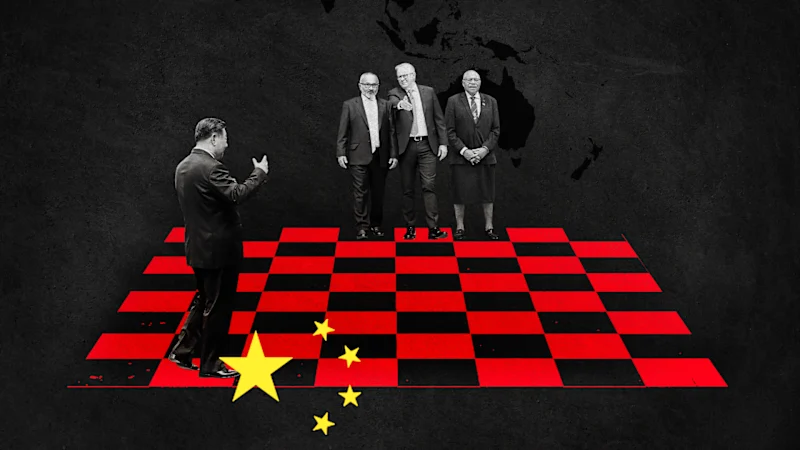
    While most Pacific leaders would prefer no ballistic weapons testing at all, they certainly do not want to see more of it. “China’s missile test is an own goal for them in the Pacific,” says Lachlan Strahan, Australia’s former high commissioner to Solomon Islands . “They have done what Pacific Island nations most object to. They are small, but they are proud, and they take their sovereignty seriously. They hate being treated like pawns in a big political game.”

    Anthony Albanese in Newcastle, with his Fijian counterpart. Australia is making the most of its sporting and other ties to the Pacific to counteract the strategic threat from China.
    Anthony Albanese in Newcastle, with his Fijian counterpart. Australia is making the most of its sporting and other ties to the Pacific to counteract the strategic threat from China.Getty Images

    While the missile test dominated this week’s headlines, the Albanese government believes the two treaties struck with Fiji this week, including the new military alliance, will stand the test of time as major foreign policy achievements. They come on top of last year’s Pukpuk Treaty with Papua New Guinea, and treaties with Tuvalu, Nauru and (as of last week) Vanuatu. New treaties with Tonga and Solomon Islands are in the works and could be completed by the end of the year. New Zealand has already signalled its interest in joining the Ocean of Peace Alliance with Australia and Fiji. While the content of the various agreements is wide-ranging, the pacts are undergirded by a core Australian objective: preventing China from establishing a permanent security presence in the region and locking in Australia as the region’s partner of choice.

    Editor’s pick

    Prime Minister of Papua New Guinea James Marape and Prime Minister of Australia Anthony Albanese.

    These goals seemed far from assured when Labor returned to power in 2022, just weeks after Solomon Islands signed a sweeping security pact with China. Wong, who described that pact as “the worst foreign policy blunder in the Pacific by an Australian government since World War II”, embarked on a Pacific blitz after taking on the job, including visits to Fiji and the Solomons, and has returned regularly since. Albanese has attended every Pacific Islands Forum meeting since becoming prime minister and walked the Kokoda Track with his PNG counterpart, James Marape.

    “Labor was really clear that the Pacific was a priority for us, and we had to change how we engage,” Wong says. “We needed to engage with respect, we needed to listen, we needed to act on specific priorities. You’ve seen the result of this in a number of transformational breakthroughs in the Pacific, including those achieved this week.”

    Strahan, who represented Australia in the Solomons when the 2022 deal with China was struck, credits the government for “deliberately and steadily” amassing a web of agreements in the Pacific, saying that many “would have been unimaginable not long ago”.

    Strahan, who last year published a memoir, The Curious Diplomat, about his foreign service career, describes China’s missile test as a mistake that will drive Pacific nations closer to Australia. “If they thought they could cower Pacific nations by lobbing a nuclear-capable missile into the South Pacific, they are misreading it,” he says.

    Lowy Institute Pacific Islands program director Oliver Nobetau agrees that the test has provided “diplomatic ammo” to Australia as it seeks to entrench its influence in the region. “They can tell Pacific countries, ‘This is exactly what we are trying to avoid.’”

    Related Article

    Anthony Albanese, a South Sydney Rabbitohs fan, has used the NRL as a diplomatic lever in the Pacific.

    Still, what Wong has described as the “permanent contest” with China for influence in the Pacific continues. Fletcher, Australia’s former ambassador in Beijing, says China wants to become a hegemonic power and have military facilities scattered around the world within decades as the US does now. “We’re breaking new policy ground in this space,” he says, “but we have to stay on our toes.”

    While Beijing is an economic and military superpower, Wong says: “We can offer proximity, culture, people, access to our labour market. We have the cultural ties, whether that’s NRL or First Nations connections. You’ve got to always keep focusing on the things where we have a comparative advantage.”

    Nobetau says that as Australia continues to strike more agreements, it must focus doggedly on implementation rather than claiming victory and moving on. For example, the PNG-Australia military alliance came into force this week and will require huge work to integrate the two defence forces, including the Papua New Guineans who will serve with the ADF. “The expectations have been set very high with these partnerships, and it is up to Australia to deliver,” Nobetau says. “They can take a breath and celebrate their success, but only for a moment. Then they need to get back to work.”

    Start the day with a summary of the day’s most important and interesting stories, analysis and insights. Sign up for our Morning Edition newsletter.
    Source link

    Related Posts

    Nauru Airlines ends Pohnpei and Koror service – ch-aviation
    Nauru

    Nauru Airlines ends Pohnpei and Koror service – ch-aviation

    July 10, 2026
    Building the Foundations for Nauru’s Next Chapter
    Nauru

    Building the Foundations for Nauru’s Next Chapter

    July 9, 2026
    The 4 Countries With the Highest Obesity Rates – and 3 With the Lowest
    Nauru

    The 4 Countries With the Highest Obesity Rates – and 3 With the Lowest

    July 9, 2026
    Will Australia’s diplomatic streak last?
    Nauru

    Will Australia’s diplomatic streak last?

    July 9, 2026
    Nauru

    Refugee advocates hold placards as they participate in a protest in Sydney, Australia …

    July 9, 2026
    Nauru

    Applications open for U.S. Embassy Suva Annual Program Statement

    July 9, 2026
    Next Post
    Bayview Hospital appoints Marilyn Patrick as hospital administrator

    Bayview Hospital appoints Marilyn Patrick as hospital administrator

    POPULAR NEWS

    Hungary…the best team in history – Al-Shorouk Online

    Hungary…the best team in history – Al-Shorouk Online

    July 6, 2026
    Opinion | Parental Consent in the Smartphone Age

    Opinion | Parental Consent in the Smartphone Age

    July 6, 2026
    Football: Soccer-Ten-man England survive Mexico comeback to reach quarter-finals

    Football: Soccer-Ten-man England survive Mexico comeback to reach quarter-finals

    July 6, 2026
    José María Balcázar: They reveal that the president’s trips within the country have cost the State more than a million soles in recent times

    José María Balcázar: They reveal that the president’s trips within the country have cost the State more than a million soles in recent times

    July 6, 2026
    George Clooney’s career to be celebrated at Venice Film Festival

    George Clooney’s career to be celebrated at Venice Film Festival

    July 8, 2026

    EDITOR'S PICK

    Veteran Pilot Killed in Crop-Duster Crash Near Spanish Lookout

    Veteran Pilot Killed in Crop-Duster Crash Near Spanish Lookout

    July 7, 2026
    DOMLEC investigating island-wide power outage

    DOMLEC investigating island-wide power outage

    July 10, 2026
    Migration: A Cuban, wounded by gunshot in Tapachula, Mexico

    Migration: A Cuban, wounded by gunshot in Tapachula, Mexico

    July 7, 2026
    How to turn your phone into a personal health dashboard

    How to turn your phone into a personal health dashboard

    July 10, 2026

    Recent Posts

    • Indian External Affairs Minister visits Oman today
    • A traditional apple flower parade was held in Maidan Wardago
    • Oldest quasars ever found deepen ‘perplexing’ space mystery
    • The 2 messages that authorities are investigating to clarify the death of a Dutch citizen who owns hotels in Santa Marta

      © 2026 Agentially - Navigating shifting sovereignties and global risk .

      Welcome Back!

      Login to your account below

      Forgotten Password?

      Retrieve your password

      Please enter your username or email address to reset your password.

      Log In
      No Result
      View All Result
      • HOME
      • AMERICAS
        • Argentina
        • Brazil
        • Canada
        • Chile
        • Colombia
        • Costa Rica
        • Cuba
        • Dominican Republic
        • Ecuador
        • El Salvador
        • Greenland
        • Guatemala
        • Honduras
        • Mexico
        • Nicaragua
        • Panama
        • Paraguay
        • Peru
        • United States
        • Uruguay
        • Venezuela
      • ASIA-PACIFIC
        • Australia
        • Brunei Darussalam
        • Cambodia
        • China
        • Federated States of Micronesia
        • Fiji
        • Indonesia
        • Japan
        • Kiribati
        • Laos
        • Malaysia
        • Marshall Islands
        • Mongolia
        • Myanmar
        • Nauru
        • New Zealand
        • North Korea
        • Palau
        • Papua New Guinea
        • Philippines
        • Samoa
        • Singapore
        • Solomon Islands
        • South Korea
        • Taiwan
        • Thailand
        • Timor-Leste
        • Tonga
        • Tuvalu
        • Vanuatu
        • Vietnam
      • CARICOM
        • CARICOM – Non-English
          • Haiti
          • Suriname
        • CARICOM Associates
          • Anguilla
          • Bermuda
          • British-Virgin-Islands
          • Cayman-Islands
          • Curacao
          • Turks-and-Caicos
        • CARICOM English
          • Antigua and Barbuda
          • Barbados
          • Belize
          • Dominica
          • Grenada
          • Guyana
          • Jamaica
          • Montserrat
          • Saint Kitts and Nevis
          • Saint Lucia
          • Saint Vincent and the Grenadines
          • The Bahamas
          • Trinidad and Tobago
      • EURASIA
        • Armenia
        • Azerbaijan
        • Balarus
        • Georgia
        • Kazakhstan
        • Kyrgyzstan
        • Moldova
        • Russia
        • Tajikistan
        • Turkmenistan
        • Ukraine
        • Uzbekistan
      • EUROPE
        • Albania
        • Andorra
        • Austria
        • Bosnia and Herzegovina
        • Bulgaria
        • Croatia
        • Cyprus
        • Czech Republic
        • Denmark
        • Estonia
        • Finland
        • France
        • Germany
        • Greece
        • Holy See
        • Hungary
        • Iceland
        • Ireland
        • Italy
        • Kosovo
        • Latvia
        • Liechtenstein
        • Lithuania
        • Luxembourg
        • Malta
        • Monaco
        • Montenegro
        • Netherlands
        • North Macedonia
        • Norway
        • Poland
        • Portugal
        • Romania
        • San Marino
        • Serbia
        • Slovakia
        • Slovenia
        • Spain
        • Sweden
        • Switzerland
        • United Kingdom
      • MIDDLE EAST AND NORTH AFRICA
        • Algeria
        • Bahrain
        • Egypt
        • Iran
        • Iraq
        • Israel
        • Jordan
        • Kuwait
        • Lebanon
        • Lybia
        • Morocco
        • Oman
        • Palestinian Territories
        • Qatar
        • Saudi Arabia
        • Syria
        • Tunisia
        • Turkey
        • United Arab Emirates
        • Western Sahara
        • Yemen
      • SOUTH ASIA
        • Afghanistan
        • Bangladesh
        • Bhutan
        • India
        • Maldives
        • Nepal
        • Pakistan
        • Sri Lanka
      • SUB-SAHARAN AFRICA
        • Angola
        • Benin
        • Botswana
        • Burkina Faso
        • Burundi
        • Cabo Verde
        • Cameroon
        • Central African Republic
        • Chad
        • Comoros
        • Cote d’Ivoire
        • Democratic Republic of the Congo
        • Djibouti
        • Equatorial Guinea
        • Eritrea
        • Eswatini
        • Ethiopia
        • Gabon
        • Gambia
        • Ghana
        • Guinea
        • Guinea Bissau
        • Kenya
        • Lesotho
        • Liberia
        • Madagascar
        • Malawi
        • Mali
        • Mauritania
        • Mauritius
        • Mozambique
        • Namibia
        • Niger
        • Nigeria
        • Republic of the Congo
        • Rwanda
        • Sao Tome and Principe
        • Senegal
        • Seychelles
        • Sierra Leone
        • Somalia
        • South Africa
        • South Sudan
        • Sudan
        • Tanzania
        • Togo
        • Uganda
        • Zambia
        • Zimbabwe

      © 2026 Agentially - Navigating shifting sovereignties and global risk .

      This website uses cookies. By continuing to use this website you are giving consent to cookies being used. Visit our Privacy and Cookie Policy.