MANILA: The Philippines is moving into the final stage of its effort to eliminate ozone-harming cooling chemicals, as the Department of Environment and Natural Resources (DENR) aims to completely phase out hydrochlorofluorocarbons (HCFCs) by 2030, Philippine News Agency (PNA) reported.
At the launch of the HCFC Phase-out Management Plan Stage 3 in Quezon City on Tuesday (July 7), the DENR-Environmental Management Bureau (EMB) said that this is the last major step in fulfilling the country’s commitment under the Montreal Protocol.
“Our mandate under the Montreal Protocol is clear. This is to gradually reduce the country’s consumption of HCFCs, or hydrochlorofluorocarbons, and to achieve their complete phase-out,” DENR-EMB Director Michael Drake Matias said, adding that the transition is designed to protect both the environment and the economy.
“We are here to ensure an environmental transition that does not compromise economic viability or vitality, but instead supports and strengthens the very industries that are critical to the country’s development while promoting environmentally sustainable technologies,” he added.
The Montreal Protocol on Substances that Deplete the Ozone Layer is a multilateral environmental agreement (MEA) created in 1987, in which member countries, including the Philippines, committed to gradually reduce and eventually eliminate the production and consumption of ozone-depleting substances (ODS) following a phase-out schedule for different chemicals.
The DENR said that it is considered the most successful international agreement to date because all 197 countries of the world have ratified the Protocol.
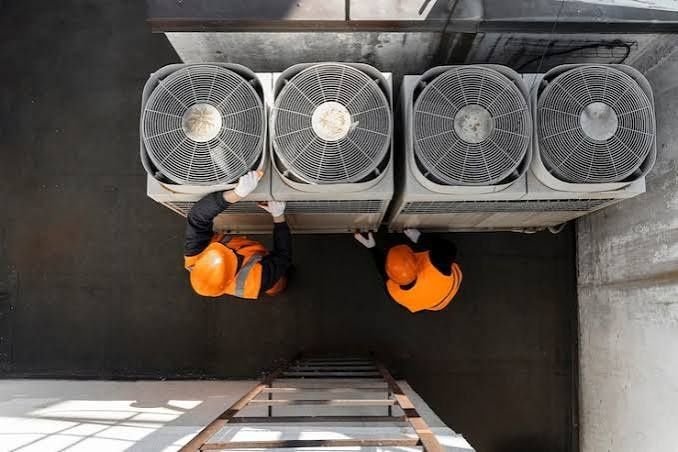
HCFCs are chemicals commonly used in air conditioners, refrigerators, fire suppression systems and some industrial applications.
Despite having replaced older ozone-depleting substances, HCFCs still damage the ozone layer and contribute to climate change, prompting countries to gradually eliminate their use.
Matias said that included in the process is helping industries transition to cleaner and more energy-efficient technologies.
He said that the final leg of the phase-out will focus heavily on strengthening the skills of refrigeration and air-conditioning technicians, who play a key role in preventing harmful refrigerants from escaping into the atmosphere.
“Part of the project would be providing assistance to them, technical capabilities, and informing them of the effects of these substances on the ozone layer. A policy will have to be evaluated as well to make it easy for the industry to have these substances captured so that they will not be released into the environment,” Matias said.
He said the country will encourage industries to adopt alternatives with lower environmental impacts, such as hydrocarbons, ammonia and carbon dioxide, as replacements for HCFCs.
“Based on science and based on studies and observations, the ozone layer is healing. And we need to continue doing this for future generations,” Matias said. – Bernama-PNA