Senior Reporter
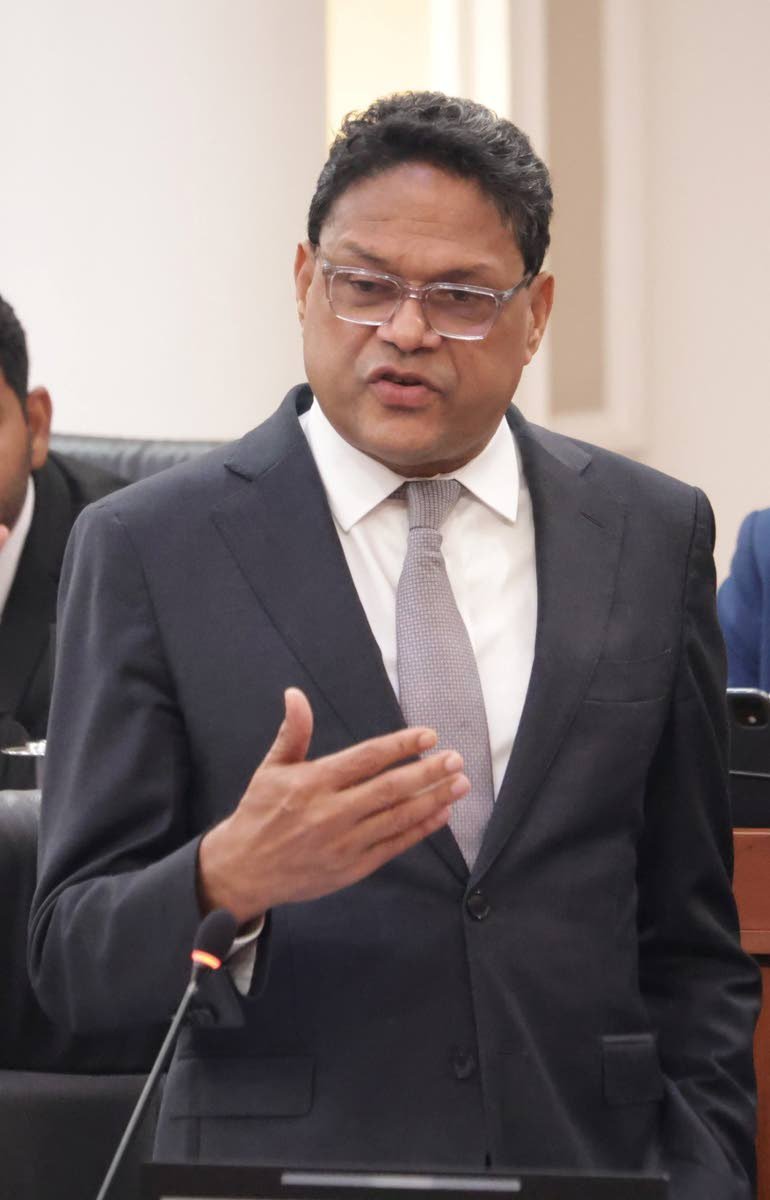
Minister of Justice Devesh Maharaj has dismissed social media claims that a close relative in the legal fraternity is in possession of a diplomatic passport.
Responding to questions from Guardian Media on the allegations yesterday, Maharaj categorically denied the allegation, replying simply, “Untrue.”
The allegation had surfaced on social media in the day, amid heightened public scrutiny over the Government’s ongoing review of diplomatic passports.
Last week, Prime Minister Kamla Persad-Bissessar announced a sweeping review of the issuance of diplomatic passports, revealing that former prime ministers Dr Keith Rowley and Stuart Young would be affected by the move.
The Prime Minister said the review was a corrective measure rather than a punitive one and was prompted after Trinidad and Tobago’s international partners expressed concerns over the issuance and possible abuse of diplomatic passports.
According to Persad-Bissessar, an investigation found that 985 people were in possession of diplomatic passports despite many not meeting the eligibility criteria.
She explained that diplomatic passports are intended for individuals representing Trinidad and Tobago at the highest levels of the State and indicated that the review would result in some holders receiving official passports, others reverting to ordinary passports, while those who continue to qualify would retain their diplomatic passports.
“Diplomatic passports signify that the holder represents the State internationally,” she said.
The PM added, “MP Young will therefore receive an official passport instead of a diplomatic passport. Some other persons on the list will also receive official passports instead of diplomatic passports, some will be removed entirely and given ordinary passports and a few will retain their diplomatic passports.”
Young has already confirmed that he was instructed to return his diplomatic passport.
Meanwhile, former Police Commissioner Gary Griffith says the Government’s review of diplomatic passports could be resolved with a simple administrative change.
Commenting on the issue yesterday, Griffith argued that the matter could be addressed by ensuring diplomatic passports automatically expire at the end of an office holder’s term.
“The diplomatic passport issue is easy to solve. Just set the expiry date, when issued, to the approximate end of the term in office for office holders and their families. This avoids the hassle of having to track people down when they leave office. Once it expires, it becomes useless,” Griffith said.
He said he was of the strong view that former office holders should not continue using diplomatic passports after leaving public office.
“You should not be using a passport to enter or leave the country if it states ‘the bearer is a minister, etc.’ when the holder no longer holds that position. If they return to office, the passport can simply be renewed,” he stated.
Griffith said the current system creates unnecessary complications because diplomatic passports are often issued with a validity period that exceeds the holder’s time in office.
“Unfortunately, visas are placed on these passports, and the problem exists because Immigration puts a 10-year expiry date on them when the actual term in office for office holders is five years or less,” he said.