The water tanks in Vienna are “currently well filled”, but the extreme weather situation requires “forward-looking action”.

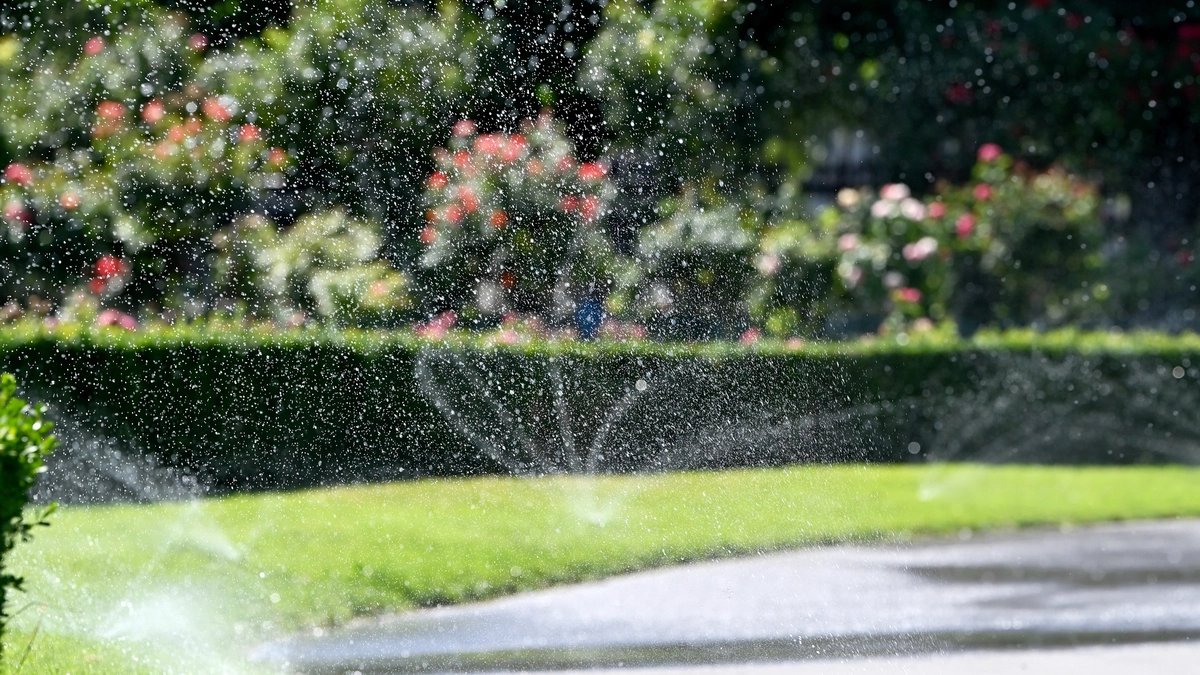
Symbolic image. Clemens Fabry
Add the Press on Google as your preferred news source.
The city of Vienna is reducing water consumption to secure drinking water supplies. The Vienna water tanks are “currently well filled”, but the extreme weather situation requires “forward-looking action”, it was said on Tuesday afternoon. City departments are reducing their water requirements where this is “possible without significant restrictions.” Street cleaning is temporarily carried out without water, and irrigation of green spaces is restricted.
Drinking fountains, pools, water playgrounds and other cooling options remain in operation. It was emphasized that the population as well as companies and institutions can also save drinking water through simple measures. This includes temporarily avoiding filling pools, refraining from washing vehicles and using household appliances as efficiently as possible.
The heat wave has led to exceptionally high water consumption. Since mid-June, temperatures have often been well above 30 degrees Celsius. The daily water requirement is currently up to 580,000 cubic meters, which is around 45 percent higher than the average daily consumption, the city said.
The Vienna water supply basically has sufficient resources to cover the increased demand. However, due to possible heavy rainfall in the source areas in Lower Austria and Styria in the coming days, there may be temporary restrictions on the use of individual sources. During heavy rainfall, springs can become cloudy and have to be temporarily removed from the supply system.
In the long term, Vienna is taking measures to increase security of supply with the “Vienna Water 2050” strategy, it was emphasized. This includes the construction of a new waterworks on the Danube Island, the expansion of water tanks, such as the expansion of the Neusiedl am Steinfeld tank in Lower Austria into the largest closed drinking water tank, as well as the renewal and expansion of the pipe network. (APA)