Tegucigalpa, Honduras
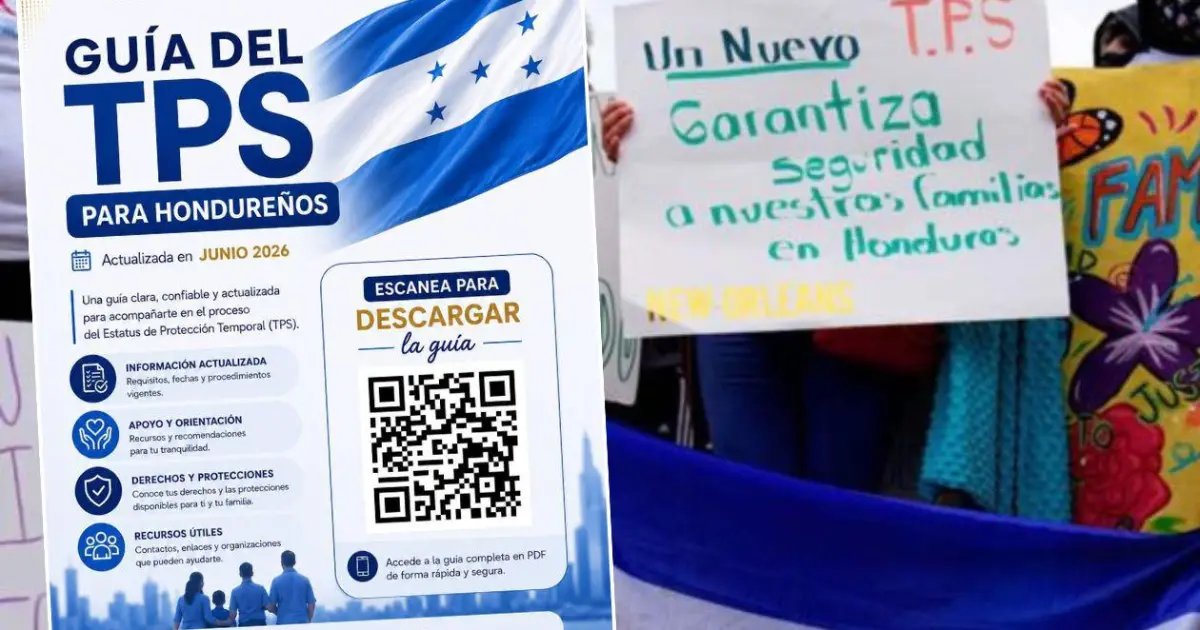
The Ministry of Foreign Affairs and International Cooperation issued an information guide aimed at Hondurans covered by Temporary Protected Status (TPS) in the United States, with a series of recommendations on what they should do and avoid after the ruling of the United States Supreme Court.
The document, prepared by the Honduran Foreign Ministry and the Honduran Embassy in the United States, warns as a key date that the work permit, known as EAD, based on TPS “is no longer valid after February 9.”
The institution recommends that, if the person has another immigration application in process, such as asylum or adjustment of status, they consult with a lawyer which document legally authorizes them to work.
The guide, presented as general information and not as a substitute for legal advice, seeks to guide the Honduran community in seven areas: search for a lawyer, personal documents, other ways to regularize status, work permit, prevention of scams, family plan and steps to follow in case of being detained by immigration authorities.
One of the first calls from the Foreign Ministry is to look for a licensed immigration attorney or an organization recognized by the United States Department of Justice.
It also mentions free or low-cost options like Carecen, ACLU, NDLON, and the National TPS Alliancein addition to recommending that Hondurans go to churches, consulates or call the support line enabled in the United States: (470) 751-9077.
The institution warns, at the same time, that migrants They should not pay “notaries”, “processors” nor people who advertise on social networks promising to fix immigration cases. “If someone tells you ‘I have contact in immigration’ or ‘I assure you of residency in three months’, it is a scam,” points out the document.
Sort documents
Another central recommendation is to keep the Honduran passport valid and save physical and digital copies of work permits, TPS receipts and previous approvals, even if they have already expired. The Foreign Ministry emphasizes that these documents can serve as proof of permanence in the United States for years.
The guide also calls for gathering evidence of residency, such as electricity bills, rental contracts, tax returns, children’s school documents and medical records. If the person changed their address, they must update their address with USCIS using form AR-11, a free process.
In the case of Honduran pensioners, the Foreign Ministry recommends consulting with a certified public accountant to find out how they could receive their pension in Honduras before making a decision to return.
Review other immigration exits
The document insists that TPS is not necessarily the only way to regularize the immigration situation. That is why he recommends consulting with a lawyer about options such as permanent residence if the person is married to a US citizen, family petition for citizen children over 21 years of age, work visa through a company or asylum if there are security reasons that prevent returning to Honduras.
It also mentions the case of people who once entered the United States with “Advance Parole”, a travel authorization that could open other immigration possibilities depending on the case.
However, the Foreign Ministry warns that applications should not be submitted to USCIS without legal review, lie on forms or send paperwork “just to save time” if there is no real basis, because that could harm the case and even activate deportation proceedings.
Work and expired permit
Regarding employment, the guide is clear: The TPS-based work permit is no longer valid after February 9. Therefore, those who have other immigration processes underway must verify if they have a valid document that allows them to work through another means.
The Foreign Ministry recommends speaking with employers, especially in cases of workers who have been in a company for years, since some employers could explore alternatives such as work visas.
However, it warns that you should not continue working with an expired permit, buy fake documents, use fraudulent Social Security numbers or fail to pay taxes. According to the guide, pay stubs and tax compliance can be important for future immigration efforts.
Family plan and rights in the event of arrest
The document also calls on Honduran families to prepare for any emergency. Recommendations include signing a power of attorney, defining in writing who would care for minor US citizen children, allowing a trusted family member to have access to bank accounts, and arranging for the children’s US passport in case they must travel.
The Foreign Ministry warns that one should not sell a house or a vehicle hastily out of fear, nor sign a voluntary exit without having a lawyer review the case. It also asks not to leave the United States without official permission, because the person may not be authorized to return.
In case of being detained or approached by authorities, the guide reminds that migrants have the right to remain silent and ask to speak with a lawyer. He also recommends requesting an order signed by a judge before opening the door to an officer, memorizing the number of the lawyer and a family member, and calling the Honduran consulate.
Among the actions that should be avoided, the Foreign Ministry mentions signing documents without legal advice, lying to officials, running, resisting or giving information about family or friends without documents.
Support lines
The Foreign Ministry enabled several telephone lines and WhatsApp contacts to guide the Honduran community. Telephone numbers include: +504 8804-0477, +504 8804-0572, +504 8804-0853, +504 8804-0936 and +504 8804-1552.
WhatsApp are also available: +504 8804-3509, +504 8804-4168, +504 8804-4354, +504 8804-4388 and +504 8804-1633.
The guide concludes with a call to share information with family members and other Hondurans in the United States to avoid misinformation, fraud and hasty decisions amid immigration uncertainty.