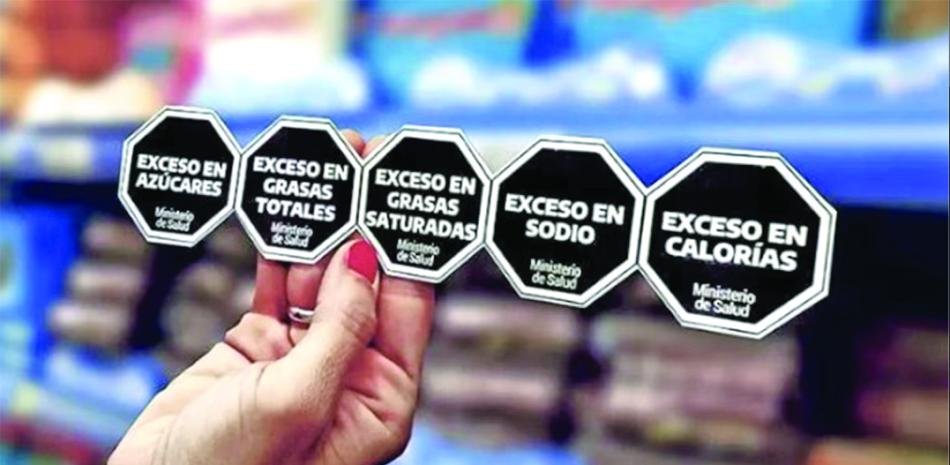
Chile was the first country in the world to implement in 2016 a mandatory system of front seals on food and beverages to warn about nutritional components, a regulation that has been replicated in different countries around the world and continues to be the subject of study and international recognition.
Ten years after its entry into force, the pioneering Law 20,606 -baptized as Food Labeling Law- has managed to change the consumption habits of Chileans, but there are still important challenges in the fight against obesity, according to experts.
When walking through the aisles of any supermarket or food store, Chileans have been encountering three octagonal black labels for a decade that initially caused surprise and that are now part of their day: “High in saturated fat”, “High in sodium” or “High in sugar”.
“Now the population more clearly identifies what is healthy and what is not, consumers go to the supermarket and have more tools to choose what they should eat,” Camila Corvalán, an academic at the Institute of Nutrition and Food Technology (INTA) of the University of Chile, told EFE.
The system has been recognized by the World Health Organization (WHO) as the most effective on a global scale and replicated in countries such as Mexico, Argentina, Colombia or Brazil.
Social support and consumption changes
The law transformed the way nutritional information is communicated and opened a new discussion about the role of public policies in promoting healthy lifestyle habits.
“In these ten years, we have seen a transformation of the consumer behavior, which shows that they value this regulation and is reflected in the fact that the purchase and consumption of products that carry warning seals have decreased,” explained Corvalán.
The data supports their response: 72% of Chileans support the law, according to Activa Research, while the per capita purchase of labeled foods decreased across the board in the period 2016-2022, according to the Food and Agriculture Organization of the United Nations (FAO).
The acquisition of high-calorie products fell by 23.8%, sodium by 36.7%, sugars by 26.7% and saturated fats by 15.7%, according to the agency.
In a small store in Santiago, shopkeeper Juan Carlos Martínez acknowledged to EFE that he has had to find a balance in his product offering, since if a product has many stamps, “people don’t buy it or take another one.”
“If you have more stamps, it is known that they are processed, but it is the responsibility of each person (…) Children obviously do not have that awareness, we adults are the ones who have to help them,” added Leslie, one of her clients.
Overweight and obesity decrease
The law has had a direct impact on the figures for overweight and obesity in Chile, one of the countries with the highest rates in Latin America, only behind Mexico and the Bahamas.
With a prevalence of overweight of 63% in 2025, according to the FAO, the outlook continues to be challenging but not as challenging as a decade ago, when this condition affected 74.2% of Chileans.
The impact has been especially notable on children, since the law also includes restrictions on advertising aimed at minors and the prohibition of the sale of products with seals in educational establishments.
A recent study by the Adolfo Ibáñez University and INTA, published in The Lancet and in which Corvalán participated, concluded that the probability of being overweight was reduced by 2.85% in girls and 2.40% in boys, after comparing data from those who were not exposed to the law with those who began schooling after it came into force.
Childhood obesity, the FAO’s main food security and nutrition policy officer for Latin America, Daniela Godoy, told EFE, “is associated with a greater probability of suffering from the same conditions in adulthood, which increases the risk of diseases such as diabetes and cardiovascular diseases.”
According to the Ministry of Health, 46% of Chilean children between 10 and 14 years old are overweight or obese.
There are more vegetables and cereals missing
Despite its initial opposition, the food industry ended up adapting and modified some products, created new ones and adjusted marketing strategies.
“The law, in some way, forced the industry to reformulate: the foods we currently have in our country have less sugar, sodium, and saturated fat,” Samuel Durán, from the Chilean Nutrition Society, told EFE.
Experts warn, however, that more efforts are needed to promote a healthier diet because “the fact that people choose products without warning seals does not mean that they are consuming more fruits, vegetables or whole grains,” Durán said.
The FAO also added to the warnings and recommended implementing measures that complement the law, such as “school feeding programs with public purchases of local and healthy foods, incorporation of food guides or subsidies for the acquisition of fruits and vegetables for vulnerable populations,” Godoy listed.
“We are well on our way, but it is just the beginning,” agreed Corvalán. EFE