A ferry that has connected Hailuoto to Oulu for nearly 60 years stopped running on Monday, replaced by two bridges.
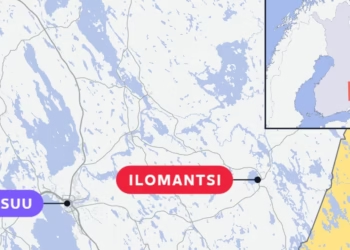
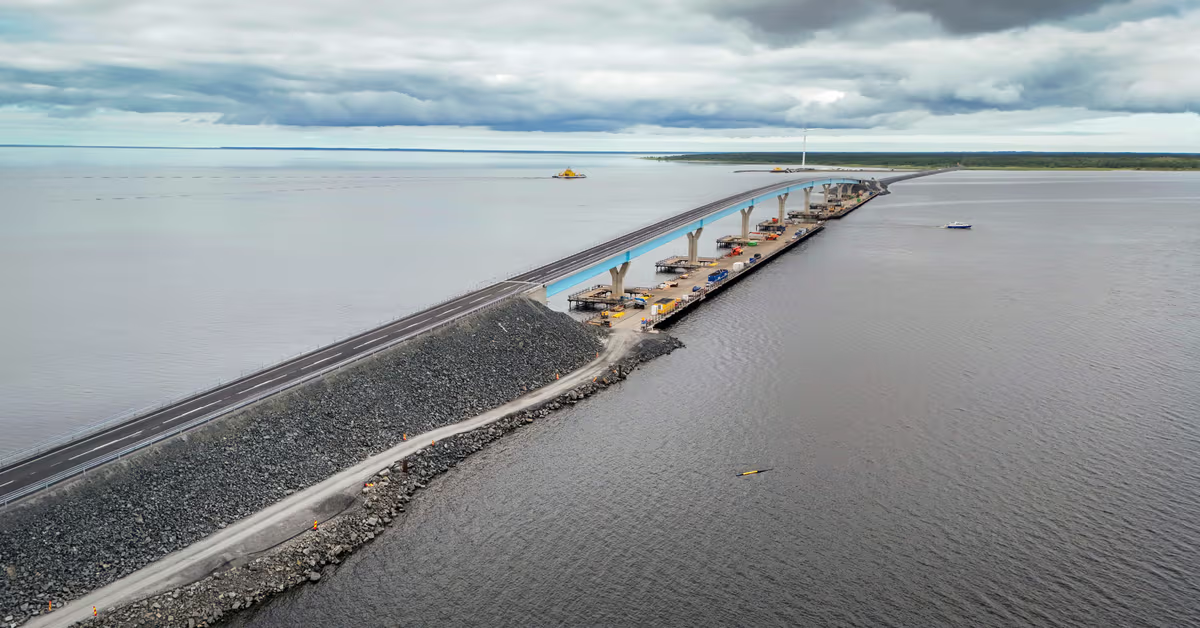
A pair of bridges opened to traffic on Monday, linking Northern Finland’s biggest island Hailuoto to the city of Oulu. Ferries that have been running regularly for almost 60 years also docked for the last time.
The last ferry departures from Oulunsalo on the mainland and Hailuoto were at 11:30am. The road connection opened 15 minutes later, when the first two cars were allowed to depart in each direction.
Locals have generally welcomed the bridges, although there are mixed feelings about the end of an era, amid worries about how increased vehicle traffic will affect the bucolic rural island, which has a population of just under 1,000.
Transport Minister Lulu Ranne (Finns) was among the first to cross the bridges, catching a ride in Matti Välikangas‘s old red lorry. She noted that the Hailuoto permanent connection was completed within budget and ahead of schedule.

Terhi Honkarinta, project manager at the Finnish Transport Infrastructure Agency, thanked all the agencies and bodies that have been involved in the long-running project.
“Everything has been planned, solved and built through collaboration,” she told Yle.
Family Bug makes history
The Hailuoto link was completed a month earlier than expected. It consists of the 767-meter Huikku Bridge, the 737-meter Riuttu Bridge, and a 6.9-kilometer causeway. Altogether the route is 8.4 kilometres long.

The first car to leave Hailuoto was driven by Antti Helanen, driving a VW Beetle that his family brought to the island on the ferry on its first day of regular operations in 1968.
Hailuoto is the largest island in the Bay of Bothnia and its own municipality. The 200-square-kilometre island has been inhabited since the 1100s. The population peaked around 2,000 at the beginning of the 20th century, but is now about half of that.
The island has one school, a couple of shops, a bank and a petrol station, and a small hotel near its iconic white Marjaniemi Lighthouse, which dates back to 1872.