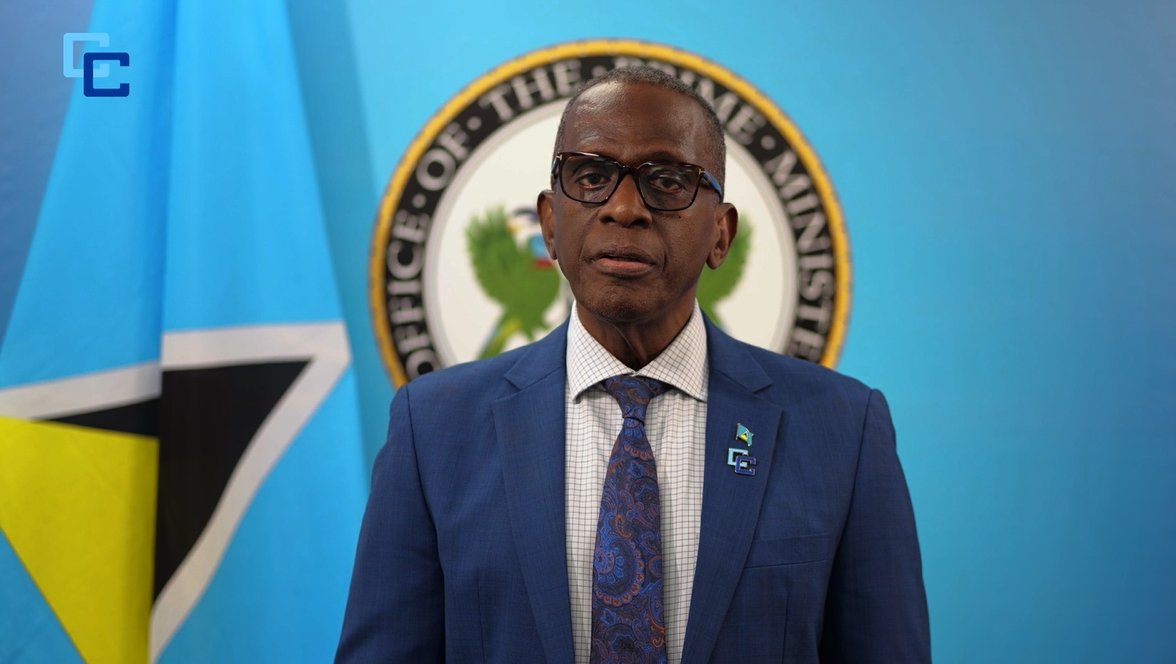
Saint Lucia Prime Minister Philip J. Pierre has pledged to make CARICOM more connected to the everyday lives of Caribbean citizens as he prepares to assume the chairmanship of the regional grouping.
Pierre released a statement on Monday, one day before he is set to take over as Chairman of the Caribbean Community (CARICOM), outlining his vision for his tenure and calling for greater unity, resilience and citizen-focused integration.
Speaking as both Prime Minister of Saint Lucia and incoming CARICOM Chairman, Pierre said he accepted the responsibility with “humility, determination, and a deep sense of service” to the people of the region.
He said CARICOM’s founding principle – that member states can achieve more together than individually – remains critical as the region confronts a rapidly changing global environment.
“Many citizens are asking an important question: how can CARICOM make a greater difference in our everyday lives?” Pierre said. “That is the question that must guide our work.”
The incoming chairman said his priority will be ensuring that CARICOM is not only visible through meetings and declarations but is experienced in “communities, schools, businesses, homes, and in the opportunities available to every Caribbean citizen.”
Pierre highlighted several areas he said require continued regional cooperation, including climate action, food and nutrition security, economic growth, digital transformation, trade and investment, and the movement of people, skills, services and ideas throughout the Caribbean.
He also stressed the importance of strengthening regional unity, arguing that the diversity of CARICOM member states is among the Community’s greatest assets.
“The Caribbean is strongest when we work together, speak with purpose, and respect the voices and contributions of every Member State,” he said.
The Saint Lucian leader said regional development must remain centred on people, ensuring that citizens of all backgrounds can see themselves reflected in CARICOM’s agenda and benefit from greater opportunities.
He also pointed to the link between development and security, calling for continued collaboration to build safer communities where people can “live, work, learn, and thrive in peace and dignity.”
Pierre said the success of CARICOM must ultimately be measured by whether citizens feel the impact of regional integration in their daily lives.
“Because integration that our people cannot feel will not last,” he said.
As he prepares to assume leadership of the regional body, Pierre said his goal is to help build a CARICOM that is “more united, more inclusive, more resilient, and more prepared for the future.”
He ended his message with a call for the region to move forward “from resilience to renewal and revival.”