The main purpose of the exhibition is to present that part of the material heritage, which includes pipes, pipe stands, cigars, mouthpieces, cigarette cases, matches, lighters, ashtrays and cigarette boxes, which are kept in the department of history and applied arts of the National Museum of Slovenia (NMS). The author of the exhibition, mag. Darko Knezthe museum’s curator of ecclesiastical objects, textiles, musical instruments and folk culture, in his research, which includes the publication of a monograph with the same title, examined more than five hundred smoking utensils from the 17th century to the present day, and about two hundred of them are presented in the exhibition.
History of tobacco
Tobacco appeared in Austria in the 16th century, but at that time it was mainly known as an ornamental plant. Smoking began on a large scale in the 17th century, when it turned from a botanical specialty into a marketable commodity. The main generator of the spread of tobacco in Europe was the Thirty Years’ War between 1618 and 1648, in which many European countries were involved. As Darko Knez pointed out at the opening, tobacco appeared in Slovenia almost as soon as it came to European territory. In Slovenia, smoking was first witnessed in 1679 with the depiction of a citizen smoking a pipe. In the 18th century, they were in Carniola, especially in Ljubljana, according to the dictionary Marko Pohlin tobacco is called duhan in Slovenian. A folk song testifies to the fact that tobacco was mainly drunk in Slovenia in the 17th century: “The fox and the fox drank tobacco, there was no tobacco, they drank water.”
As Knez explained, “in the 17th century, he first came to the Austrian area, and then also to Slovenia. Tobacco soon spread to all social classes, first of course among the wealthier, but eventually it covered everyone else.” He emphasized that the idea that women did not smoke and that it was a privilege of men was wrong. The exhibition also shows an example of women’s cigarettes that were made in Egypt.
Accessories and propaganda
Among other things, there are many match boxes on display. Since smoking has become generally socially acceptable and modern and has eaten into every pore of social life, matchboxes have also started to be used for propaganda. “Everything possible was advertised on them, from political events and political propaganda to sports and cultural events. Everyone used matches, so this kind of propaganda got into every home,” explained the curator.
As an interesting point, he pointed out the box of filter 57 cigarettes that was found in a cannon barrel in the military museum in Pivka: “Obviously some soldier kept his cigarettes there, but then forgot about them.”
A Slovenian specialty
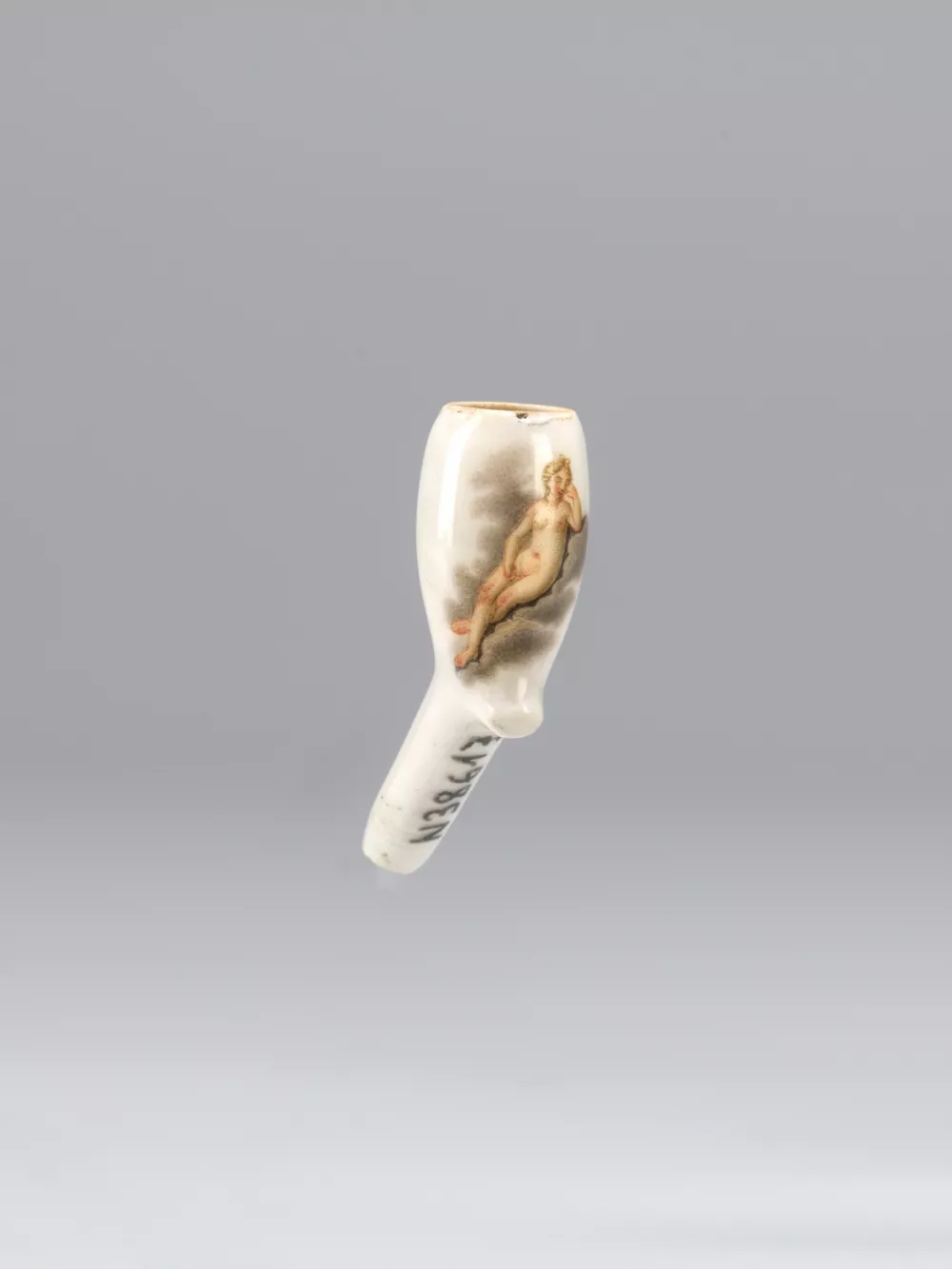
In the selection of more than 200 objects on display, they also included a porcelain pipe with an image of the island of Bled and a porcelain pipe with a miniature female nude from the beginning of the 20th century, and a tobacconist with inlaid Masonic symbols from the beginning of the 19th century. The author of the exhibition singled out the Visnjarica tap from Gori: “These taps are part of traditional Slovenian craftsmanship and are the only taps that were made in Slovenia.” Because of their characteristic cover, they were world famous, especially among seafarers.”
Knez’s monograph, which complements the exhibition, is divided into several chapters, among others on the history of tobacco and tobacco and smoking in Slovenia, smoking accessories and smoking objects of famous Slovenians, such as Valentin Guide, France Prešeren and Simon Jenko. The publication was published in the Resources series. Material for the material culture of Slovenes 17, published by NMS.
The collection of smoking accessories of the National Museum of Slovenia is the largest collection of its kind in Slovenian museums and one of the highest quality in Central Europe. All the exhibits still have a noticeable smell of tobacco, regardless of the conservation and restoration interventions that were carried out on them.