Air conditioning has become an almost indispensable part of everyday life, especially during the summer months when temperatures reach extreme values.
However, many people wonder whether staying in an air-conditioned space all day can be harmful to health and whether their fears about air-conditioning are justified.
The answer is not simple. Experts point out that a properly used and regularly maintained air conditioner generally brings more benefits than harm, but that improper use can cause certain health problems.
Air conditioning can literally save lives
During heat waves, air-conditioned spaces significantly reduce the risk of heat stroke, exhaustion and other consequences of high temperatures, especially for the elderly, children and chronic patients.
High temperatures are one of the leading causes of weather-related mortality, which is why refrigerated spaces can play an important role in health protection.
Better concentration and better quality sleep
Staying in a comfortably cooled space can improve concentration, work ability and sleep quality.
Research has shown that people in overheated rooms think more slowly, make decisions more difficult and make mistakes more often in everyday tasks.
Lower temperatures during the night also make it easier to sleep and contribute to better rest.
What could be the problem?
The most common problem is not the air conditioner itself, but the way it is used.
Air conditioners dry out the air, which in some people can cause:
* dry eyes
* dried skin
* irritation of the nose and throat
* cough
* headache
People suffering from asthma or other chronic respiratory diseases may be more sensitive to these changes.
Dirty filters are a risk
If the air conditioner is not maintained regularly, mold, fungi and bacteria can develop in the filters, which worsen the air quality.
That is why experts recommend regular filter cleaning and device servicing at least once a year.
Large temperature differences are not good
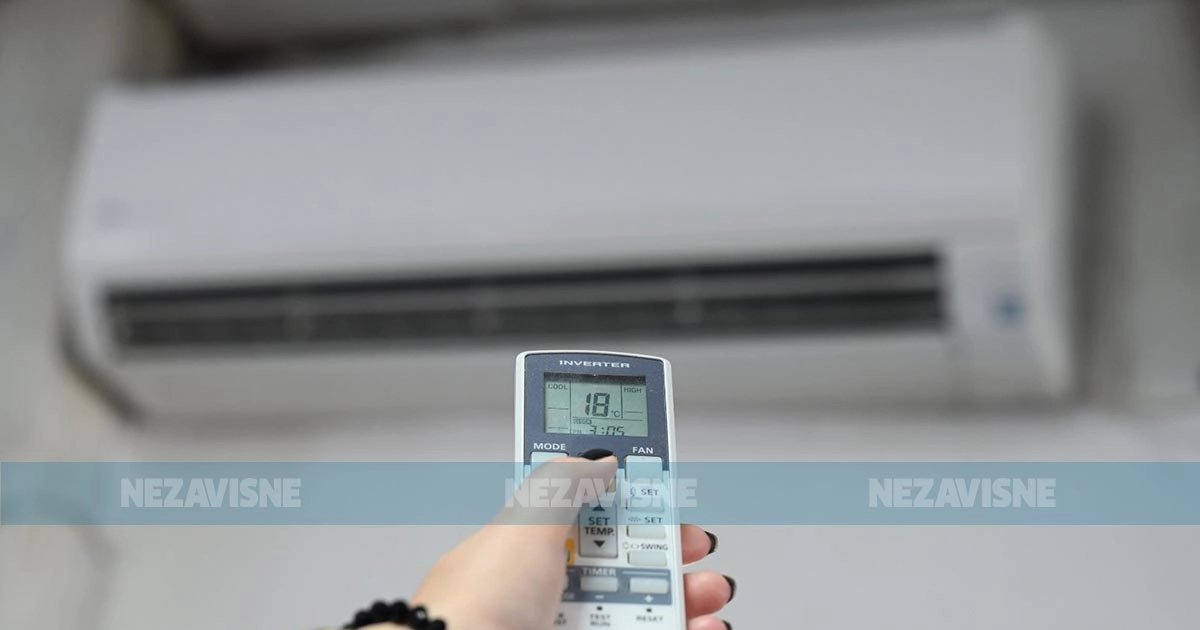
A common mistake is to set the temperature to 18 or 19 degrees when it is more than 35 outside.
Such sudden changes represent stress for the body and can cause headache, muscle pain, stiff neck or worsening of respiratory problems in sensitive people.
What temperature is best?
Most experts recommend that the air conditioner be set between 24 and 26 degrees, that is, that the difference between the outside and inside temperature should not be greater than seven to eight degrees.
It is also important that the cold air does not blow directly towards people, but that it is directed towards the ceiling or wall in order to distribute it evenly throughout the room.
Don’t forget ventilation
Although air conditioning cools the space, it cannot completely replace fresh air. Periodic airing of rooms helps to reduce carbon dioxide concentration and improve indoor air quality.
Staying in an air-conditioned space is not harmful in itself, on the contrary, during extreme heat it can significantly protect health and reduce the risk of heat stroke.
Problems mostly occur when the air conditioner is used improperly, when the temperature is too low or when the device is not regularly maintained. With moderate use, regular filter cleaning and sufficient fluid intake, the air conditioner remains one of the safest ways to protect against the summer heat.