Monday, May 4, 2026
    The GeoStrategic Consensus
    No Result
    View All Result
    • Login
    • HOME
    • AMERICAS
      • Argentina
      • Brazil
      • Canada
      • Chile
      • Colombia
      • Costa Rica
      • Cuba
      • Dominican Republic
      • Ecuador
      • El Salvador
      • Greenland
      • Guatemala
      • Honduras
      • Mexico
      • Nicaragua
      • Panama
      • Paraguay
      • Peru
      • United States
      • Uruguay
      • Venezuela
    • ASIA-PACIFIC
      • Australia
      • Brunei Darussalam
      • Cambodia
      • China
      • Federated States of Micronesia
      • Fiji
      • Indonesia
      • Japan
      • Kiribati
      • Laos
      • Malaysia
      • Marshall Islands
      • Mongolia
      • Myanmar
      • Nauru
      • New Zealand
      • North Korea
      • Palau
      • Papua New Guinea
      • Philippines
      • Samoa
      • Singapore
      • Solomon Islands
      • South Korea
      • Taiwan
      • Thailand
      • Timor-Leste
      • Tonga
      • Tuvalu
      • Vanuatu
      • Vietnam
    • CARICOM
      • CARICOM – Non-English
        • Haiti
        • Suriname
      • CARICOM Associates
        • Anguilla
        • Bermuda
        • British-Virgin-Islands
        • Cayman-Islands
        • Curacao
        • Turks-and-Caicos
      • CARICOM English
        • Antigua and Barbuda
        • Barbados
        • Belize
        • Dominica
        • Grenada
        • Guyana
        • Jamaica
        • Montserrat
        • Saint Kitts and Nevis
        • Saint Lucia
        • Saint Vincent and the Grenadines
        • The Bahamas
        • Trinidad and Tobago
    • EURASIA
      • Armenia
      • Azerbaijan
      • Balarus
      • Georgia
      • Kazakhstan
      • Kyrgyzstan
      • Moldova
      • Russia
      • Tajikistan
      • Turkmenistan
      • Ukraine
      • Uzbekistan
    • EUROPE
      • Albania
      • Andorra
      • Austria
      • Bosnia and Herzegovina
      • Bulgaria
      • Croatia
      • Cyprus
      • Czech Republic
      • Denmark
      • Estonia
      • Finland
      • France
      • Germany
      • Greece
      • Holy See
      • Hungary
      • Iceland
      • Ireland
      • Italy
      • Kosovo
      • Latvia
      • Liechtenstein
      • Lithuania
      • Luxembourg
      • Malta
      • Monaco
      • Montenegro
      • Netherlands
      • North Macedonia
      • Norway
      • Poland
      • Portugal
      • Romania
      • San Marino
      • Serbia
      • Slovakia
      • Slovenia
      • Spain
      • Sweden
      • Switzerland
      • United Kingdom
    • MIDDLE EAST AND NORTH AFRICA
      • Algeria
      • Bahrain
      • Egypt
      • Iran
      • Iraq
      • Israel
      • Jordan
      • Kuwait
      • Lebanon
      • Lybia
      • Morocco
      • Oman
      • Palestinian Territories
      • Qatar
      • Saudi Arabia
      • Syria
      • Tunisia
      • Turkey
      • United Arab Emirates
      • Western Sahara
      • Yemen
    • SOUTH ASIA
      • Afghanistan
      • Bangladesh
      • Bhutan
      • India
      • Maldives
      • Nepal
      • Pakistan
      • Sri Lanka
    • SUB-SAHARAN AFRICA
      • Angola
      • Benin
      • Botswana
      • Burkina Faso
      • Burundi
      • Cabo Verde
      • Cameroon
      • Central African Republic
      • Chad
      • Comoros
      • Cote d’Ivoire
      • Democratic Republic of the Congo
      • Djibouti
      • Equatorial Guinea
      • Eritrea
      • Eswatini
      • Ethiopia
      • Gabon
      • Gambia
      • Ghana
      • Guinea
      • Guinea Bissau
      • Kenya
      • Lesotho
      • Liberia
      • Madagascar
      • Malawi
      • Mali
      • Mauritania
      • Mauritius
      • Mozambique
      • Namibia
      • Niger
      • Nigeria
      • Republic of the Congo
      • Rwanda
      • Sao Tome and Principe
      • Senegal
      • Seychelles
      • Sierra Leone
      • Somalia
      • South Africa
      • South Sudan
      • Sudan
      • Tanzania
      • Togo
      • Uganda
      • Zambia
      • Zimbabwe
    • HOME
    • AMERICAS
      • Argentina
      • Brazil
      • Canada
      • Chile
      • Colombia
      • Costa Rica
      • Cuba
      • Dominican Republic
      • Ecuador
      • El Salvador
      • Greenland
      • Guatemala
      • Honduras
      • Mexico
      • Nicaragua
      • Panama
      • Paraguay
      • Peru
      • United States
      • Uruguay
      • Venezuela
    • ASIA-PACIFIC
      • Australia
      • Brunei Darussalam
      • Cambodia
      • China
      • Federated States of Micronesia
      • Fiji
      • Indonesia
      • Japan
      • Kiribati
      • Laos
      • Malaysia
      • Marshall Islands
      • Mongolia
      • Myanmar
      • Nauru
      • New Zealand
      • North Korea
      • Palau
      • Papua New Guinea
      • Philippines
      • Samoa
      • Singapore
      • Solomon Islands
      • South Korea
      • Taiwan
      • Thailand
      • Timor-Leste
      • Tonga
      • Tuvalu
      • Vanuatu
      • Vietnam
    • CARICOM
      • CARICOM – Non-English
        • Haiti
        • Suriname
      • CARICOM Associates
        • Anguilla
        • Bermuda
        • British-Virgin-Islands
        • Cayman-Islands
        • Curacao
        • Turks-and-Caicos
      • CARICOM English
        • Antigua and Barbuda
        • Barbados
        • Belize
        • Dominica
        • Grenada
        • Guyana
        • Jamaica
        • Montserrat
        • Saint Kitts and Nevis
        • Saint Lucia
        • Saint Vincent and the Grenadines
        • The Bahamas
        • Trinidad and Tobago
    • EURASIA
      • Armenia
      • Azerbaijan
      • Balarus
      • Georgia
      • Kazakhstan
      • Kyrgyzstan
      • Moldova
      • Russia
      • Tajikistan
      • Turkmenistan
      • Ukraine
      • Uzbekistan
    • EUROPE
      • Albania
      • Andorra
      • Austria
      • Bosnia and Herzegovina
      • Bulgaria
      • Croatia
      • Cyprus
      • Czech Republic
      • Denmark
      • Estonia
      • Finland
      • France
      • Germany
      • Greece
      • Holy See
      • Hungary
      • Iceland
      • Ireland
      • Italy
      • Kosovo
      • Latvia
      • Liechtenstein
      • Lithuania
      • Luxembourg
      • Malta
      • Monaco
      • Montenegro
      • Netherlands
      • North Macedonia
      • Norway
      • Poland
      • Portugal
      • Romania
      • San Marino
      • Serbia
      • Slovakia
      • Slovenia
      • Spain
      • Sweden
      • Switzerland
      • United Kingdom
    • MIDDLE EAST AND NORTH AFRICA
      • Algeria
      • Bahrain
      • Egypt
      • Iran
      • Iraq
      • Israel
      • Jordan
      • Kuwait
      • Lebanon
      • Lybia
      • Morocco
      • Oman
      • Palestinian Territories
      • Qatar
      • Saudi Arabia
      • Syria
      • Tunisia
      • Turkey
      • United Arab Emirates
      • Western Sahara
      • Yemen
    • SOUTH ASIA
      • Afghanistan
      • Bangladesh
      • Bhutan
      • India
      • Maldives
      • Nepal
      • Pakistan
      • Sri Lanka
    • SUB-SAHARAN AFRICA
      • Angola
      • Benin
      • Botswana
      • Burkina Faso
      • Burundi
      • Cabo Verde
      • Cameroon
      • Central African Republic
      • Chad
      • Comoros
      • Cote d’Ivoire
      • Democratic Republic of the Congo
      • Djibouti
      • Equatorial Guinea
      • Eritrea
      • Eswatini
      • Ethiopia
      • Gabon
      • Gambia
      • Ghana
      • Guinea
      • Guinea Bissau
      • Kenya
      • Lesotho
      • Liberia
      • Madagascar
      • Malawi
      • Mali
      • Mauritania
      • Mauritius
      • Mozambique
      • Namibia
      • Niger
      • Nigeria
      • Republic of the Congo
      • Rwanda
      • Sao Tome and Principe
      • Senegal
      • Seychelles
      • Sierra Leone
      • Somalia
      • South Africa
      • South Sudan
      • Sudan
      • Tanzania
      • Togo
      • Uganda
      • Zambia
      • Zimbabwe
    No Result
    View All Result
    Agentially
    No Result
    View All Result
    Home EUROPE Austria

    Instead of “gambling” we should regulate “bad games” – DiePresse.com

    The Analyst by The Analyst
    April 23, 2026
    in Austria
    Instead of “gambling” we should regulate “bad games” – DiePresse.com


    We warn against gambling because people can lose money. But our laws ask above all: How much chance is there in the game? Maybe that’s the wrong question.

    READ ALSO

    Because of statements about gender, climate, etc.: University of Vienna cancels honor for mathematician Taschner – DiePresse.com

    What will probably not happen until the asylum reform starts – DiePresse.com

    There seems to be a broad consensus that one should be careful when gambling. You can lose a lot of money in a short period of time, you can become addicted and lose money constantly, and this can negatively affect not only your own well-being but also that of others. Different countries have different views on this issue and differ in how closely they regulate gambling. Austria, for example, has a very restrictive view towards gambling (with the exception of sports betting).

    At the heart of every regulation a country applies is its legal definition of a game of chance. In Austrian law, and similarly in many other countries, it is defined as follows: “A game of chance within the meaning of this federal law is a game in which the decision about the outcome of the game depends exclusively or predominantly on chance and the players place a bet in the expectation of monetary compensation.” A game is therefore a game of chance when money is at stake and the outcome is determined primarily by chance. In Austria, the commercial offering of such games is generally prohibited (unless it is done by the state).

    I don’t find this definition very satisfactory. I will argue that a simple alternative – defining “bad gaming” rather than “gambling” – would provide a much better basis for regulation.

    The economic view

    Every week the National Economic Society (NOeG) creates a blog post on a current economic topic in cooperation with the “Presse”. The NOeG is a non-profit association for the promotion of economics.

    Contributions from external authors do not have to correspond to the opinion of the “Presse” editorial team.

    >>> All posts

    I find the concept of “coincidence” less clear than the legal definition suggests. I’m happy to accept chance as a meaningful concept, but we should at least distinguish between two different types of uncertainty, as the modern decision theory literature does. There are situations where probabilities are well understood and agreed upon, such as in casino games. In decision theory this is called risk. But there are also situations – think of sports (or political) competitions – in which people can disagree about how likely a particular outcome is. In decision theory this is often called ambiguity. I assume that most people would count risk as chance, but should ambiguity also be called chance? If anything, it’s at least clearly a very different kind of coincidence.

    Consider the game of rock-paper-scissors when played for money. There is no external random device that determines the outcome – only the decisions of the players. One could argue that there is no chance at all in the game, only behavior. On the other hand, if players make their choices at random – as game theory would suggest – then the outcome appears random. But at least the uncertainty in the game comes entirely from the players themselves. Austrian law is often interpreted as if results are determined either by chance or skill. But in this case, the only “chance” comes from the players’ strategies, which are themselves an expression of skill. Quite a mess.

    Now consider Tic-Tac-Toe played for money on a platform that retains a percentage of bets. The game itself has no random component at all: if played optimally, it always ends in a draw. But when players of different skill levels participate, some will systematically lose money. From the perspective of someone who pays to play, this situation may seem quite similar to playing in a casino. Still, it would be difficult to argue that Tic-Tac-Toe meets the legal definition of a game of chance since there is absolutely no chance in the game.

    At the same time, if we interpret “chance” broadly, some activities that would not normally be classified as gambling could fall within the legal definition. Let’s look at sports again. The existence of betting markets shows that outcomes are uncertain, and this uncertainty is sometimes even due to factors beyond the players’ control, for example the weather. If there is money at stake for participants in these sports, it is not obvious why such activities should not count as gambling.

    A similar point applies to sports betting and even financial trading. The results of bets and investments depend heavily on uncertain future events and the (possibly unpredictable) behavior of others. If these sources of uncertainty count as “coincidence,” then such activities appeared to meet the legal definition. However, they are typically treated very differently than casino games. This suggests that the legal definition does not draw the lines in a satisfactory way.

    Instead of trying to determine how much “randomness” there is in a game – a task that is often unclear and controversial – I suggest a different approach. Instead of defining gambling, we should define “bad games.” I would define a game as “bad” if it is a sub-zero sum game for the participants, meaning that the net payoff to all players is negative overall. In other words, the players as a group lose money.

    This definition has many advantages. It is simple, it is easy to use, and it avoids the need to distinguish between chance and skill. All you need to do is check whether the total amount paid out to players is less than what they deposited.

    Consider casino games. These are clearly sub-zero sum games: players wager money, and the casino takes a percentage. By my definition, these are bad games. The same goes for any platform that allows people to play games like rock-paper-scissors or tic-tac-toe for money while keeping a portion of the stakes.

    In contrast, many sports competitions are not bad games. They generate value for viewers who pay to watch. This revenue is then used to pay participants. From a player perspective, the overall net payout can be positive. In this sense, such games are not sub-zero sum games and therefore not “bad”.

    The same distinction helps clarify the difference between sports betting and financial trading. When it comes to sports betting, a betting provider typically keeps a portion of the stakes, making the activity a sub-zero-sum game for participants. In financial markets, however, investments tend to generate positive returns over time, so the overall net payout to participants can be positive. This makes financial trading generally a positive-sum activity and not a bad game in the sense defined here.

    Of course, individuals can also lose significant amounts of money in positive-sum games. If policymakers are concerned about this, they can limit participation or mandate protections. But these are separate topics. Such concerns do not depend on whether an activity involves “chance” or not.

    I believe that my definition of a bad game – a game that is a sub-zero sum game for the participants – would be a much better centerpiece for any legal text aimed at regulating gambling than the current legal definition of a game of chance. Of course, one would probably want to add some restrictions. For example, we would probably want to avoid classifying children’s music, art, or sports competitions as a bad game, even if each participant pays a small fee and perhaps only one wins a prize, because the activity has educational value. But such considerations can easily be supplemented.

    <strong>The author: Christoph Kuzmics</strong> deals with the theory of strategic thinking. He has been Professor of Microeconomics at the University of Graz since 2015; before that he was at Bielefeld University. From 2003 to 2011, Kuzmics was an assistant professor at the Kellogg School of Management, Northwestern University.” width=”1000″ height=”600″ loading=”lazy” fetchpriority=”low”/></p>
<photo-lightbox src=

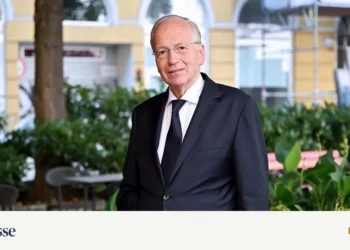
    The author: Christoph Kuzmics deals with the theory of strategic thinking. He has been Professor of Microeconomics at the University of Graz since 2015; before that he was at Bielefeld University. From 2003 to 2011, Kuzmics was an assistant professor at the Kellogg School of Management, Northwestern University. 
    Read more about these topics:


    Source link

    Related Posts

    Because of statements about gender, climate, etc.: University of Vienna cancels honor for mathematician Taschner – DiePresse.com
    Austria

    Because of statements about gender, climate, etc.: University of Vienna cancels honor for mathematician Taschner – DiePresse.com

    May 4, 2026
    What will probably not happen until the asylum reform starts – DiePresse.com
    Austria

    What will probably not happen until the asylum reform starts – DiePresse.com

    May 4, 2026
    Dancing, despite everything: How Kiev’s club scene survives the war – DiePresse.com
    Austria

    Dancing, despite everything: How Kiev’s club scene survives the war – DiePresse.com

    May 4, 2026
    The “Techno-Fascist” Dreams of the Palantir Billionaires
    Austria

    The “Techno-Fascist” Dreams of the Palantir Billionaires

    May 4, 2026
    The era of creative accounting is dawning in the EU – DiePresse.com
    Austria

    The era of creative accounting is dawning in the EU – DiePresse.com

    May 3, 2026
    Final money laundering report: too few confiscations of black money – DiePresse.com
    Austria

    Final money laundering report: too few confiscations of black money – DiePresse.com

    May 3, 2026
    Next Post
    “2/3 of the 35 billion given by the state will go to Rivaldo” – the financial situation of “Bunyodkor” has worsened

    "2/3 of the 35 billion given by the state will go to Rivaldo" - the financial situation of "Bunyodkor" has worsened

    POPULAR NEWS

    Justin Bieber fans flood Coachella festival for headlining show – Entertainment

    Justin Bieber fans flood Coachella festival for headlining show – Entertainment

    April 20, 2026

    Over 600 flee homes as Army, NPA clash in Negros Occidental

    April 21, 2026

    Ex-DPWH exec recalls P800-M ‘delivery’ to Zaldy Co 

    April 20, 2026

    Former PM Paluckas suspends party membership, to waive immunity over criminal probe

    April 24, 2026
    Pres. Ali challenges CARICOM to transform into health research powerhouse

    Pres. Ali challenges CARICOM to transform into health research powerhouse

    April 23, 2026

    EDITOR'S PICK

    EN VIVO: Trump dice que podría retirar sus tropas de España e Italia por su postura sobre Irán

    EN VIVO: Trump dice que podría retirar sus tropas de España e Italia por su postura sobre Irán

    April 30, 2026
    Judge dismisses Trump lawsuit against Wall Street Journal over Epstein case

    Judge dismisses Trump lawsuit against Wall Street Journal over Epstein case

    April 17, 2026

    Payne appointed Digicel Barbados CEO

    April 7, 2026
    Snap names Doug Hott as new CFO

    Snap names Doug Hott as new CFO

    April 21, 2026

    Recent Posts

    • The court overturned the decision of the Osh mayor’s office to allocate 2.4 hectares of land in the city center to a businessman
    • “Home & Renovation” by iute: a comprehensive solution for one of the most important projects – home renovation
    • Russia-Congo relations have great potential — Putin – Russian Politics & Diplomacy
    • In Crimea, a third of residents use unlicensed satellite TV

      © 2026 Agentially - Navigating shifting sovereignties and global risk .

      Welcome Back!

      Login to your account below

      Forgotten Password?

      Retrieve your password

      Please enter your username or email address to reset your password.

      Log In
      No Result
      View All Result

        © 2026 Agentially - Navigating shifting sovereignties and global risk .

        This website uses cookies. By continuing to use this website you are giving consent to cookies being used. Visit our Privacy and Cookie Policy.