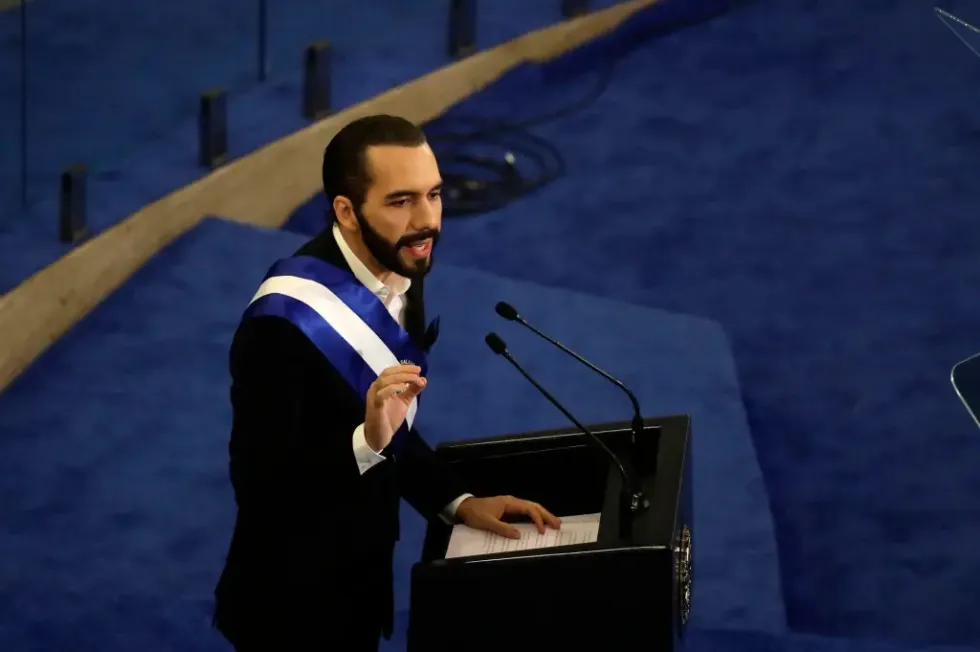
The president of El Salvador, Nayib Bukele, registered his pre-candidacy to seek a third consecutive term in the general elections of 2027, an option enabled by a 2025 constitutional reform that allows indefinite reelection, as reported on the night of Sunday, June 28, 2026 by the ruling party Nuevas Ideas (NI).
“We are ready,” the president of the party and cousin of the president, Xavi Bukele, published on
In response to this message, which was taken up by the official NI account and party deputies in the Legislative Assembly, Ulloa thanked “for this new opportunity.”
“Thank you Nayib, thank you Xavi, thank you Nuevas Ideas for this new opportunity to continue contributing to the wonderful project of transforming our country,” wrote Ulla, who would also seek a third term as the country’s vice president.
He added that “decades and centuries of frustrated dreams are beginning to become reality” and “our wise and patient people know it and accompany us.”
The Salvadoran president has not commented on his social networks about the registration of his pre-candidacy, while it is expected that he will have no opponents in his party’s primaries.
How did he screw himself into power?
The Legislative Assembly, dominated by NI, approved and ratified, in a single day on July 31, 2025 without prior analysis or debate, the reform of articles 75, 80, 133, 152 and 154 of the Constitution, giving President Bukele the freedom to opt for a third consecutive term.
According to various surveys published recently, Bukele maintains high popularity ratings, mainly due to the reduction of violence and the fight against gangs, but with growing economic demands from the population.
At the end of December 2025, Bukele said in an interview with a Spanish YouTuber that he would like to continue governing the Central American country for “ten more years,” although he clarified that it was just a wish.
Bukele assumed his second consecutive term on June 1, 2024, despite the fact that the Constitution prohibited it at that time, and that it would end in 2029.
However, the reform brought forward the presidential elections to 2027, when the general elections will also be held. From then on, the presidential term will be six years.