Wigan, near the southern end of the ceremonial county of Lancashire, feels distinct from the rest of England. It has its own rough-hewn vibe.
They speak differently up here, with a heavy regional dialect. For example, people stressed out by the chaos of modern British politics would say in Wiganese that they feel mault’deerf (mauled to death).
Traditionally, many people in this area have also worshipped differently to elsewhere in England. Southern Lancashire was a stronghold of Catholic recusants during the Reformation. To this day, many of the old mining villages around Wigan still look more to Rome than to Canterbury, the seat of Anglican power.
They also play differently in this part of England. Religion aside, the most worshipped thing in Wigan is rugby league. The relatively niche sport is far stronger here than anywhere else.
It is unclear if Liverpool-born Andy Burnham, the new MP for Makerfield near Wigan, speaks fluent Wiganese. Although if he did, he might admit that he’s powfagged (exhausted) after his emphatic byelection triumph in the early hours of Friday morning.
Burnham may have prayed for such a decisive victory – he secured 55 per cent of the vote. And like many of his new constituents, he is a proud Catholic, educated at St Aelred’s in Newton-le-Willows, 10 minutes from the constituency.
Burnham is also a rugby league fan, as vice-president of the nearby Leigh Centurions club.
Last Saturday, five days before the voters of Makerfield voted for him in their droves, Burnham visited another rugby league club, St Jude’s of Wigan, to drop a series of colossal hints about the other job he covets apart from being the local MP: prime minister of the UK.
[ Andy Burnham: How quickly could he become the UK’s prime minister?Opens in new window ]
After almost doubling Labour’s majority in Makerfield and humbling Nigel Farage’s once-surging Reform UK, Burnham is now the clear favourite to oust the hapless Labour leader Keir Starmer from Downing Street.
What might Burnham’s Britain look like?
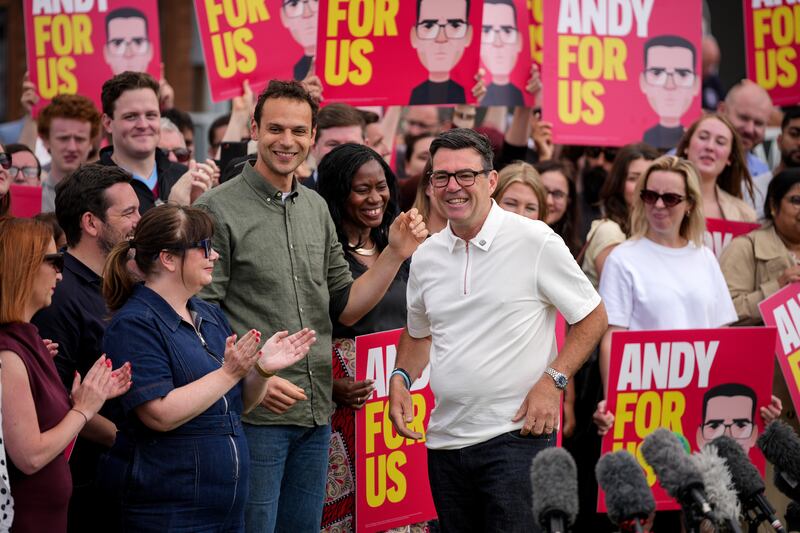
The concept of Burnham’s Britain appears to be moving towards reality. The standard bearer of Labour’s “soft left” tradition gave a vision of what it might look like in his speech at St Jude’s.
Burnham, who was the mayor of Greater Manchester until his thumping byelection win, was in ebullient form when he arrived at the rugby league club last week. Somewhat unusually for Labour in recent times, the party members there seemed just as buoyant.
Labour enthusiasm has been an absent friend for most of Starmer’s two years in Downing Street. The most glaring difference between his Britain and Burnham’s could be a renewed energy in Labour as it girds itself for battle with Reform UK.
Burnham bounced into St Jude’s last Saturday through the side door of its clubroom, Jimmy’s Bar. He was greeted like a hero by cheering Labour supporters, sensing that victory lay ahead.
“Long live the king!” shouted one as Burnham prepared to speak. For years he has been styled as the political “King of the North”. Now Burnham is primed to execute his plan to extend his dominion all the way south to Downing Street.
He told the St Jude’s crowd that he would turn Makerfield, a patchwork of old mining towns, into “the most powerful constituency in the land,” a not-so-subtle hint about his ultimate aim to be the land’s most powerful politician.
“Does anyone feel that we can stay on the path that we are on as a country?” he asked, to a resounding “no”. “Let’s vote to get this country back on track.”
Burnham promised greater UK public oversight of utilities such as energy and water. He said he would “massively expand” the number of apprenticeships, an acknowledgment of entrenched British worries that globalisation brought in too many foreign workers at the expense of boosting the skills of young British locals.
At the heart of much of the UK’s recent political angst is a growing frustration among the electorate that living standards have stagnated in a country where economic growth has been paltry for years. Burnham said the country must focus on “re-industrialisation”.
“Vote so people can afford life again, and so that they can have a good life,” he said. “Vote for a change in the way this country is run, so that in places like this people are not forgotten any longer.”
[ Downing Street contender Andy Burnham would pursue closer British-Irish relationsOpens in new window ]
Then in a nod to the looming battle with the hard right of Reform at the UK’s next general election, Burnham said he wanted to prevent Britain from going down the “path of the US, with its polarised, poisonous politics”.
He promised he would “change the Labour Party and put it back in touch with the British people”.
After his win in Makerfield confirmed his status as the top Labour leadership contender, the only obstacle left to the establishment of Burnham’s Britain may be Starmer.
The winds of change are once again blowing through the UK’s corridors of power.
How soon could Burnham become UK prime minister?

It depends on how Starmer reacts to Burnham’s victory in the days and weeks ahead. The scale of the northerner’s victory over Reform may accelerate matters, although Starmer indicated on Friday that he would stand in a leadership contest.
If Starmer accepts his fate is sealed, the end for him might be swift. But if, as he has threatened, the UK prime minister fights on, there may still be a bloody battle ahead.
The rallying cry of Burnham’s supporters throughout the election campaign was “ABC – Andy By Conference”. His closest political allies wanted him installed in Downing Street by, at the very latest, the Labour Party’s annual conference at the end of September.
It might come sooner than that now, although sources inside Burnham’s camp told The Irish Times that recent speculation in British media that he would try to aggressively remove Starmer within days of the byelection were wide of the mark.
“He has always wanted to go long,” said one source. Starmer and Burnham are expected to hold talks this weekend.
Burnham’s allies have repeatedly called for an “orderly transition” of power away from Starmer. Going “long” in such an orderly way would still, however, require a relatively swift acknowledgment from the current prime minister that his time was up, giving him several weeks or even months to formally hand over to Burnham.
The King of the North may also need time to reacquaint himself with the ways of the south. Burnham was first elected as an MP in 2001, but he has been out of Westminster ever since he became Manchester mayor in 2017. He has been out of the UK’s cabinet for more than a decade. He also doesn’t know many of the Labour Party’s new 2024 intake of MPs. A longer transition would allow him to fine-tune his plan for government.
If Starmer insists that he will not quit, then a leadership contest could be triggered quickly. Wes Streeting, the former health secretary who also has designs on Downing Street, has said he is prepared to start a leadership contest next week if Starmer digs in.
A leadership contest would be expected to last about six weeks, although it might not happen at all as Burnham would be seen as practically unbeatable given his huge win in Makerfield.
One looming date may focus minds in the UK government. The next, crucial summit between the UK and the European Union is set for July 22nd. Whatever about ABC, if Starmer accepts his fate and Labour settles on a coronation of Burnham, he may want to take up power before that summit, before parliament goes into recess on July 17th.
Who else might help to run Burnham’s Britain?
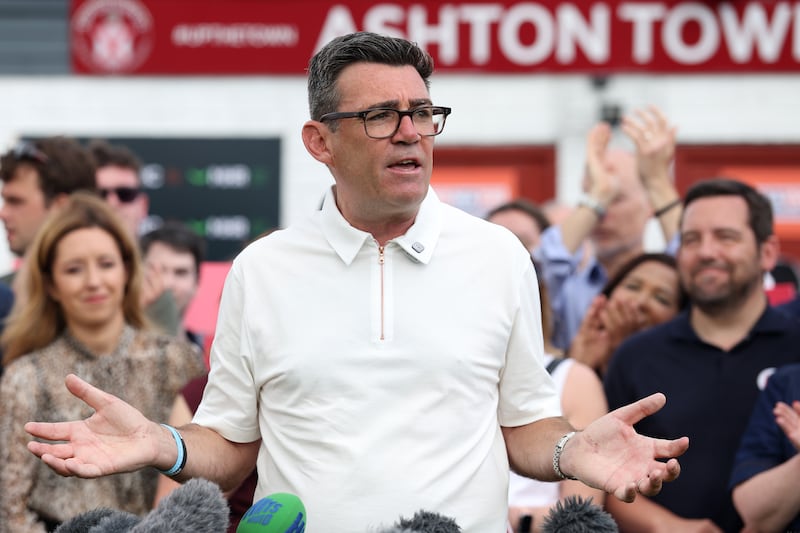
As the now-overwhelming favourite to unseat Starmer as UK prime minister, speculation has focused on who might sit in a Burnham cabinet.
Labour sources speculate Rachel Reeves would be unlikely to survive as the UK’s chancellor of the exchequer, as Burnham would seek a decisive break from the past. She is popular with traders in the bond markets, however, due to her fiscal restraint in a country that is burdened by a national debt bigger than the value of its entire economy.
Shabana Mahmood, an immigration hardliner who is the current home secretary, is seen as one of the front-runners for the chancellor position if Burnham seeks a tough name to reassure the markets. She may want to stay where she is, however, to see through the far-reaching immigration reforms she has already announced.
Ed Miliband, the former Labour leader and current net zero secretary, is another contender for chancellor, although the avowed left-winger would not be popular with the bond markets.
An outside bet for chancellor could be John Healey, who resigned last week as defence secretary because Reeves and Starmer refused to give him the money he wanted to rebuild the UK’s rickety armed forces. Burnham could hand Healey the keys to the treasury and tell him to find the cash for defence that Reeves insisted wasn’t there.
Streeting may also be a contender for one of the UK’s big offices of state, such as foreign secretary, especially if he does a deal with Burnham to avoid going up against him in a leadership contest that the recently departed health secretary would be almost guaranteed to lose.
Former deputy prime minister Angela Rayner would be odds on to return to cabinet, although possibly not in her old role.
If Burnham does take over at Number 10, it seems certain that there would be a big role for Louise Haigh, who was transport secretary until she was effectively forced to resign by Starmer in late 2024 over revelations of a past court conviction – her allies say Starmer knew about it all along and did not back her.
Haigh, who is highly respected in the party, has effectively led Burnham’s campaign to win Makerfield and, ultimately, Downing Street. There would also likely be a role for Knowles MP Anneliese Midgley, who worked with Haigh behind the scenes for Burnham.
Meanwhile, it was reported by The Guardian that the former Manchester mayor has already lined up a team of backroom economic advisers, including former Goldman Sachs chief economist Jim O’Neill, and Richard Hughes, the former head of the UK’s official fiscal watchdog, the Office for Budget Responsibility.
What would Burnham do differently to Starmer?
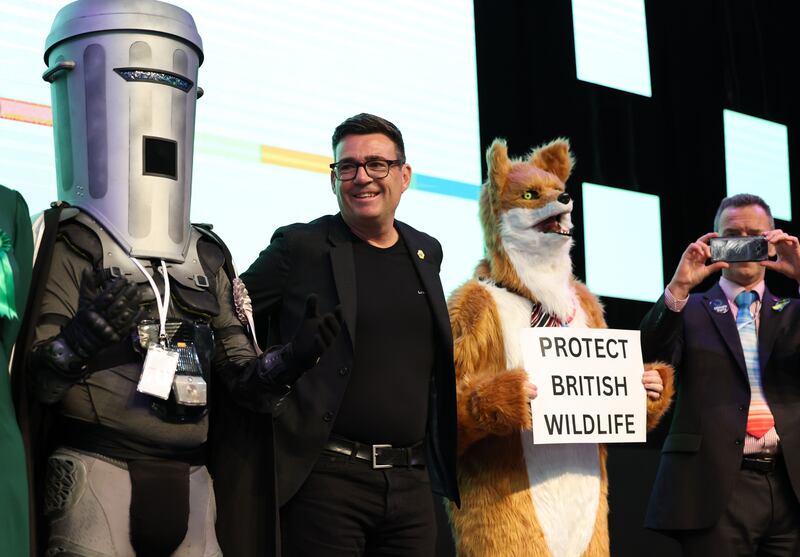
Burnham, who is well to the left of Starmer, previously suggested that Britain should tax and borrow more to fund public services, instead of being “in hock” to bond markets, but he has since backed away from that stance after criticism.
Burnham now appears to concede that he would implement the UK’s so-called “fiscal rules”, which include no borrowing for day-to-day spending, while also sticking to Labour’s manifesto commitments, which include no rises in VAT or income tax rates.
He also previously spoke out in opposition to welfare cuts planned last year by Reeves, later watered down. However, at a private dinner in Makerfield last week, senior members of Burnham’s team expressed satisfaction at a newspaper headline for an interview in which he said he supported reforming welfare to pay for defence spending.
Burnham suggested during the campaign he would spur growth by cutting business rates, abolishing them altogether for small businesses in the hospitality sector.
Manchester under his leadership became the fastest-growing economic region in Britain, as he focused on attracting private investment.
Burnham would roll out his “Manchesterism” philosophy across Britain, including greater public oversight of critical public utilities and transport. The Bee Network of Manchester public transport was seen as one of his biggest successes.
It is also likely that Burnham would pursue even closer relations with the European Union than Starmer. He confirmed this month, however, that he is not proposing Britain rejoins the EU despite having previously said he hopes to “see it in my lifetime”.
He has also spoken repeatedly of his desire to see a proportional representation voting system introduced in Britain.
What might Burnham’s Britain mean for Ireland?
In short, the Republic could expect a continuation and perhaps even a deepening of the political rapprochement begun by Starmer in 2024, after the rancour of the Tory Brexit years.
Burnham told The Irish Times in an interview last week that he would prioritise the UK-Ireland political relationship: “I will carry that relationship forward, and if I get back to Westminster, that [UK-Irish relations] is what I will be feeding off.”
[ How Irish is Andy Burnham, the possible next British prime minister?Opens in new window ]
If the UK under Burnham pursues closer EU relations, good terms with the Republic would take on even greater significance as he tried to rebuild alliances in the bloc.
He regularly visited the State in recent years on trade missions with Labour’s Liverpool mayor, Steve Rotheram. Burnham was also one of the final guests hosted at Áras an Uachtaráin by Michael D Higgins before the former president left office.
Burnham, who will be Labour’s first Catholic prime minister if he succeeds in unseating Starmer – and only the second Catholic UK prime minister ever, after Boris Johnson – also told this newspaper last week that he feels “emotional” over his Irish heritage, which he traces back to Drogheda in the late 1800s.
Apart from a shift in power towards the north of England, from where many of his allies hail and a region where there are close Irish links, the biggest difference between Burnham’s Britain and Starmer’s may be the emotional intelligence of the occupant of Downing Street.
Burnham is seen as more media savvy and less stilted than Starmer, and more in tune with Labour’s voter base. Polls also show he is the party’s most popular politician among the British public. It remains to be seen how long that status would endure if he enters the bear pit of governance and Downing Street.