Monday, May 4, 2026
    The GeoStrategic Consensus
    No Result
    View All Result
    • Login
    • HOME
    • AMERICAS
      • Argentina
      • Brazil
      • Canada
      • Chile
      • Colombia
      • Costa Rica
      • Cuba
      • Dominican Republic
      • Ecuador
      • El Salvador
      • Greenland
      • Guatemala
      • Honduras
      • Mexico
      • Nicaragua
      • Panama
      • Paraguay
      • Peru
      • United States
      • Uruguay
      • Venezuela
    • ASIA-PACIFIC
      • Australia
      • Brunei Darussalam
      • Cambodia
      • China
      • Federated States of Micronesia
      • Fiji
      • Indonesia
      • Japan
      • Kiribati
      • Laos
      • Malaysia
      • Marshall Islands
      • Mongolia
      • Myanmar
      • Nauru
      • New Zealand
      • North Korea
      • Palau
      • Papua New Guinea
      • Philippines
      • Samoa
      • Singapore
      • Solomon Islands
      • South Korea
      • Taiwan
      • Thailand
      • Timor-Leste
      • Tonga
      • Tuvalu
      • Vanuatu
      • Vietnam
    • CARICOM
      • CARICOM – Non-English
        • Haiti
        • Suriname
      • CARICOM Associates
        • Anguilla
        • Bermuda
        • British-Virgin-Islands
        • Cayman-Islands
        • Curacao
        • Turks-and-Caicos
      • CARICOM English
        • Antigua and Barbuda
        • Barbados
        • Belize
        • Dominica
        • Grenada
        • Guyana
        • Jamaica
        • Montserrat
        • Saint Kitts and Nevis
        • Saint Lucia
        • Saint Vincent and the Grenadines
        • The Bahamas
        • Trinidad and Tobago
    • EURASIA
      • Armenia
      • Azerbaijan
      • Balarus
      • Georgia
      • Kazakhstan
      • Kyrgyzstan
      • Moldova
      • Russia
      • Tajikistan
      • Turkmenistan
      • Ukraine
      • Uzbekistan
    • EUROPE
      • Albania
      • Andorra
      • Austria
      • Bosnia and Herzegovina
      • Bulgaria
      • Croatia
      • Cyprus
      • Czech Republic
      • Denmark
      • Estonia
      • Finland
      • France
      • Germany
      • Greece
      • Holy See
      • Hungary
      • Iceland
      • Ireland
      • Italy
      • Kosovo
      • Latvia
      • Liechtenstein
      • Lithuania
      • Luxembourg
      • Malta
      • Monaco
      • Montenegro
      • Netherlands
      • North Macedonia
      • Norway
      • Poland
      • Portugal
      • Romania
      • San Marino
      • Serbia
      • Slovakia
      • Slovenia
      • Spain
      • Sweden
      • Switzerland
      • United Kingdom
    • MIDDLE EAST AND NORTH AFRICA
      • Algeria
      • Bahrain
      • Egypt
      • Iran
      • Iraq
      • Israel
      • Jordan
      • Kuwait
      • Lebanon
      • Lybia
      • Morocco
      • Oman
      • Palestinian Territories
      • Qatar
      • Saudi Arabia
      • Syria
      • Tunisia
      • Turkey
      • United Arab Emirates
      • Western Sahara
      • Yemen
    • SOUTH ASIA
      • Afghanistan
      • Bangladesh
      • Bhutan
      • India
      • Maldives
      • Nepal
      • Pakistan
      • Sri Lanka
    • SUB-SAHARAN AFRICA
      • Angola
      • Benin
      • Botswana
      • Burkina Faso
      • Burundi
      • Cabo Verde
      • Cameroon
      • Central African Republic
      • Chad
      • Comoros
      • Cote d’Ivoire
      • Democratic Republic of the Congo
      • Djibouti
      • Equatorial Guinea
      • Eritrea
      • Eswatini
      • Ethiopia
      • Gabon
      • Gambia
      • Ghana
      • Guinea
      • Guinea Bissau
      • Kenya
      • Lesotho
      • Liberia
      • Madagascar
      • Malawi
      • Mali
      • Mauritania
      • Mauritius
      • Mozambique
      • Namibia
      • Niger
      • Nigeria
      • Republic of the Congo
      • Rwanda
      • Sao Tome and Principe
      • Senegal
      • Seychelles
      • Sierra Leone
      • Somalia
      • South Africa
      • South Sudan
      • Sudan
      • Tanzania
      • Togo
      • Uganda
      • Zambia
      • Zimbabwe
    • HOME
    • AMERICAS
      • Argentina
      • Brazil
      • Canada
      • Chile
      • Colombia
      • Costa Rica
      • Cuba
      • Dominican Republic
      • Ecuador
      • El Salvador
      • Greenland
      • Guatemala
      • Honduras
      • Mexico
      • Nicaragua
      • Panama
      • Paraguay
      • Peru
      • United States
      • Uruguay
      • Venezuela
    • ASIA-PACIFIC
      • Australia
      • Brunei Darussalam
      • Cambodia
      • China
      • Federated States of Micronesia
      • Fiji
      • Indonesia
      • Japan
      • Kiribati
      • Laos
      • Malaysia
      • Marshall Islands
      • Mongolia
      • Myanmar
      • Nauru
      • New Zealand
      • North Korea
      • Palau
      • Papua New Guinea
      • Philippines
      • Samoa
      • Singapore
      • Solomon Islands
      • South Korea
      • Taiwan
      • Thailand
      • Timor-Leste
      • Tonga
      • Tuvalu
      • Vanuatu
      • Vietnam
    • CARICOM
      • CARICOM – Non-English
        • Haiti
        • Suriname
      • CARICOM Associates
        • Anguilla
        • Bermuda
        • British-Virgin-Islands
        • Cayman-Islands
        • Curacao
        • Turks-and-Caicos
      • CARICOM English
        • Antigua and Barbuda
        • Barbados
        • Belize
        • Dominica
        • Grenada
        • Guyana
        • Jamaica
        • Montserrat
        • Saint Kitts and Nevis
        • Saint Lucia
        • Saint Vincent and the Grenadines
        • The Bahamas
        • Trinidad and Tobago
    • EURASIA
      • Armenia
      • Azerbaijan
      • Balarus
      • Georgia
      • Kazakhstan
      • Kyrgyzstan
      • Moldova
      • Russia
      • Tajikistan
      • Turkmenistan
      • Ukraine
      • Uzbekistan
    • EUROPE
      • Albania
      • Andorra
      • Austria
      • Bosnia and Herzegovina
      • Bulgaria
      • Croatia
      • Cyprus
      • Czech Republic
      • Denmark
      • Estonia
      • Finland
      • France
      • Germany
      • Greece
      • Holy See
      • Hungary
      • Iceland
      • Ireland
      • Italy
      • Kosovo
      • Latvia
      • Liechtenstein
      • Lithuania
      • Luxembourg
      • Malta
      • Monaco
      • Montenegro
      • Netherlands
      • North Macedonia
      • Norway
      • Poland
      • Portugal
      • Romania
      • San Marino
      • Serbia
      • Slovakia
      • Slovenia
      • Spain
      • Sweden
      • Switzerland
      • United Kingdom
    • MIDDLE EAST AND NORTH AFRICA
      • Algeria
      • Bahrain
      • Egypt
      • Iran
      • Iraq
      • Israel
      • Jordan
      • Kuwait
      • Lebanon
      • Lybia
      • Morocco
      • Oman
      • Palestinian Territories
      • Qatar
      • Saudi Arabia
      • Syria
      • Tunisia
      • Turkey
      • United Arab Emirates
      • Western Sahara
      • Yemen
    • SOUTH ASIA
      • Afghanistan
      • Bangladesh
      • Bhutan
      • India
      • Maldives
      • Nepal
      • Pakistan
      • Sri Lanka
    • SUB-SAHARAN AFRICA
      • Angola
      • Benin
      • Botswana
      • Burkina Faso
      • Burundi
      • Cabo Verde
      • Cameroon
      • Central African Republic
      • Chad
      • Comoros
      • Cote d’Ivoire
      • Democratic Republic of the Congo
      • Djibouti
      • Equatorial Guinea
      • Eritrea
      • Eswatini
      • Ethiopia
      • Gabon
      • Gambia
      • Ghana
      • Guinea
      • Guinea Bissau
      • Kenya
      • Lesotho
      • Liberia
      • Madagascar
      • Malawi
      • Mali
      • Mauritania
      • Mauritius
      • Mozambique
      • Namibia
      • Niger
      • Nigeria
      • Republic of the Congo
      • Rwanda
      • Sao Tome and Principe
      • Senegal
      • Seychelles
      • Sierra Leone
      • Somalia
      • South Africa
      • South Sudan
      • Sudan
      • Tanzania
      • Togo
      • Uganda
      • Zambia
      • Zimbabwe
    No Result
    View All Result
    Agentially
    No Result
    View All Result
    Home AMERICAS Greenland

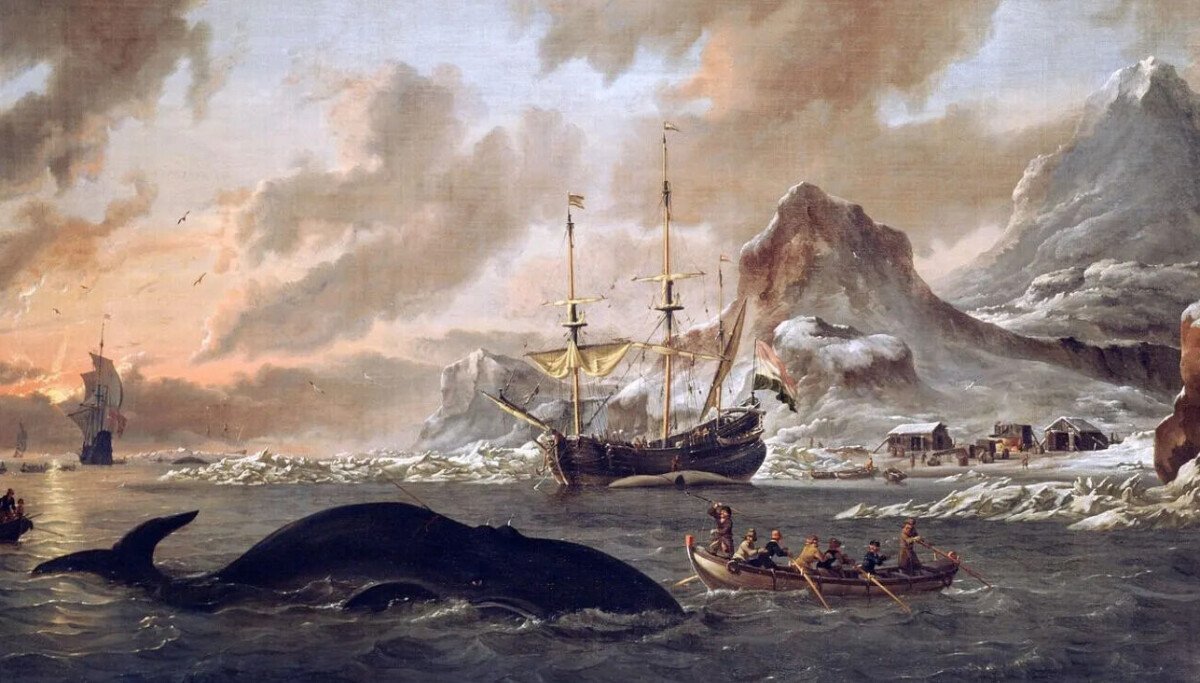
    The whaling of the past threatens the bowhead whale thousands of years into the future

    The Analyst by The Analyst
    April 23, 2026
    in Greenland
    The whaling of the past threatens the bowhead whale thousands of years into the future


    For a whaler the bowhead whale (Balaena mysticetus) is something close to the perfect prey.

    READ ALSO

    ELECTIONS 2026 D candidate: Children in Greenland must have the same rights as children in Denmark

    Trump envoy will replace Iran with Italy at World Cup

    The whale, weighing up to 100 tons, is a slow swimmer, and when it dies, it does not sink to the bottom like most other whales.

    Instead, the bowhead whale’s thick layer of blubber acts like a life jacket, keeping the giant afloat on the surface. Precisely the layer of blubber was the primary reason for the intense hunting of bowhead whales in the past.

    The fat was boiled into oil, which was an extremely expensive and sought-after commodity in large parts of the world, where it was especially used in lamps. For the same reason, the bowhead whale was hunted so massively over a period of just over 400 years that by the 1920s there were almost no more left.


    A bowhead whale photographed in Disko Bay in Greenland.
    Photo: Fredrik Christiansen

    Not long after, the species was protected, and today the population is on the rise, but the deadly past has left deep traces that may threaten the whale’s future. This is shown by a new comprehensive study that has just been published in the scientific journal Cell.

    METHODS OF THE STUDY

    Carbon 14 dating is used to determine the age of organic matter; that is, material that was once alive.

    The method works by measuring the remaining content of the radioactive isotope carbon 14, which decays when the organism dies.

    Carbon 14 has a half-life of 5730 years. Carbon 14 dating can be used to determine the age of organic material, which is up to approximately 50,000 years old.

    In the new study, the researchers have carbon 14-dated 850 bones from approximately 200 bowhead whales. Fossil DNA or aDNA are remnants of old and partially degraded DNA (hereditary material) preserved in, among other things, bones, teeth and hair from long-dead people, animals or plants.

    It can also be found in environmental samples such as permafrost and soil. Today, it is possible to analyze fossil DNA, which is up to two million years old.

    Isotope analysis can be used to map what animals and humans have eaten and what environmental conditions they have lived under.

    By measuring the value of different isotopes in teeth or bones, researchers can find traces of food items and changes in the environment.

    Sources: Lex.dk, Eline Lorenzen

    – We describe how the bowhead whale as a species has lost a large part of its genetic diversity, and how the negative development will only continue, says Eline Lorenzen, professor of molecular natural history at the Globe Institute at the University of Copenhagen and lead author of the new study, to Videnskab.dk.

    – In short, this means that the bowhead whale may become far more vulnerable to climate change, diseases and other threats in the future.

    Unique time series

    Although large, whale bones are hard to find. The skeletons of dead whales typically end up on the sea floor, where they are eaten by fish and microorganisms. In the new study, however, the researchers have had access to a completely unique collection of prehistoric bones from bowhead whales, which in terms of age spans the past 11,000 years.

    The bones do not just gossip about the bowhead whale’s past, but can also tell a great deal about the giants’ present and future. The many bones were collected by geologists in the 1980s and 1990s and ended up with Eline Lorenzen and the other authors by chance.

    – I canceled a scientific conference in 2017, where I completely coincidentally got into a conversation with a colleague who mentioned this time series of hundreds of bones from bowhead whales collected in high arctic Canada, says Eline Lorenzen.

    – I dropped my jaw and had to grab them immediately!

    Soon after, she heard about a similar series of bones – also from bowhead whales – collected on Svalbard in northernmost Norway.

    – Suddenly we had two independent and comparable time series of the bowhead whale’s history from the eastern to the western Atlantic. So, what are the chances? It’s absolutely crazy! says the professor.

    In the new study, the researchers examined the bones according to all the rules of art. They have each been dated using the carbon 14 method, while modern isotope analyzes reveal where the individual whales lived, what they ate and what the ecosystem looked like back then.

    Finally, the researchers have mapped the individual whales’ genomes based on fossil DNA in the bones and compared the results with the genome of living bowhead whales.

    Overall, the study tells two overall stories:

    · The bowhead whale has over time been an extremely robust species that has survived dramatic climate changes over the past several thousand years.

    · Today’s bowhead whales have greatly reduced genetic diversity compared to whales that lived before commercial whaling.

    Dangerous bottleneck

    And what does that mean?

    – This means that human predation on these whales has had enormous consequences, which will continue for thousands of years to come, says Eline Lorenzen.

    Before the massive impact of humans, the bowhead whale could otherwise withstand most things.


    Infographic: Ditte Svane-Knudsen, NOAA, Freymueller et al. (Ecology & Evolution)

    – Our analyzes show that over the past 11,000 years the whales have experienced dramatic climate changes with average temperatures that were two to three degrees higher than today, says the professor.

    – They have apparently managed this without major problems, because we see no significant decline in numbers, distribution or genetic diversity.

    It, in turn, came with commercial whaling, which took off from about the year 1540. Historical records based on logbooks from whaling ships testify to staggering numbers. The population around Svalbard – officially known as East Greenland-Svalbard-Barents Sea – declined from approximately 52,000 individuals to just a few hundred.

    – The decline fits perfectly with what we can read in the genetic data. It’s absolutely crazy, says Eline Lorenzen.

    Further west, the Canada-West Greenland population declined from approximately 18,500 to 6,000 individuals.

    The development has created a genetic bottleneck that can have a major negative impact on the bowhead whale.

    – When the number of individuals in a population falls so drastically, the genetic diversity also shrinks significantly in a few generations, says Eline Lorenzen.

    – But that process takes many, many generations and has not been fully expressed yet, because it was only four or five generations ago that whaling ceased.

    THE LOWLAND WHALE

    The bowhead whale (Balaena mysticetus) is one of the giants of the sea and the longest-lived mammal on the planet.

    A bowhead whale can live to be over 200 years old. The largest individuals are 18 meters long and can weigh up to 100 kilos. Bowhead whales are almost completely black with a white lower jaw.

    Whales have nature’s longest baleen; plates of creatine in the upper mouth that act as a strainer and catch zooplankton from the water the whale swallows.

    Was hunted intensively from around 1540 to 1931, when an international ban on hunting bowhead whales came into effect. It is estimated that the total bowhead whale population numbered approximately 90,000 individuals before commercial fishing took off.

    By the 1920s, only about 3,000-4,000 remained. Today there are around 23,000-24,000 individuals.

    Although the bowhead whale is today protected, indigenous peoples – Inuit in Canada, Alaska and Greenland – still have permission to kill a small number of whales under strict quotas.

    Sources: Lex.dk, NOAA, Eline Lorenzen

    Genetic diversity is the total pool of genes and other DNA in the genetic material, which a species has to draw on when it must continuously try to adapt to changing environmental conditions, diseases or climate change. In the bowhead whale’s case, that pool has thus become much smaller.

    – You can compare it to a Swiss army knife: the greater the genetic variation, the more tools there are in the Swiss army knife, says Eline Lorenzen.

    – Today, the bowhead whale has far fewer tools in its Swiss army knife than in the past.

    »State of the art«

    – It is an incredibly interesting study, says Michael Møller Hansen, professor at the Department of Biology at Aarhus University.

    Here he researches genetic variation and its importance for the adaptation and survival of populations and species. He is not involved in the new study, but has read it for Videnskab.dk.

    – In terms of research and methodology, it is state of the art (the highest level, ed.), says the professor.

    – They combine the best and most modern methods and show very convincingly that the bowhead whale has not been vulnerable to climate change and other environmental factors over the past 11,000 years. The only thing that has really mattered is whaling.

    Here, however, the consequences are long-lasting.

    – The bowhead whale will lose more and more genetic variation over the coming generations, simply because there are far fewer whales than before. With each generation, variation will be lost until it stabilizes at a lower level, says Michael Møller Hansen.

    The projections in the new study run up to the year 3500. Here, the genetic decline is far from over yet.

    – It takes tens of thousands of years to rebuild genetic variation, says Eline Lorenzen and points to a major possible challenge for the bowhead whale.

    – Historically, the species has adapted to rising temperatures, but it may become more difficult in the coming decades, she says.

    The majority of the whales that were killed by whalers came from the more southern parts of the whales’ habitats.


    Danish sailors also took part in the hunt for bowhead whales. On Rømø, there is tangible evidence in the form of a fence made of bones from bowhead whales in 1772.
    Photo: Eline Lorenzen

    – It is probably the more southerly whales in a given population that have adjusted to higher temperatures, while those further north have not had the same need, says Eline Lorenzen.

    – Today, the genetic material from the more southern whales has largely been lost, and this can weaken the species’ ability to adapt.


    Source link

    Related Posts

    ELECTIONS 2026 D candidate: Children in Greenland must have the same rights as children in Denmark
    Greenland

    ELECTIONS 2026 D candidate: Children in Greenland must have the same rights as children in Denmark

    May 4, 2026
    Trump envoy will replace Iran with Italy at World Cup
    Greenland

    Trump envoy will replace Iran with Italy at World Cup

    May 4, 2026
    Mineselskab buys into South Greenland company
    Greenland

    Mineselskab buys into South Greenland company

    May 4, 2026
    Flight had to return to Nuuk
    Greenland

    Flight had to return to Nuuk

    May 4, 2026
    Statutes for gillnet fishing set restrictions on fishing
    Greenland

    Statutes for gillnet fishing set restrictions on fishing

    May 4, 2026
    Narsarsuaq put Greenland on the world map
    Greenland

    Narsarsuaq put Greenland on the world map

    May 4, 2026
    Next Post
    OVP denounces that it has been 7 years since the disappearance of Hugo Marino and there is still no official response

    OVP denounces that it has been 7 years since the disappearance of Hugo Marino and there is still no official response

    POPULAR NEWS

    Justin Bieber fans flood Coachella festival for headlining show – Entertainment

    Justin Bieber fans flood Coachella festival for headlining show – Entertainment

    April 20, 2026

    Over 600 flee homes as Army, NPA clash in Negros Occidental

    April 21, 2026

    Ex-DPWH exec recalls P800-M ‘delivery’ to Zaldy Co 

    April 20, 2026

    Former PM Paluckas suspends party membership, to waive immunity over criminal probe

    April 24, 2026
    Pres. Ali challenges CARICOM to transform into health research powerhouse

    Pres. Ali challenges CARICOM to transform into health research powerhouse

    April 23, 2026

    EDITOR'S PICK

    B.C. declared toxic drugs a public health emergency 10 years ago. Has it made a difference?

    B.C. declared toxic drugs a public health emergency 10 years ago. Has it made a difference?

    April 14, 2026
    Everyone panicked, except missing Ruthven | News Extra

    Everyone panicked, except missing Ruthven | News Extra

    April 14, 2026
    The German auto industry faces new competition from China

    The German auto industry faces new competition from China

    May 1, 2026
    Between politics and religion: Trump versus Leo XIV

    Between politics and religion: Trump versus Leo XIV

    April 25, 2026

    Recent Posts

    • Expert: Belarus ranks among world leaders in early-stage cervical cancer detection
    • Georgia’s Annual Inflation at 5.9% in April 2026 – Civil Georgia
    • Pashinyan assessed progress with Azerbaijan
    • “Two died, several will remain disabled”: a pediatric traumatologist about injuries in Bishkek. Interview

      © 2026 Agentially - Navigating shifting sovereignties and global risk .

      Welcome Back!

      Login to your account below

      Forgotten Password?

      Retrieve your password

      Please enter your username or email address to reset your password.

      Log In
      No Result
      View All Result

        © 2026 Agentially - Navigating shifting sovereignties and global risk .

        This website uses cookies. By continuing to use this website you are giving consent to cookies being used. Visit our Privacy and Cookie Policy.