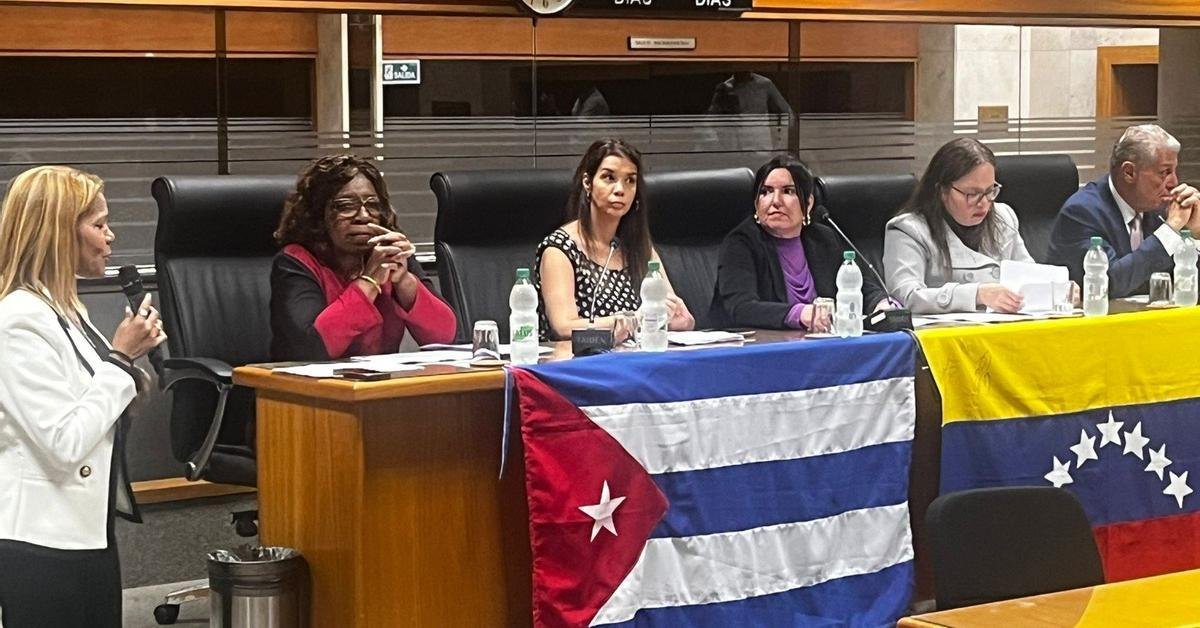
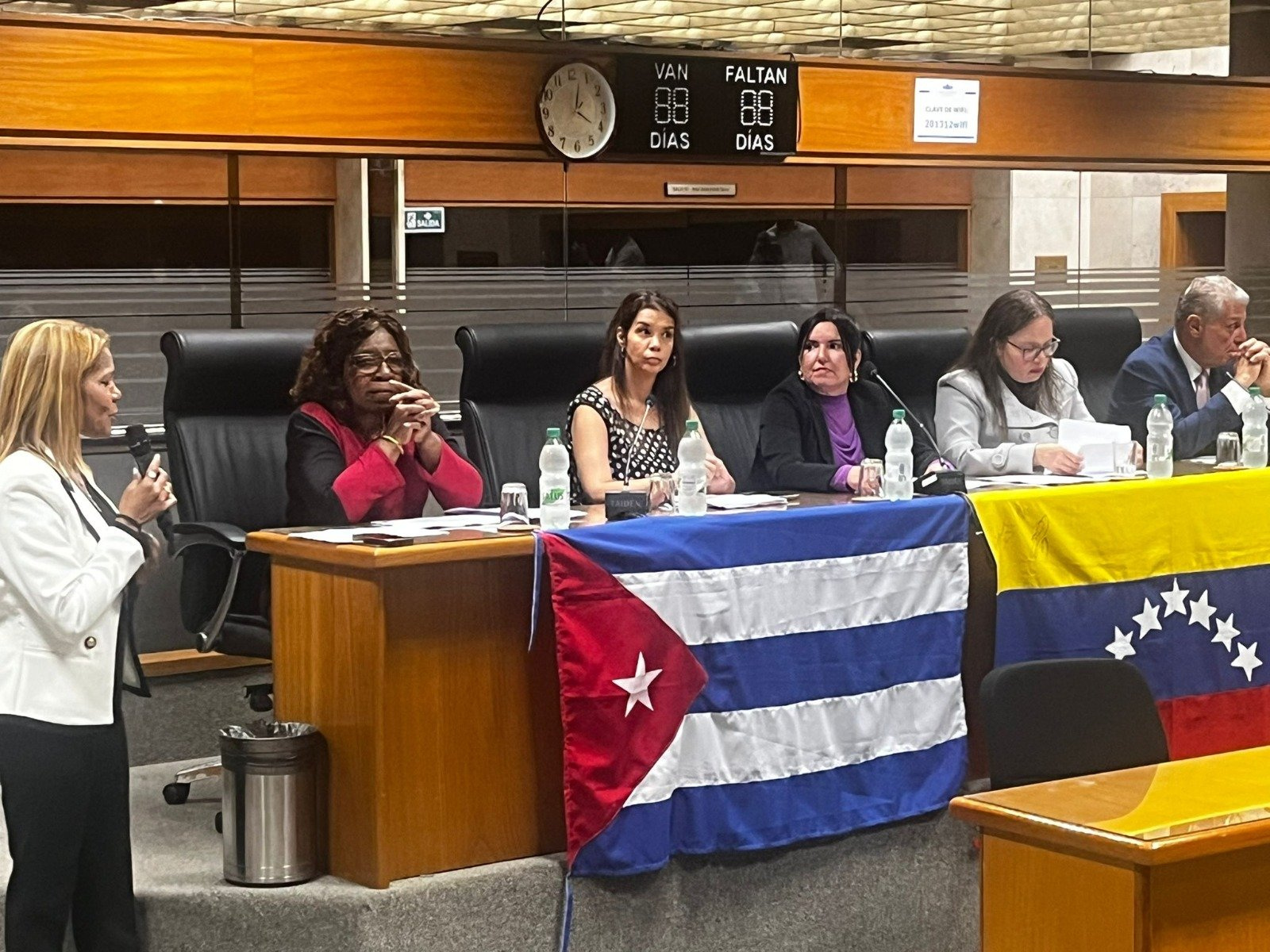
Havana/The Cuban representative in Uruguay Leydis Aguilera seeks the immigration regulation of 30,000 people, including thousands of Cubans, who live in Uruguay. The deputy promotes a Residency by Arraigo bill, which extends the program that operated between May 15, 2024 and November 23, 2025 and that favored to more than 20,000 migrants.
For foreigners seeking to reside in Uruguay, this proposal will allow them to “regularize an already pre-existing situation,” he told Montevideo Portal. The legislator explained that the Residency by Rooting program already exists in Uruguay, which was decreed on May 15, 2024 and was in effect until November 23, 2025. However, she assures that the bill “proposes the inclusion of residence by roots as a new immigration category.”
In addition, the proposal is focused on “people who are in the country, who live, who form their families, who contribute, who study, who are in the process of revalidating their degrees; it would allow them to access a residence.”
“It is about recognizing and regularizing an already existing reality,” Aguilera said to the newspaper The Observer. The project, he stressed, does not imply “indiscriminately opening the doors”, but rather “ordering the situation of those who already reside in the country.”
According to official figures, Uruguay has experienced an uninterrupted increase in migrants in the last decade. According to the last census, 3.5% of the Uruguayan population was born in another country, which is equivalent to a total of 120,000 immigrants.
According to the last census, 3.5% of the Uruguayan population was born in another country, which is equivalent to a total of 120,000 immigrants.
According to figures from The ObserverIn 2023, more than 7,000 Cubans who requested refuge remained “in limbo” because the care system is “suffocated.” The Ministry of Foreign Affairs then said that the country ended that year with 24,193 accumulated applications. A year earlier, Alberto Gianotti, from the Migrant Support Network, had warned that between 9,000 and 10,000 nationals of the Island They had to apply for a visa to maintain their legal status in the South American country.
Representative Aguilera told the same media that this phenomenon “has come to act as a fundamental element to maintain the stability of the size of the Uruguayan population.”
The official document establishes that the right to apply for residency may not be affected by the lack of a prior consular visa. “No person seeking refuge may have their right to obtain residency by roots affected by not having requested or obtained the normally required consular visa.”
Among the main criteria, it stands out that the applicant must not be prohibited from entering or staying in the country in accordance with articles 45 and 46 of the Immigration Law Number 18250. Likewise, it is required to prove an uninterrupted stay of more than 180 days in national territory, which seeks to guarantee an effective link with the country. “This requirement is interpreted as an indicator of real roots and continuity in the stay,” the project states.
Another key element is the impossibility of regularizing the immigration situation under the traditional categories of permanent or temporary residence, in accordance with articles 33 and 34 of the same law. This positions roots as an alternative route for those who are left out of conventional schemes.
The application process includes the presentation of documentation that supports the identity and situation of the applicant.
The application process includes the presentation of documentation that supports the identity and situation of the applicant. Requirements include proof of no criminal record, vaccination certificate, recent photographs and the identification document used to enter the country.
The document also recognizes the situation of those who have transited irregularly through other countries before arriving in Uruguay, also allowing them to benefit from this mechanism.
The regulations contemplate the figure of family roots as one of the main means of access to residence. People who prove direct ties – such as father, mother, spouse, cohabitant, minor children or older children with disabilities – could begin the process under this modality.
Another of the ways contemplated is the establishment of roots through training, which allows immigrants to regularize their situation through the accreditation of ongoing studies. To do this, they must demonstrate, through the Ministry of Education and Culture of Uruguay, that they are enrolled in a degree or course lasting more than one year.
In addition, it is required to prove economic income equivalent to at least the national minimum wage, which introduces a component of economic self-sufficiency in the process.