EXPECTATION GAP:
While the government projected 7.71 percent GDP growth for this year, consumers in the survey on average forecast GDP growth of 6.38 percent
-
By Crystal Hsu
/ Staff reporter
Taiwanese consumers are growing more cautious about the economy and spending, despite continued signs of strong growth in official data, underscoring a widening gap between macro fundamentals and household sentiment as geopolitical tensions and inflation concerns intensify, a survey released yesterday by Cathay Financial Holding Co (國泰金控) showed.
The shift in sentiment comes as the lingering conflict between the US and Iran has pushed oil prices higher and revived fears that rising energy costs could feed into broader inflation, weighing on consumer confidence in Taiwan’s trade-dependent economy.
That caution is clearly visible in expectations, as 50.3 percent of respondents said they believe Taiwan’s economy would deteriorate over the next six months, more than double the 23.7 percent expecting improvement, while another 21.2 percent see conditions holding steady, the survey found.
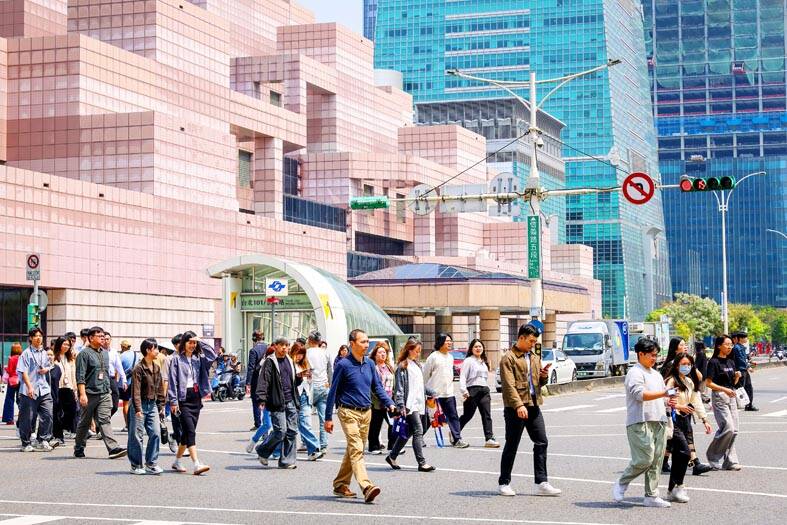
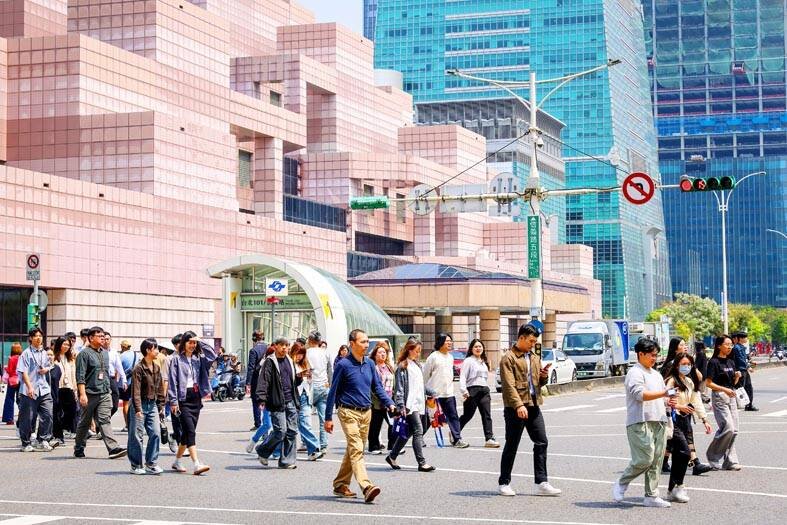
Photo: Ritchie B. Tongo, EPA
The pessimism contrasts sharply with official indicators.
The government’s business climate monitor was “red” in February, indicating strong economic momentum, while both leading and coincident indicators continued to rise, data from the National Development Council showed.
The Directorate-General of Budget, Accounting and Statistics in February projected 7.71 percent economic growth for this year, with inflation contained at 1.68 percent.
However, consumers are already preparing for a weaker reality, expecting GDP growth of just 6.38 percent on average, while 37 percent said they believe expansion would exceed 7 percent, the survey showed.
Inflation expectations are also trending higher at 2.27 percent, reflecting concern that crude oil prices near US$100 a barrel — after disruptions through the Strait of Hormuz — could keep imported costs elevated, it showed.
The result is a more defensive household stance. Nearly two-thirds of respondents expect their income to remain unchanged over the next six months, while close to half say they would hold back on durable goods and big-ticket purchases.
Housing sentiment remains particularly weak, with 63.9 percent saying it is not a good time to buy property and 59 percent also are unwilling to sell — signaling a market stuck in a wait-and-see mode, despite firm price expectations.
Still, financial market sentiment is showing relative resilience. After a sharp sell-off last month, local equities have rebounded this month, stabilizing risk appetite.
Forty-five percent of respondents expect the TAIEX to rise over the next six months, versus 28.5 percent who expect a decline.
That has translated into cautious reallocation rather than outright risk aversion as 37.5 percent plan to shift cash or deposits into equities, while 14.4 percent said they intend to reduce exposure. Nearly half — 48.1 percent — plan to keep allocations unchanged.
On housing, expectations remain paradoxically firm despite weak sentiment, with 44 percent of respondents anticipating prices in their area would rise more than 3 percent over the next six months, including 9 percent expecting gains of more than 10 percent.