Kazakhstan will lose one of its export routes from May: Astana will not be able to pump oil through the Druzhba system to the German refinery in Schwedt. Russia’s income from this transit is minimal, Kazakhstan will be able to redirect volumes for export through Russian ports, and Germany will be able to buy raw materials from the sea, but at a higher price. A Kommersant source believes that Russia is unlikely to rush to restore transit in this direction, taking into account relations with the West.
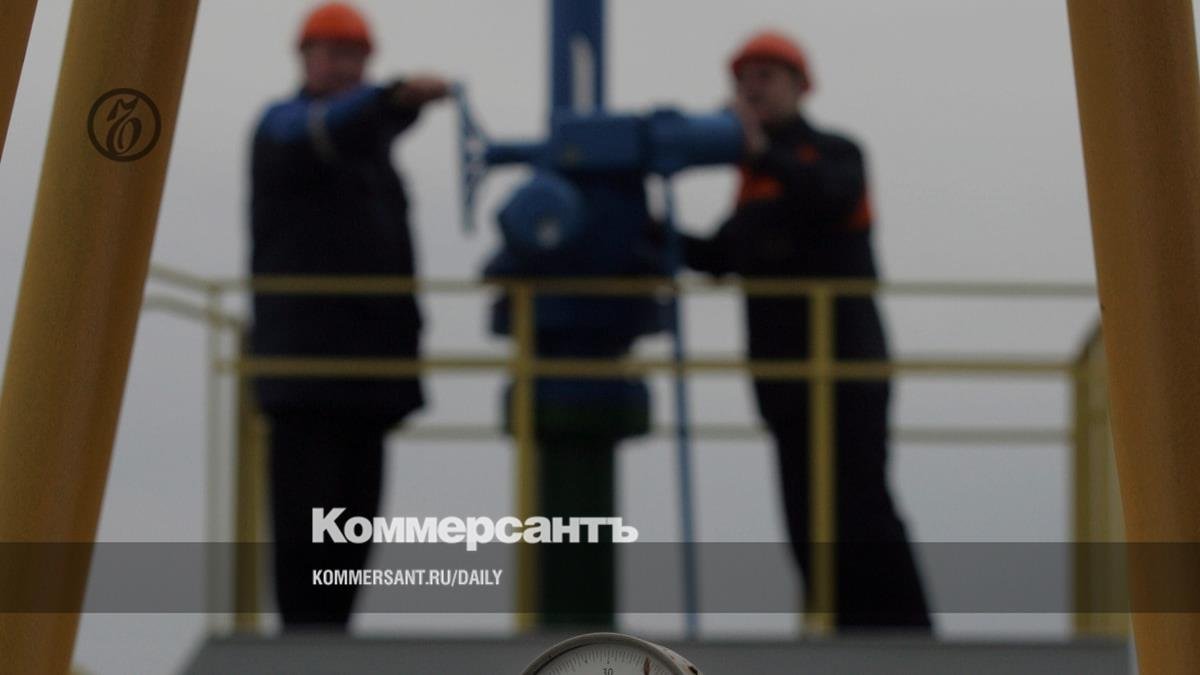
Russia will suspend the transit of oil from Kazakhstan to Germany via the Druzhba oil pipeline from May 1, Deputy Prime Minister Alexander Novak told reporters on April 22. He explained this by “technical capabilities today” and noted that raw materials will be supplied in other free directions. Mr. Novak emphasized that the pipeline remains the most effective infrastructure for supplying energy resources to Europe and, under normal relations, should be used to its fullest extent, as this is beneficial to both suppliers and consumers.
Kazakh Energy Minister Erlan Akkenzhenov linked the suspension of transit to recent attacks on Russian infrastructure.
According to him, Kazakhstan initially did not plan to ship oil to Germany via Druzhba in May and in the future will be able to redistribute volumes along other routes, in particular through the Caspian Pipeline Consortium (CPC). 80% of oil exports from Kazakhstan go through the CPC. Mr. Akkenzhenov emphasized that exports along this route are stable. Raw materials can also be redirected to China. Supplies through Druzhba will be restored as soon as technically possible, the official said.
The recipient of Kazakh oil under Druzhba was the German refinery PCK Raffinerie GmbH in Schwedt with a capacity of 11.6 million tons. Transit through Russia covered about 20–30% of the plant’s current needs. Last year, the volume of supplies amounted to 2.1 million tons, in 2026 it was planned to increase them to 3 million tons. It is still unknown where the refinery will purchase oil from now on. German Economics and Energy Minister Katerina Reiche told reporters that alternative routes exist, but they need to be “carefully planned.” We are talking about supplies through the Polish port of Gdansk or the German Rostock located at sea, with subsequent pumping through a pipeline to Schwedt.
Polish pipeline operator PERN has confirmed that it will be able to supply oil to Germany from Gdansk. But so far, as his representative said, the company has not received such requests from the German side.
A Kommersant source on the market does not see the suspension of transit as a tragedy for either party.
“Russia still did not receive significant profits from these supplies, Germany will be able to buy raw materials on the market, it will just be more expensive for it, and Kazakhstan will easily find other sales routes,” he says. Kommersant’s interlocutor recalls that the 2 million tons that went through Druzhba to Germany is less than 3% of the total oil exports from the republic. Such small volumes can be redirected to the ports of Novorossiysk, Primorsk or Ust-Luga for deliveries to Germany by sea. Another Kommersant source suggests that Russia is unlikely to rush to restore transit in this direction, given strained relations with the West.
Igor Yushkov, an expert at the Financial University under the Government of the Russian Federation, points out that in fact, the transit of oil from Kazakhstan through Russia via the Transneft system via the Atyrau-Samara oil pipeline will continue, the raw materials will simply be loaded onto tankers in the Black or Baltic Sea. But, he notes, if the safety of these supplies is not ensured, then in the event of any incidents on the port infrastructure, the shortage of hydrocarbon raw materials will increase on the world market in general and the European market in particular. Therefore, the expert believes, Germany will be interested in maintaining this supply channel. The country, says Mr. Yushkov, has a financial lever of pressure on Kyiv, which Berlin can refuse the next tranche if the situation worsens, although this does not guarantee complete security for Russian ports.