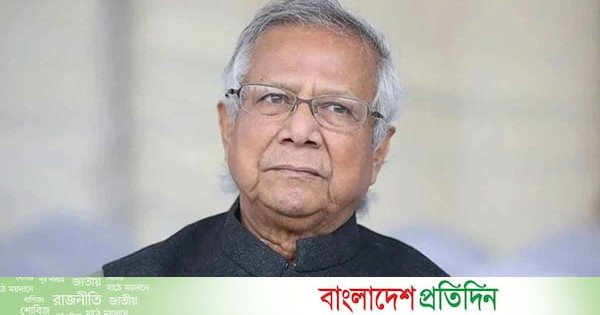
After the fall of the autocratic Awami League government, Dr. An interim government led by Mohammad Yunus came to power. Many Bangladeshis saw this change as an opportunity to reshape the country’s political trajectory. Citizens hoped for a return to democratic governance based on institutional reforms, re-establishment of the rule of law, greater accountability, transparency and justice.
However, deep debate remains over the interim government’s eighteen months of action. While their supporters touted a peaceful transfer of power and some administrative changes after February’s general election, critics say the interim government has significantly failed to live up to expectations. One of the main promises of the interim government was a comprehensive reform of state institutions.
But according to critics, the regime has increasingly been controlled by unelected civil society figures. Many of whom are foreign nationals. Also active was an impressive ‘kitchen cabinet’. As well as a vested interest group that wielded enormous influence without democratic accountability. Instead of reforms, the interim government implemented a politics of revenge through mass arrests and long detentions of various lawyers, politicians, journalists, academics and political activists. How many people were arrested, formally charged or ultimately prosecuted while they were in power raises questions as the details are not made public.
Another major criticism centers on the alleged politicization of state institutions. According to critics, the interim period allowed Jamaat-e-Islami and the National Citizen Party (NCP) to expand their influence in various parts of the bureaucracy and other state institutions. Instead of strengthening good governance, self-aggrandizement, nepotism and corruption increased during this period.
These concerns are reinforced by a recent investigation by Transparency International Bangladesh (TIB). The corruption index is said to have worsened during the interim administration.
Critics argue that despite promises of transparent governance, the interim government operates with virtually no accountability system. Unlike an elected government, its advisers were not subject to meaningful parliamentary oversight or public scrutiny. Chief advisor. The role of Muhammad Yunus has also created a lot of controversy. Although he is widely respected internationally and has received strong support from Western governments, particularly the United States.
According to critics, his administration failed to separate public office from personal interests. Corruption and tax-related cases against Yunus and his associates have been dropped. In addition, additional opportunities have been granted to companies associated with its business interests, such as manpower export licenses. Similarly, the signing of the US-Bangladesh mutual trade agreement has also sparked controversy. Many described the agreement as an important step in strengthening bilateral economic ties.
But according to critics, the agreement is inconsistent. Because of this, America’s strategic and commercial interests will be protected. It also risks limiting Bangladesh’s long-term economic sovereignty.
Perhaps the most visible source of frustration for ordinary citizens is the deterioration of law and order. ‘Mob’ was like a daily companion. On the other hand groups known as ‘Tawhidi Janata’ have conducted their activities with increasing confidence. Critics charge that the interim government has failed to deal decisively with such groups. This has resulted in an environment where illegal activities have become increasingly normal. This further erodes public confidence in law enforcement agencies.
Equally worrisome, according to many observers, was the narrowing of intellectual and cultural expression. The situation was such that artists, academics, writers and cultural organizations found themselves increasingly cornered. They became reluctant to express dissent.
Instead of encouraging pluralism, critics argue, the administration has often used labels like ‘fascist’ to denigrate political opponents and stifle fair criticism. They also claim that supporters of the interim government, along with the Jamaat and the NCP, have used similar rhetoric in contemporary politics. In particular, efforts to politically isolate the Bangladesh Nationalist Party (BNP) were conspicuous.
The recent announcement of mass protests by the Jamaat-led 11-party alliance against the BNP-led government has intensified these concerns. Critics see the protests not just as democratic opposition, but as an attempt to create another round of political instability aimed at regime change, bypassing the normal constitutional process.
Given these developments, it stands to reason that the Jamaat and the NCP should bear political responsibility for the lapses associated with the interim government. Both parties benefited significantly from the political environment created during this eighteen month period. As a result they have expanded their institutional influence.
Similarly, advisers exercising executive powers during the interim government cannot be exempted from scrutiny. Any allegation of abuse of power, illegal detention, biased trial, abuse of state power or conflict of interest deserves an independent investigation under due process. Accountability is a cornerstone of democratic governance and should apply equally to both elected and unelected administrations.
Ultimately, the interim government will be judged not by its promises, but by its legacy. The aspirations of millions of Bangladeshis for institutional reform, justice, transparency and democratic renewal have only been partially fulfilled. If Bangladesh is to move forward, every administration, past, present and future, regardless of political affiliation or international support, must be judged by the same standards of accountability. Sustainable democracy does not depend on individuals, but on strong institutions, equal application of the law and respect for democratic principles.