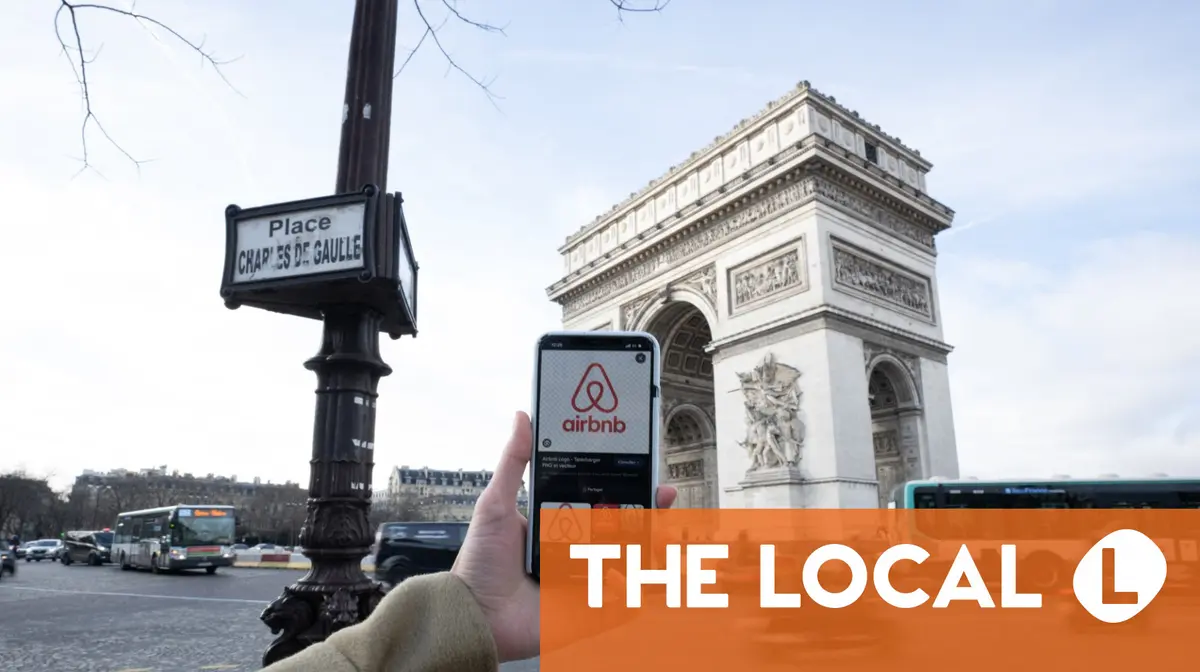
Like many countries around Europe, France is clamping down on the rental platform Airbnb, which is accused of creating housing shortages for locals. Here’s what that means if you are planning to stay in one this summer.
Around Europe, protests have been growing about over-tourism that reduces the quality of life for locals, with the US property rental giant Airbnb often cited as a symbol of the problems.
While France hasn’t seen wide scale protests like those in Spain and Italy, local authorities in areas with a housing shortage are increasingly pushing back on tourist rentals, such as Airbnb.
That means a variety of new rules and restrictions in place. Although the rules are almost all targeted at the owner, not the person renting, it’s worth being aware of the restrictions that may be in place.
Check it’s registered
Since 2025, any furnished property that is rented out – even for just a couple of weeks of the year – must be properly registered with local authorities and have a registration number.
Anyone wishing to list their French property on Airbnb must first register it with the authorities and display the registration number on their listing.
For guests, this number doesn’t really change much – it’s a requirement for anyone listing a property in France on the portal, and means that the hosts are paying all their taxes and social contributions, and also meet safety and energy standards, have valid insurance and are updated on evolving local regulations.
On the off-chance you see a French property listed without this number included, it may be best to avoid, as unlicenced rentals can be closed down by local authorities.
Annual limits
Numerous towns and cities in France impose strict limits on the number of days Airbnb properties may be rented to visitors.
The EU-wide short-term rental data-sharing regulation that came into effect in May means that monitoring total rental periods is now much more straightforward.
Officials in Paris, in particular, are being particularly aggressive on enforcement of these time limits. It’s no consolation, but if your Airbnb host suddenly cancels on you without warning, chances are it’s because they’ve gone over the period they’re allowed to rent under short-term tourism rules.
Keybox bans
Some towns and cities have targeted the most obvious symbol of tourist rentals, on-street ‘keyboxes’ that allow landlords to leave a key out for tourists without having to be present for check-in and check-out.
Paris, Lille, Annecy, Saint-Malo, Biarritz, Marseille, Besançon, Nice, Avignon and Wimereux have all outlawed key boxes placed on public property, such as lampposts, bike racks, electricity cabinets, poles and lamp posts, and other towns and cities are starting to follow their lead.
In practical terms, for anyone staying in an Airbnb this summer, this basically means your host might have to arrange a handover of keys when you arrive, or set up a keybox somewhere on the property so that it doesn’t fall foul of the street furniture crackdown.
Airbnb bans
In truth, there aren’t any outright ‘Airbnb bans’ in France, although some local authorities have banned the listing of new Airbnbs, which sometimes gets reported as a ban.
In areas that have strict rules, this has led to the rise of places listed as ‘apart-hotels’ – some of these truly are apart-hotels – that is, a place that has the facilities of a hotel (reception desk, breakfast area etc) but where each guest gets a space more like an apartment with a living area as well as a bedroom.
Some, on the other hand, are simply Airbnb apartments by another name, often with some creative descriptions (eg the ‘breakfast room’ turns out to be the boulangerie next door).
Linens
Most Airbnb properties in France provide bed linens and towels, but a significant minority don’t – and it’s important to be aware that, while every rental in France must contain basic amenities, such as a bed and a blanket, this does not mean bed sheets must be included.
When booking, therefore, make sure you check the ‘amenities’ section of the property listing to confirm the host provides towels and bed linens. Better to know in advance and be prepared.
By the same token, if a rental says they will provide the linens and does not, Airbnb can penalise them for false advertisement – make sure you screenshot the property description and take photos at check-in.
Noise
No one expects you to be silent, but towns and cities can enforce ‘quiet hours’ between 10pm and 7am, when you’re expected to keep the noise down to reasonable levels so your temporary neighbours can get some shuteye.
If you’re staying in an Airbnb in such an area – Paris is one – you should be informed by your host and you can expect a visit from local law enforcement if you ignore it.