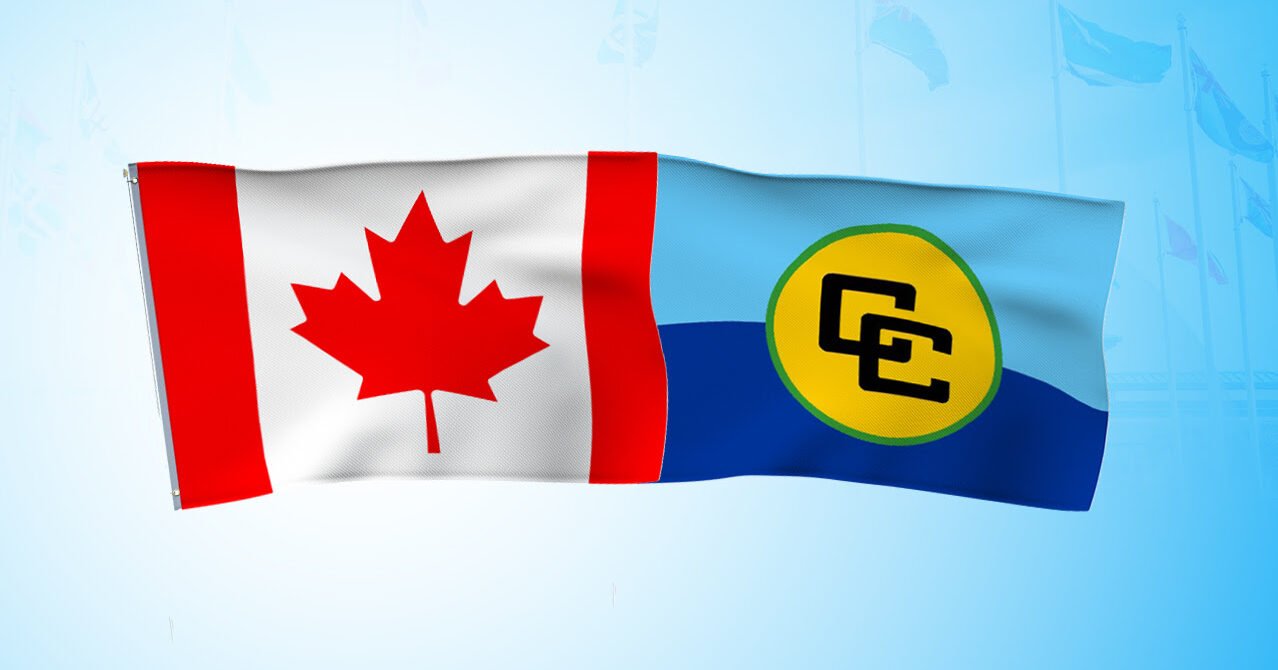

Canada and the Caribbean Community (CARICOM) have reaffirmed their commitment to deepening cooperation after foreign ministers from both sides met during the 2026 Organization of American States (OAS) General Assembly in Panama City, Panama.
According to a joint press release, the 2026 Canada-CARICOM Foreign Ministers’ Group Meeting was co-chaired by Canada’s Minister of Foreign Affairs, the Honourable Anita Anand, and Barbados’ Minister of Foreign Affairs and Foreign Trade, the Honourable Christopher Sinckler, representing the Chair of the CARICOM Council for Foreign and Community Relations (COFCOR).
The discussions built on the Canada-CARICOM Strategic Partnership established in 2023, with ministers acknowledging that growing geopolitical uncertainty has made closer collaboration increasingly important. They reaffirmed their shared commitment to regional security, economic prosperity, climate resilience and democratic governance.
During the meeting, the release said that ministers reviewed progress made under the Strategic Partnership and approved a renewed Action Plan focused on three key priorities—building competitive and resilient economies, advancing climate action, and strengthening regional security and stability. They agreed that the plan should include defined timelines, measurable targets, and sustainable financing to ensure effective implementation.
According to the release, security featured prominently on the agenda, with ministers examining challenges posed by transnational organized crime, gang violence, irregular migration, and the deteriorating situation in Haiti. They agreed that stronger regional cooperation is needed to improve institutional capacity, reinforce maritime security, and combat illicit trafficking.
The ministers also recognized that the region’s security threats have become increasingly interconnected, requiring coordinated action in areas such as maritime security, cyber resilience, intelligence sharing, and dismantling criminal networks. Canada was commended for its continued support through capacity-building initiatives, targeted interventions, and operational partnerships.
Reportedly, the crisis in Haiti received significant attention during the meeting. Ministers voiced concern over the country’s continuing political instability, security challenges and humanitarian situation, noting the wider regional effects, including increased drug and weapons trafficking.
They stressed the need for continued international backing for the Gang Suppression Force (GSF), describing it as an important element in helping Haitians restore security. Ministers also pledged their full support for renewing the mission’s mandate at the United Nations Security Council in the early fall.
The meeting acknowledged the progress made through GSF deployments, including command-level personnel and ongoing training and capacity-building efforts on the ground.
Ministers reiterated that the Haitian people must determine their own political future and reaffirmed CARICOM’s support for Haiti’s interim authorities as they work toward holding credible elections as soon as possible. They also highlighted the importance of tackling corruption and impunity by bringing Haiti’s two newly established specialized judicial units into operation without delay.
To maintain international attention on Haiti, ministers agreed to hold broader consultations during the United Nations General Assembly to examine both immediate and long-term collective responses to the country’s challenges.
Economic development and climate resilience were also identified as closely linked priorities. Ministers emphasized that access to affordable and dependable energy is essential for economic expansion, industrial growth, and innovation. They pointed to opportunities to increase trade and investment, strengthen supply chains and promote sustainable development through stronger commercial ties.
The discussions also highlighted the role of the Commonwealth Caribbean Countries Tariff programme, known as CARIBCAN, which grants duty-free access to the Canadian market for most products originating in 18 Commonwealth Caribbean countries and territories.
Against the backdrop of global economic uncertainty and geopolitical tensions, ministers said Caribbean countries must strengthen their ability to withstand external shocks, including supply chain disruptions and climate-related disasters. The release said they called for continued cooperation to improve resilience, while advocating for reforms to the international financial system and greater access to concessional financing for vulnerable middle-income Small Island Developing States.
The meeting further underscored the importance of disaster preparedness, expanding clean and renewable energy, preserving correspondent banking relationships and improving access to climate finance and concessional funding that reflects countries’ vulnerabilities and capacity to absorb external shocks.
As per the release, looking ahead, ministers reaffirmed their commitment to the Canada-CARICOM Strategic Partnership as an important framework for cooperation. They directed officials to finalize the renewed Action Plan by identifying priority initiatives, developing an implementation workplan and strengthening reporting mechanisms. A Senior Officials’ Dialogue is also scheduled for the fall to advance implementation and report progress back to ministers.
The meeting brought together senior representatives from across CARICOM, including Dominica High Commissioner to Canada Steve Ferrol, Barbados’ Christopher Sinckler, The Bahamas’ Frederick A. Mitchell, Jamaica’s Kamina Johnson Smith, Guyana’s Hugh Todd, Saint Lucia’s Alva Romanus Baptiste, Saint Vincent and the Grenadines’ Dwight Fitzgerald Bramble, CARICOM Assistant Secretary-General Elizabeth Solomon, Belize Chief Executive Officer H.E. Oscar Arnold,, Grenada Ambassador Hassan Hadeed, Haiti’s Jean Especa, Saint Kitts and Nevis Ambassador Jacinth Henry-Martin, Suriname Ambassador Chairmé C. Haakmat-Konigferander, and Trinidad and Tobago Chargé d’Affaires Akilah Seale.