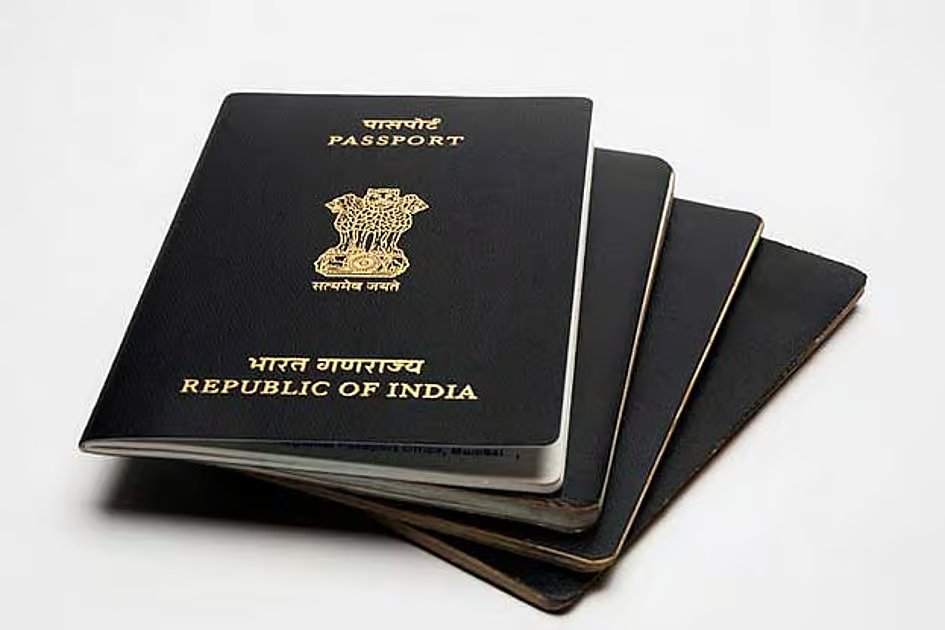
Shortly after an Indian official from the Ministry of External Affairs said that the Indian passport is just a travel document and not one that can verify citizenship, a massive uproar took place online.
Obtaining the Indian passport is a tedious process that verifies one’s identity, education, family background and residence among many other things — which led many to believe that it would qualify as proof.
However, the Indian passport is a document issued by the Ministry of External Affairs as is governed by the Passports Act of 1967. The matter of citizenship, on the other hand, falls under the Citizenship Act of 1955, under the jurisdiction of the Ministry of Home Affairs.
Stay up to date with the latest news. Follow KT on WhatsApp Channels.
Also, in some cases, the authority can issue passports and travel documents to non-citizens, if the Government finds it necessary to do so.
So now, this begs the question: Which documents can legally prove Indian citizenship?
Indian residents have a multitude of identification cards issued by the Government of India, let’s take a closer look at them:
1. Aadhar Card
Issued by the Unique Identification Authority of India, the Aadhar is a 12-digit individual identification number. This card can be issued to any resident of India and is used to avail government services, and can be used as proof of identity.
This, too, however, does not legally prove citizenship. The document establishes identity, not citizenship, as it can be issued to non-citizen residents of India.
2. PAN Card
A Permanent Account Number (PAN) is a ten-digit alphanumeric identifier, issued by India’s Income Tax Department. This number is issued to existing taxpayers or persons who are required to file a return of income, and therefore, cannot classify as a proof of citizenship.
3. Voter ID
A Voter card is issued by the Electoral Commission of India to citizens of a locality within India, allowing them to cast their vote in regional and national elections. This, however, is issued by a separate entity and not by the Ministry of Home Affairs and therefore does not qualify as legal proof for citizenship.
4. Birth certificate
A resident’s birth certificate shows proof of birth in the nation. However, while this document confirms that the person may be a resident, it does not automatically grant citizenship — except in some cases, where the citizenship of parents can be proven.
Here’s a better look on how it works:
How citizenship works
Indian citizenship is governed by the Citizenship Act of 1955, and falls under the jurisdiction of the Ministry of Home Affairs.
As of now, according to the Embassy of India in Abu Dhabi, an individual can obtain Indian citizenship by one or more of the following means:
-
Citizenship by birth: Every person born in India on or after January 26, 1950 but before the beginning of the Citizenship (Amendment) Act, 2003, where both the parents are citizens of India or one of whose parents is a citizen of India and the other is not an illegal migrant at the time of birth, shall be a citizen of India by birth.
-
Citizenship by descent: Every person born outside India shall be a citizen of India by descent if both the parents or either of them is an Indian citizen, not being an illegal migrant, provided his/her birth is registered at an Indian Mission/Post abroad within one year of the birth.
-
Citizenship by registration: The Ministry of Home Affairs may register as a citizen of India any person that falls under an approved category.
-
Citizenship by naturalisation: A person of full age and capacity can apply for citizenship by naturalisation under the provisions of Third Schedule to the Citizenship Act.
Can residents and NRIs prove their citizenship in India?
On December 20, 2019, India’s Press Information Bureau addressed this question as part of a larger document on the National Register of Citizens, also known as the NRC.
It said that citizenship can be proved “by submitting any documents related to date of birth and place of birth. However, a decision is yet to be taken on such acceptable documents.”
As of now, there is no final list of acceptable documents that can prove Indian citizenship. However, the 2019 release did say that the government will continue to evaluate documents that can be added to this list in order to verify one’s citizenship status.