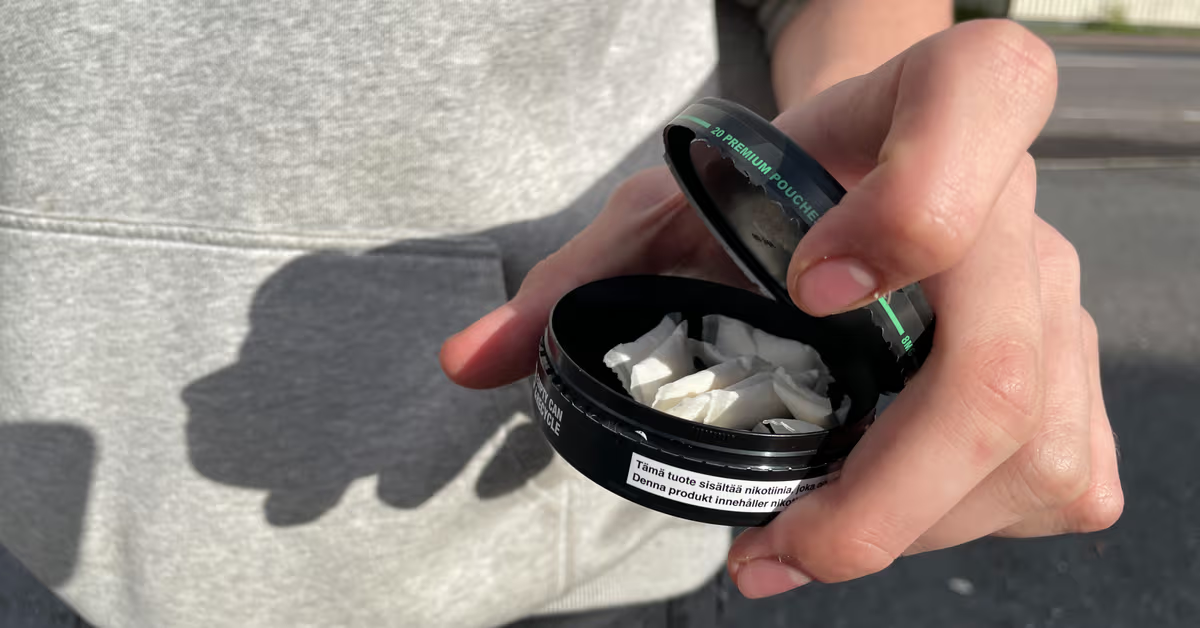
Politicians chose short-term financial interests over the health of young people, argues THL Director Mika Salminen, who says nicotine is “nearly as addictive as heroin”.

Mika Salminen, Director General of the Finnish Institute for Health and Welfare (THL), has slammed the political decision to allow the sale of nicotine pouches in Finland.
He calls that “a huge mistake”, in which politicians chose money over the health of young people.
In an interview with Yle’s Swedish-language service, Salminen argues that the products are so harmful, addictive and unnecessary that they should never have been allowed on the market.
“Nicotine is almost as addictive as heroin,” Salminen notes.
He further alleges that these products were released onto the market primarily for tax reasons, regardless of the health risks to young people.
Money or health?
Instead of banning nicotine pouches, as was done with snus – a form of powdered tobacco popular in neighbouring Sweden – Finland decided to allow pouch sales under certain conditions. The idea was to prevent smuggling while controlling the market and collecting taxes.
In Salminen’s view, this was short-sighted. He says that research has shown clearly that nicotine is harmful to health – and that there is no reason to believe that nicotine pouches any less dangerous than other products containing the powerful stimulant.
For example, it can be really dangerous if a baby ingests a nicotine sachet, says Salminen. Pouches left lying on the ground can also be toxic for wildlife.

Nicotine is linked to a wide range of risks to heart, brain and nervous system, as well as to a foetus if the user is pregnant.
“Furthermore, the amount of nicotine allowed in the pouches in Finland is really high,” he says.
A law passed last summer allows a maximum nicotine content of 16.6 mg/g. That legal reform also limited the flavours that can be sold – an issue that sparked a political dispute within the government. It also required health warnings on packages as of early 2026. Further restrictions on packaging take effect in August. The sale of nicotine pouches was first liberalised in 2023.
Do you want to support an unethical industry?
The use of nicotine pouches has increased in Finland, especially among young people – and particularly boys and men.
A THL study of vocational school students last year found that one in four boys and one in six girls used nicotine pouches daily.
Salminen is particularly concerned that a new generation of young people is at risk of becoming addicted to nicotine even though traditional cigarette smoking has declined sharply.
“It is of course part of being young to test your limits and take risks, and maybe not think so much about your health,” he says. “But I wonder if those who use nicotine pouches want to support a business that is fundamentally unethical?”
Salminen says he is referring to tobacco companies’ dubious reputation on environmental issues, human rights and other issues.
Big Tobacco’s tactics
The THL chief compares what is happening with nicotine pouches with the history of cigarettes.
“It has been shown that the tobacco giants knew about the health dangers of smoking for a long time, yet they kept quiet about them and managed to trick people into becoming addicted,” he says.
The popularity of smoking has declined in Finland, and in the western world in general. This is due to increased awareness of the dangers of smoking and smoking being restricted in many ways.
“So now the tobacco industry is probably trying to create new business with nicotine pouches,” Salminen suggests.