
As Iranian media reports on explosions on Iran’s Kharg Island, here’s why it’s so strategic:
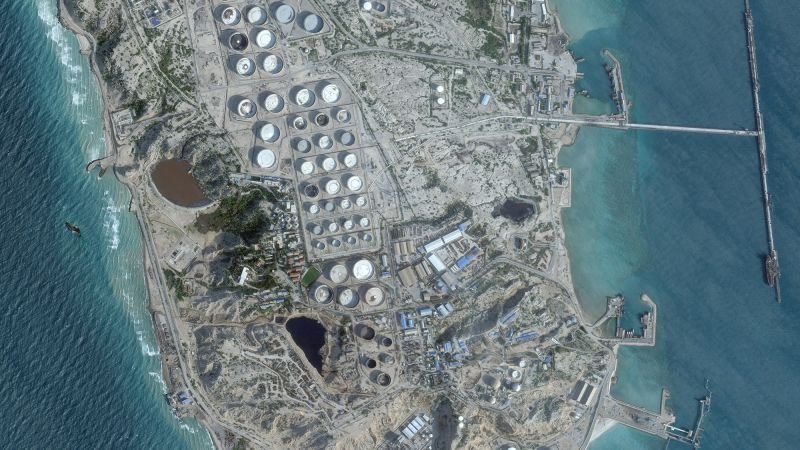
Kharg Island is roughly a third of the size of Manhattan but is central to Iran’s economy, handling roughly 90% of the country’s crude exports. It’s located at the very northern end of the Persian Gulf, away from the Strait of Hormuz but critically near Iranian oil facilities.
Almost every day, millions of barrels of crude oil gush from Iran’s major fields — including Ahvaz, Marun and Gachsaran — through pipelines to the island, known among Iranians as the “Forbidden Island” due to tight military controls.
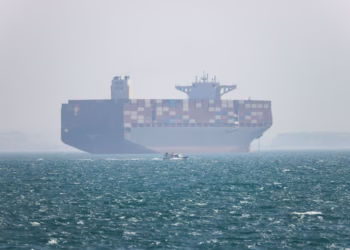
Its long jetties, jutting into waters deep enough to accommodate oil supertankers, make the island a critical site for oil distribution.
Storage capacity on Kharg is estimated at roughly 30 million barrels and, according to global trade analyst Kpler, about 18 million barrels of crude are currently stored there, Reuters reported.
Last month, Trump announced that the US military conducted what he called “one of the most powerful bombing raids in the history of the Middle East,” wiping out military assets on Kharg Island. A US military official told CNN the strikes were “large-scale” but avoided hitting the island’s oil infrastructure.
CNN previously reported that the Trump administration was weighing using US troops to seize the tiny island as leverage over the Iranians to coerce them to reopen the Strait of Hormuz.
Iran had been laying traps and moving additional military personnel and air defenses to the island in recent weeks in preparation for a possible US operation to take control of the island, according to multiple people familiar with US intelligence reporting on the issue.
Watch more on the island from CNN’s Paula Hancocks:

Is Kharg Island the key to getting Iran’s oil?
President Trump has told the Financial Times he is considering raised the prospect of seizing Kharg Island, a coral outcrop 25 km off Iran’s coast, which handles 90% of the country’s crude exports. But taking Kharg Island doesn’t necessarily mean getting all of Iran’s oil. CNN’s Paula Hancocks explains.
CNN’s Natasha Bertrand, Zachary Cohen and Kylie Atwood contributed reporting to this post.