With the restoration of relationships between the United States and Venezuela, Caracas began a process of reforms in laws which, in theory, allow a greater participation of the private and foreign sector leaving aside years of nationalization.
READ ALSO

In that sense, one of the priority sectors is the electrical. immersed in a serious crisis when of 30,000 megawatts of capacity only generate about 15,000According to experts, in the Caribbean country they are constant blackouts of more than four hours a dayespecially in homes outside the capital.
READ ALSO

In recent days, the person in charge of the country, Delcy Rodriguezsigned a memorandum with General Electric for recover more than 5,000 megawatts for him National Electric System (SEN) within a period of four years.
Although there is expectation of possible improvement, they are the same workers of the National Electric Corporation (Corpoelec) who they denounce the opacity in new contracts and exclusion of Venezuelan personnel in what will be the company’s repair process.
Electrical workers in Venezuela Photo:Ana Rodríguez Brazón/EL TIEMPO
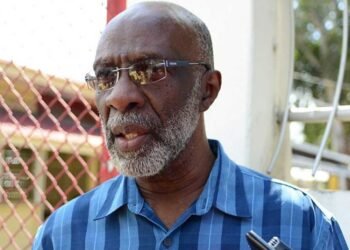
Alexis Rodriguezmember of Executive Committee of Workers of the Electrical Industry of Venezuela, questioned that leave out the technicians of the company because they are “the ones They know the reality of Corpoelec“he said at a press conference.
For Rodríguez, it is inadmissible that the National Assembly intends to debate a reform to the current law and the workers have not even been consultedwho also demand fair treatment.
The union member recalled that for nine years old do not receive a supply of uniforms and that currently the minimum wage of workers is about 2 dollars a month more bonuses.
Layoffs and bad payments, the constant in Venezuela
On the other hand, more than 500 workers have been laid off by political reasons and are waiting for the restoration of their jobs.
For your part Oswaldo Mendezrepresentative of the electrical workers of the state of Lara, recalled the fear that exists for the 34,000 employees what the industry has and what are not being taken into account nor for salary increase, added to the 16,000 retirees whose salary is not enough.
Despite an increase in oil production, the Venezuelan economy is not improving. Photo: Getty Photo:Getty Images
The private sector, the commitment to recover the electricity sector
Experts bet on electricity recovery through the private sector.
For analysts, the country will not be able to overcome the crisis of its electrical service if it insists on repeating the same centralized state model that led to its collapse. The only proven way to achieve a reliable, accessible service with competitive rates is determined participation of the private sector in the generation, transmission and distribution of energyas demonstrated by the experiences of Peru, Colombia and Brazil.
This was stated by the engineer and professor at the Catholic University Andrés Bello (UCAB), José María De Vianaduring his presentation at the forum “Venezuela lives in the dark on an ocean of oil and gas: How to illuminate your future?”
Venezuela signed an agreement with General Electric. Photo:AFP
“Venezuela is the richest energy province of the Western Hemisphere for its water, gas, oil, sun and wind resourceswhich makes it even more paradoxical that his cities live in darkness“De Viana explained.
The expert warned that behind a reliable electrical service there must be a robust gas supplyrated as the fuel of the energy transitionand that the low oil production of the country has also reduced the availability of associated gas, worsening the crisis.
De Viana recalled that the Venezuelan electrical system functioned in a decentralized and efficient manner until in 2007 a state integrated monopoly model was adopted that there was already failed in other parts of the worlda decision that he attributed to an interest of political control and discretionary management of the sector’s resources rather than technical or economic reasons.
The gaps in the electrical reform in Venezuela
For his part, the former deputy Elias Mattabelieves that the reform that is being proposed“recognizes the failure of the electricity monopoly without giving guarantees to investors”.
For Matta, the reform represents a historic advance on a legal level, but remains incomplete in practice. Furthermore, the evidence that the system can be improved is in the system itself. history of chavismo.
The former parliamentarian identified three omissions in the reform which, in his opinion, convert the legal opening in a promise without support.
“The reform does not create an independent regulatory body of the Executive. While the rate setting, contract awarding and supervision of compliance remain in the hands of the same ministry that operates Corpoelec, the private has no referee: has the opponent as a judge. No serious investor accepts that condition”he explained.
Matta also warns that Without a wholesale market there is no clear price signal. Besides, without international arbitration, there will be no confidence to attract foreign capital.