Born August 12th, 1951
Died May 9th, 2026
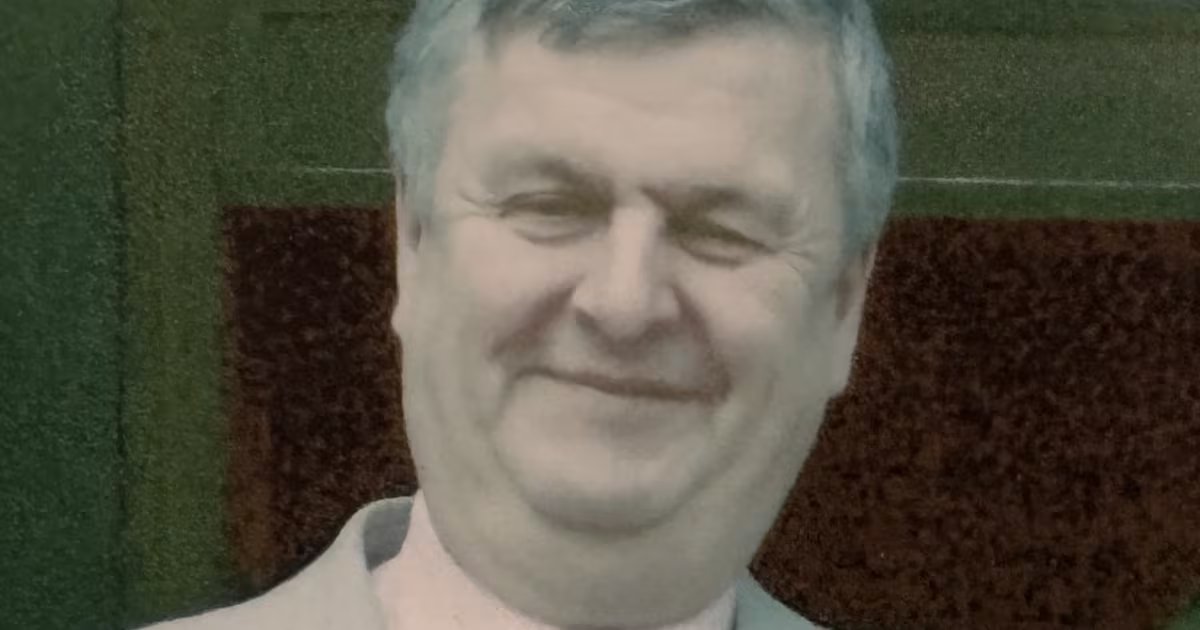
Paul May, who has died aged 74, was a lifelong justice campaigner who played a key role in campaigns leading to the release of the wrongfully convicted Birmingham Six and other victims of miscarriages of justice.
Michael Mansfield, who was among the lawyers battling for the victims, described May as “a co-warrior for justice”.
May, the eldest of three children, May was born in August 1951 in Stepney, London.
His parents, James, a painter-decorator, and Mary, had separately emigrated from the west of Ireland to England, where they met and married.
After the family moved to Manchester, May was offered a place at Xaverian College, a prestigious Catholic grammar school. Although his rebellious nature led to his expulsion aged 15, May was invited back to take his O-levels, apparently because the school knew he was very likely to get high grades.
Aged about 17, May started working with Manchester Corporation. He later moved to London, where he worked with Islington Council, eventually becoming deputy director of housing. He was an active trade unionist in local government and at the heart of many political campaigns, including opposing benefits outsourcing. He got a kiss from novelist Isabel Allende for campaigning to prevent the Chilean dictator, Augosto Pinochet, taking refuge in the UK. The left-leaning May also worked for Jeremy Corbyn in several of his Labour Party election campaigns.
While committed to his work tackling homelessness, May saw his real job as tackling injustice.
Columban priest Fr Bobby Gilmore, who established the Irish Council for Prisoners Overseas, said May was part of a small group, including historian Robert Kee, trade unionist Ivan Costello and the chairman of the Federation of Irish societies, Seamus McGarry, who met in Gilmore’s London offices during the 1980s to campaign for the release of the Birmingham Six.
Concern had been raised at a very early stage about the safety of the convictions of the six men from Northern Ireland jailed for life in 1975 for the 1974 Birmingham pub bombings. A 1976 pamphlet by Fr Denis Faul and Fr Raymond Murray argued the six men were innocent and had been framed.
The pressure for their convictions to be overturned intensified after Granada TV’s world In Action broadcast a programme in 1985 based on an investigation of the case by journalist Chris Mullin, later a Labour MP. In 1986 Mullin published a book supporting the men’s claims of innocence in which he claimed to have spoken to other men who were responsible for the bombings.
Gilmore chaired the Birmingham Six campaign in England and campaigns were also active in Ireland, Europe and the US.
After a fresh appeal based on new evidence was dismissed in early 1988, the campaign escalated. Three years later, a differently constituted appeal court allowed the appeal and ruled the convictions, on foot of fresh scientific evidence, unsafe and unsatisfactory. The crown had not opposed the appeals on other grounds of new evidence of police fabrication and suppression of evidence.
After 16 years in prison, the six walked free on March 14th, 1991. Few will forget the sight of Paddy Hill thundering outside the Old Bailey: “Justice? I don’t think them people in there have got the intelligence or honesty to spell the word, never mind dispense it.” All six were later paid compensation.
As chairman of the London branch, May was a key anchor of the campaign in England. It involved members of the Irish community, trade unionists, lawyers, Sr Sarah Clarke and other church activists, students, journalists and politicians including Corbyn.
May, said Gilmore, was an excellent strategist and collaborator.
“He was calm, objective and energetic. His motivation was justice. He was not interested in pardons, they were an admission of guilt. He believed those who didn’t have a voice should be heard. The important thing was his resilience. He was without rancour or frustration.”
After May told Gilmore his mother was from Gilmore’s native Glenamaddy in Co Mayo, Gilmore recalled meeting the young May with his mother in the town years earlier during one of her visits home. She had died aged 45 from thrombosis when May was just 21.
May was involved in other successful miscarriage of justice campaigns, including the Guildford Four, Maguire Seven, English woman Judy Ward and Danny McNamee, all separately wrongly convicted of offences in connection with the IRA’s bombing campaign.
The miscarriages of justice led to important changes in British law and the establishment of the Criminal Cases Review Commission.
In his eulogy at May’s funeral service, barrister Nick Brown, a long-time friend and collaborator of May since they met in 1987 working on the Birmingham Six campaign, said the campaign’s success changed the culture of the English court of appeal for a “brief but halcyon period” in the 1990s and 2000s.
Senior criminal judges, he said, “became much more open to the possibility that a miscarriage of justice may have occurred, much more alert to both police and prosecutorial misconduct and its significance, and much more liberal in their approach and insistent on the need to ensure that justice is seen to be done”.
May, as vice-chairman of the Britain and Ireland Human Rights Centre and as an individual, also did “invaluable behind-the-scenes work” to further the Northern Ireland peace process, said Brown.
Aged 50, May returned to education. While reading law at Birkbeck College in London, he met another mature student, Jane Mair. Their friendship blossomed into love and they married after both graduated with first-class honours in law.
May’s long-time friend Breda Power, a daughter of Billy Power, one of the Birmingham Six, said May was the happiest she had ever seen him after his marriage. The couple shared a love of travel and both were news addicts.
Until his retirement, May worked as parliamentary and campaigns officer with the national disability charity Scope.
Mair worked with May on the campaign that led to the overturning in 2012 of the 2004 conviction of Sam Hallam for the murder of a trainee chef during a street brawl. Hallam, from Hoxton in London, was just 17 at the time and was jailed for a minimum 12 years.
May often wondered what it took for the system to learn from the experience of cases such as the Birmingham Six. In a 2014 article, Justice, Moral Panic and the Irish, he asked: “Have the UK Government, criminal justice system and media learned any lessons from the 30-year moral panic during the Northern Ireland conflict? Hardly. Not long ago, I met with Vincent Maguire who together with five relatives and a family friend was imprisoned in the 1970s for terrorist offences which never existed. Speaking of the irrational atmosphere in which the Maguire Seven were tried and convicted, Vince commented: ‘Back then it was Irish people on the receiving end. Now it’s Muslims.’”
In recent years May was a devoted carer for his wife after she suffered mobility issues due to a fall.
In a letter to Mair after May died suddenly last month at the couple’s home in York, Corbyn spoke of his “enormous respect” for the man whom he first met among a small group who came together to support the families of the Guildford Four.
It was “not an exaggeration” to say, without May’s work, the campaign would not have been won, said Corbyn. “It’s people like Paul who step up when few others do, and are prepared to give their all to a campaign, that made the difference.”
May is survived by his wife and two sisters.