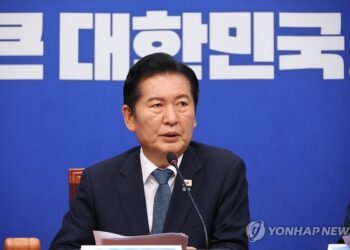
Lack of oversight of the National Election Commission came into the spotlight Tuesday in the meeting of a special parliamentary committee looking into nationwide ballot shortages and delays for voters on Election Day early this month.
The meeting centered around why the NEC decided to reduce ballot paper printing, whether its former chair’s overseas trips that cost tens of millions of won each were justifiable and whether NEC contracts sealed without public procurement were questionable.
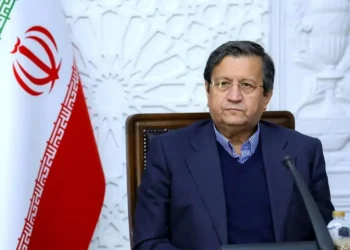
Rho Tae-ak, the former chair of the NEC appearing before the committee, said he could not clearly recall whether he had been briefed on the NEC’s decision to reduce ballot paper printing before the plan received board approval at the NEC general meeting in November.
Rho was one of the key decision-makers behind the NEC’s November decision to reduce the number of ballots to be printed, without preparing adequate measures to deal with possible shortages.
The shortages led to the additional printing of ballot papers at 141 polling stations nationwide as a preemptive measure, but voter delays still occurred at 91 polling stations on June 3.
Controversies over the NEC also focused on Rho’s trip to Australia and New Zealand in 2022, Germany and Estonia in 2024, and Denmark and Sweden in 2025 with his wife, who has no professional expertise in election management.
Along with some NEC staff traveling to the Maldives, a South Asian country reputed for its resort, to study its election case, Rho’s trips using taxpayers’ money must be deemed inappropriate, according to Rep. Joo Jin-woo of the main opposition People Power Party.
Rho said he would accept the people’s criticism of his official travel.
Regarding the NEC’s failure to employ public procurement in contracts related to tasks such as ballot printing, Joo pointed to suspicions of corruption that some select companies were able to exclusively sign contracts with the NEC, awarding them 247.1 billion won ($160.6 million) over the past five years.
Rho, in response, said he was not aware of the situation.
In South Korea, the chair of the NEC is considered one of the five most powerful figures in South Korea, along with the president, speaker of the National Assembly, chief justice of the Supreme Court and chief justice of the Constitutional Court.
In a country that experienced election-rigging scandals before democratization in 1987, the NEC was endowed with immunity from external oversight in an attempt to keep it free from interference by those wielding power, meaning neither the National Assembly nor the Board of Audit and Inspection has jurisdiction over the NEC except under extraordinary circumstances.
Rho said Tuesday the NEC would be open to “regular inspections” by the National Assembly.
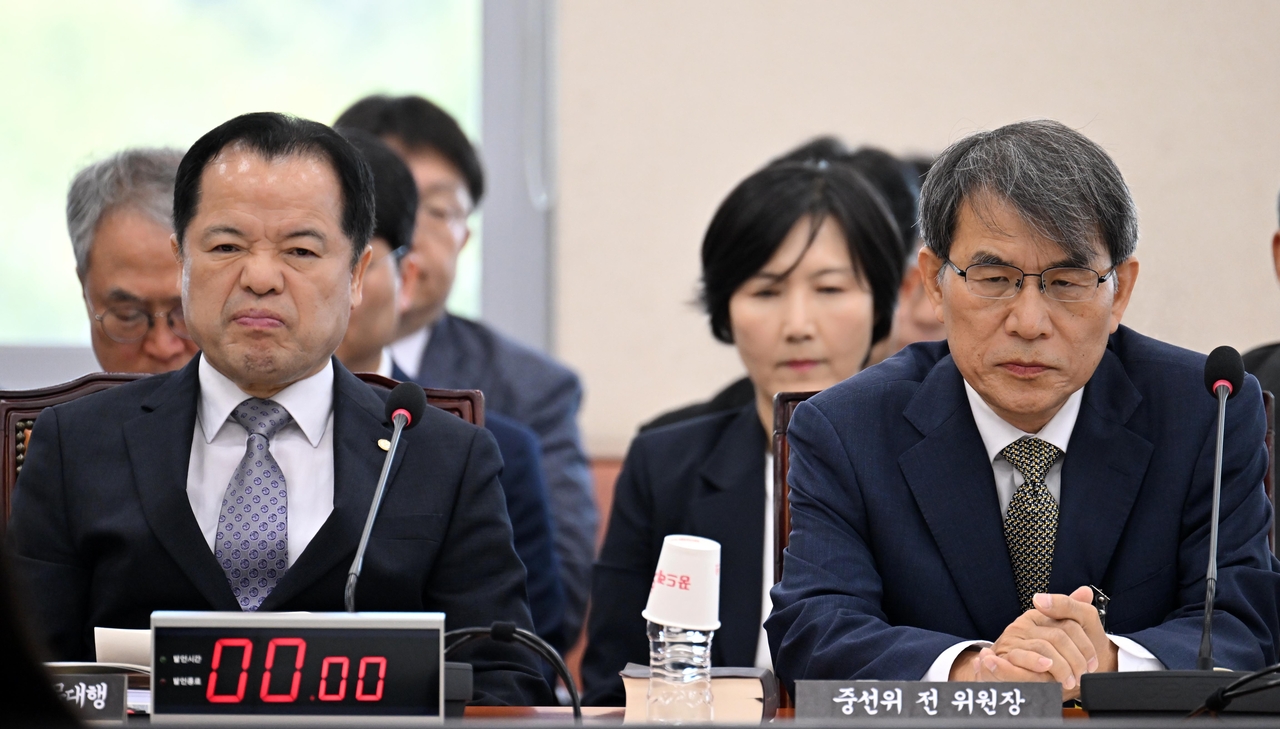
The NEC also came under attack from People Power Party lawmakers who alleged that Wi Chul-hwan, now acting chief of the election authority, had been a close friend of the liberal president in the past.
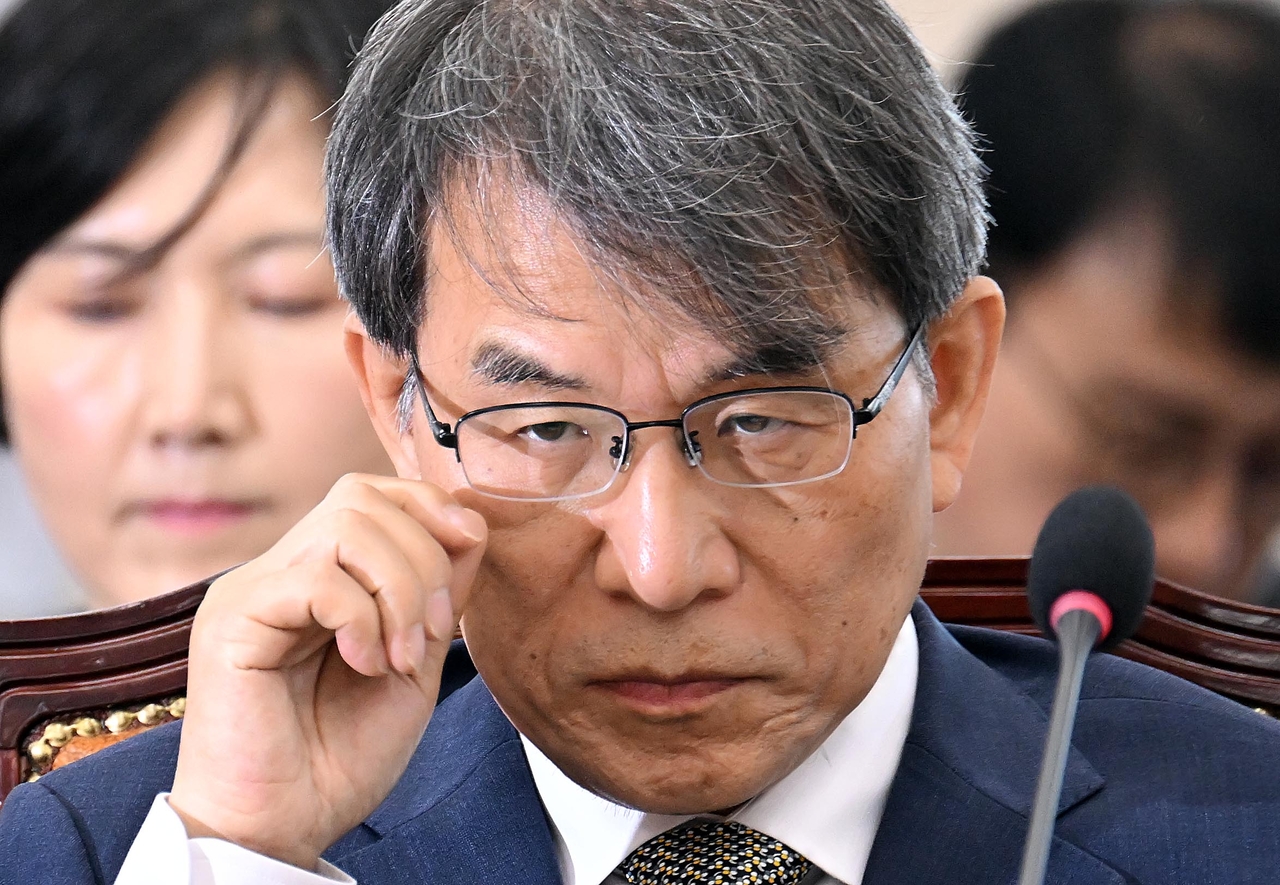
Wi, a commissioner of the NEC who has served as acting chief since Rho Tae-ak’s departure as chair following the local elections held some three weeks ago, rejected calls for his resignation, saying his resignation would amount to abandonment of his duty to restore public trust in election authorities.
“The NEC is currently on the verge of paralysis,” Wi said in response to an inquiry by Rep. Kim Eun-hye of the People Power Party during the meeting.
“Following the NEC chair’s resignation, we are seeing a complete vacuum in terms of our duties. We must somehow fulfill our duty to take appropriate measures following a thorough investigation.”
Rho and Wi were among 43 witnesses summoned by the parliamentary committee to appear Tuesday. Other witnesses included NEC commissioners and officials, as well as members of the NEC’s Seoul metropolitan-level branch and its Songpa-gu district-level branch.
During the morning session, 16 of the 43 witnesses failed to appear, while some of them appeared later in the afternoon. This prompted Rep. Youn Kun-young of the ruling Democratic Party of Korea to criticize the NEC for “resisting truth-finding efforts.”
The bipartisan special committee previously agreed to hold two general meetings, on Tuesday and July 1, where authorities are expected to brief the parliament and answer lawmakers’ questions.
The committee is poised to carry out an on-site inspection on July 8, while hearings are scheduled for July 14 and July 22.
Committee member Rep. Lee Jun-seok of the minor conservative Reform Party called for more sessions, citing time constraints as the committee is set to operate only until Aug. 1, as well as the possibility of the NEC not cooperating with the Assembly committee.
While the main rival parties have both been critical of authorities’ lax election management, they differ on how to reform the election body.
The ruling bloc, including President Lee Jae Myung and Prime Minister Kim Min-seok, proposed changing the NEC’s status through a constitutional amendment. The People Power Party, meanwhile, has called for a parliament-sponsored special counsel probe, separate from the ongoing joint investigation by the prosecution and police.
consnow@heraldcorp.com