Recent excavations in a remote cave 2,235 meters high in the Pyrenees Mountains are completely shaking up established theories about how prehistoric humans exploited the harsh mountain geography. Research conducted in the area called “Cave 338” in the Freser Valley proves that humanity does not only see the mountainous regions as temporary “transit routes”, but on the contrary returns here regularly for thousands of years.
THE LAST FIRE LIGHTED 3 THOUSAND YEARS AGO
Until now, archaeologists thought that high-altitude mountainous areas were too harsh for prehistoric societies and were used only for short-term hunting or migratory crossings. However, a new study published in the journal Frontiers radically changes this perspective.
Working in a cave in the Eastern Pyrenees, the research team identified four distinct layers of human activity. While the oldest charcoal remains date back to approximately 6,000 years ago; The most intense traces of settlement indicate 5,500 to 4,000 years ago (Early Bronze and Copper Age periods). The last remains of a hearth found in the region date back to approximately 3,000 years ago.
The lead author of the research is Prof. Carlos Tornero summarizes the importance of the discovery with these words:
“For a long time, high mountain environments were considered marginal places only occasionally frequented by prehistoric communities. But here we found an extremely rich archaeological sequence containing numerous combustion structures (hearths) and very high amounts of green mineral fragments.”

MYSTERIOUS GREEN MINERAL FOUND
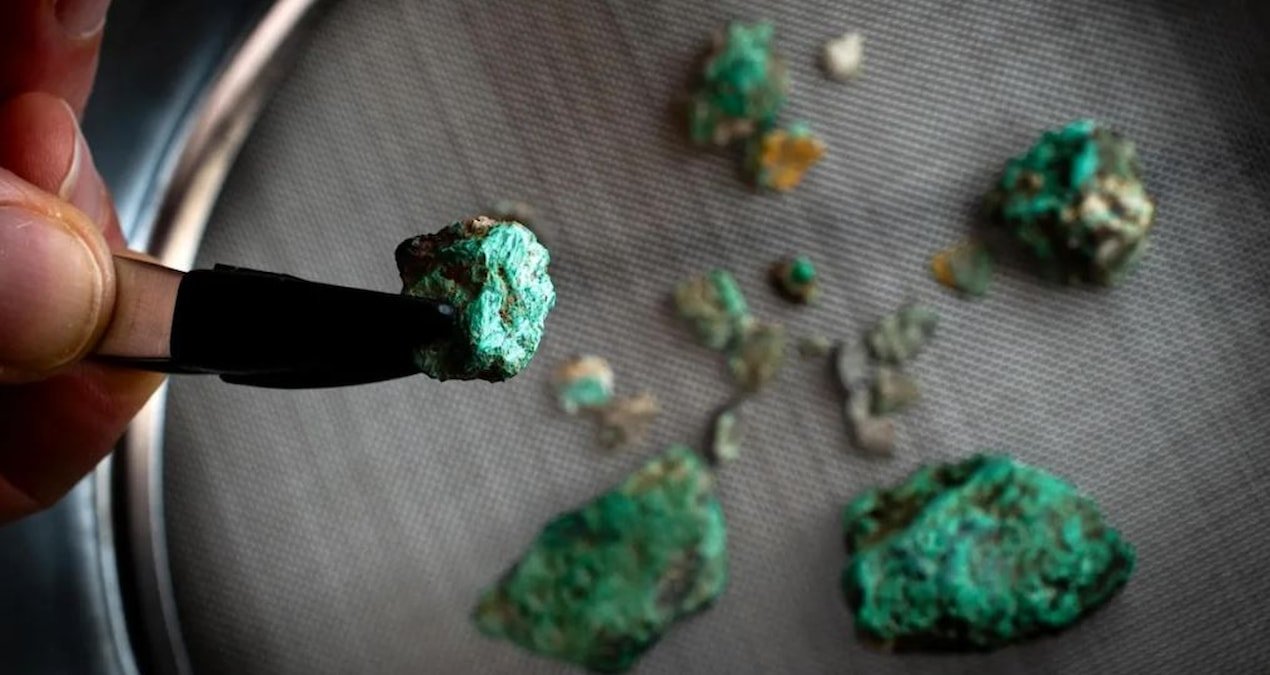
The most striking find during the excavations in the cave was the 23 ancient furnaces and the green mineral pieces exposed to fire found around these furnaces. Scientists say this mineral He guesses that it is malachite (copper ore).
If laboratory analyzes confirm this prediction, Cave 338 will go down in history as one of the earliest high-altitude mineral processing camps in human history.
Co-author Dr. Julia Montes-Landa states that minerals do not burn by chance and shares the following details:
-While there is no trace of heat on other objects in the cave, almost all of the green minerals have undergone thermal change.
-This shows that prehistoric people processed this mineral in a conscious and planned way using fire.
NOT JUST A WORKSHOP, BUT A SACRED SPACE
The cave was not just a mining or production area; it was also part of the social and spiritual life of the community. In addition to the remains of production in the cave, archaeologists found the following striking findings:
-Child Remains: A child’s finger bone and a baby tooth indicate that the cave was also used as a ritualistic or sacred burial site.
-Symbolic Jewelry: A pendant made of seashell and another pendant made of grizzly bear teeth were found. These jewelry prove that the mountain community had cultural and symbolic ties to the outside world.
NOT A PERMANENT BUT AN PERSISTENT SETTLEMENT
Experts estimate that humans did not live permanently in this high-altitude cave year-round. However, the density of remains here and the fact that the area has been visited uninterruptedly for 2,000 years indicate that people returned to the same spot in certain seasons or periods, for short and medium-term periods, but persistently.
What’s Next? The research team continues laboratory studies to confirm that the green mineral is malachite. With the new excavation season starting on the mountain this summer, it is expected that even more striking details about this mysterious life of humanity at high altitudes will come to light.
All copyrights of the articles, news and photographs published on the website www.sozcu.com.tr belong to Mega Ajans and Rek. Tic. It belongs to A.Ş. It cannot be quoted without permission, even by citing the source.