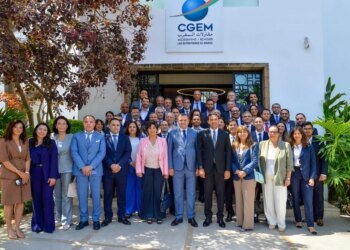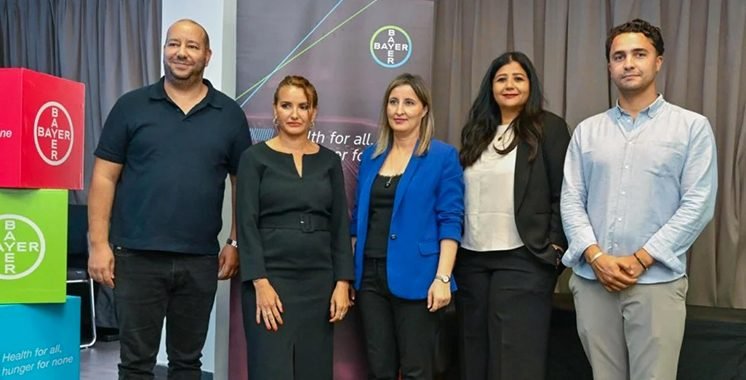
The top management of Bayer Maroc during the round table organized on June 18 in Rabat.
Bayer Morocco reaffirmed its commitment to food sovereignty during a round table organized in Rabat on June 18, 2026 and a field visit to a grain farm in Had Kourt (Sidi Kacem) the next day. The company highlighted its agronomic, technological and digital solutions intended to support Moroccan farmers in improving yields and optimizing resources.
Bayer Maroc highlights innovation in the service of food sovereignty. In a context where food sovereignty is emerging as a strategic priority for Morocco, the company organized, on June 18 and 19, 2026, two events intended to highlight its commitment to more efficient and resilient agriculture. The process began in Rabat with a round table organized under the theme “Food sovereignty and security: focus on the 2026 cereal campaign”, before continuing with a field visit to a cereal farm located in Had Kourt, in the province of Sidi Kacem, in the heart of the Gharb region.
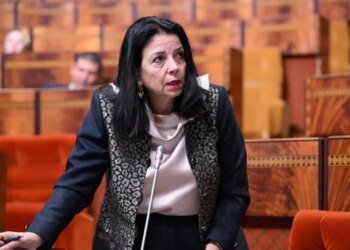
Through these meetings, the group presented its vision of sustainable agriculture and concretely illustrated how the solutions developed by Bayer Crop Science support Moroccan farmers facing the growing challenges linked to food security and adaptation to climate change. “After several years of drought, this cereal season carries a message of hope for Morocco. Cereals are at the heart of our food security, and this recovery is a reminder of how essential it is to strengthen the resilience of this strategic sector. At Bayer Maroc, we are proud to contribute, alongside farmers, to more efficient, more sustainable and more resilient agriculture, serving the country’s food security,” declared Amina L’Kima, Managing Director of Bayer Maroc and Director of the Bayer Crop Science North Africa division. According to the company, Moroccan agriculture is evolving today at the crossroads of opportunities and long-term challenges.
If the improvement in rainfall observed this season constitutes an encouraging signal for producers, it should not overlook the persistent challenges that the sector remains faced with, in particular the scarcity of water resources, the repetition of drought episodes and the volatility of production costs. In this sense, the ability to maintain stable production levels, particularly for cereals, while optimizing the use of available resources, appears to be an essential lever for strengthening the Kingdom’s food sovereignty. Thus, the visit to the partner farm made it possible to concretely illustrate these challenges and to show how innovation can contribute to responding to them. Participants discovered different crop protection solutions, digital decision support tools as well as innovative agronomic practices intended to improve yields while optimizing the use of water and inputs. Demonstrations carried out directly on the plots highlighted the combined contribution of new generation phytosanitary products, personalized technical recommendations and data from digital tools.
An integrated approach which aims to enable farmers to better manage their crops, reduce risks and secure their harvests. In addition to technological solutions, Bayer also emphasizes the importance of local support. The company relies on a network of local teams and several field systems, such as “Farmer Days”, demonstration days or even stewardship programs, in order to maintain a permanent dialogue with farmers. This approach makes it possible to better understand the realities on the ground, to identify the specific needs of different regions and to propose responses adapted to the constraints of each operation. For Bayer, this proximity is a key factor in accelerating the adoption of more sustainable agricultural practices and strengthening the sector’s resilience to future challenges.
Three questions for Amina L’Kima, general director of Bayer Maroc
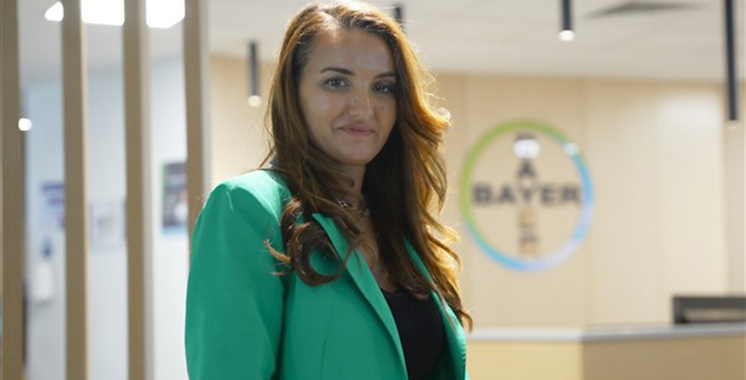
ALM: Today, food sovereignty and sustainability are major issues for many states. How is Bayer contributing to this effort?
Amina L’Kima: The issues of food sovereignty, and more broadly food security, are at the heart of our mission: “Health for all, hunger for none”. Our Crop Science division plays a central role in this ambition.
At Bayer, we contribute to more sustainable agriculture and better food sovereignty by supporting farmers on a daily basis. This commitment is reflected in the regular introduction of innovations adapted to the needs of Moroccan agriculture, but also in significant training and knowledge transfer work.
Through demonstration platforms, technical days, meetings with farmers and field support programs, we provide them with the tools and solutions necessary to sustainably improve their productivity and resilience. It is this proximity and this daily commitment which constitute our contribution to the development of Moroccan agriculture.
What is your positioning on the Moroccan market?
In Morocco, Bayer positions itself as a reference partner for farmers thanks to its technical expertise, its capacity for innovation and the quality of its field support. As a world leader in the field of crop protection and innovative agricultural solutions, we put our know-how at the service of Moroccan agriculture in order to contribute to its sustainable development and resilience in the face of climatic and economic challenges. Our ambition is to support farmers in adopting more efficient and sustainable practices, while supporting the competitiveness and food sovereignty of the Kingdom.
What are your prospects for the second half of 2026?
The year 2026 is exceptional, notably thanks to particularly favorable rainfall. After several years marked by drought, this campaign represents a real turning point for Moroccan agriculture. We are very satisfied with the results recorded during the first half of the year, which notably enabled a significant improvement in the filling level of dams and created favorable conditions for the various agricultural sectors. We are therefore approaching the second half of the year with optimism. Bayer will continue to support farmers across all crops, whether field crops, horticulture or the fruit and vegetable sectors. Our objective remains to provide innovative and adapted solutions to support the performance and sustainability of the Moroccan agricultural sector.