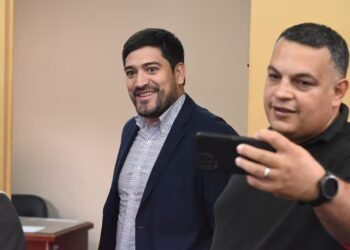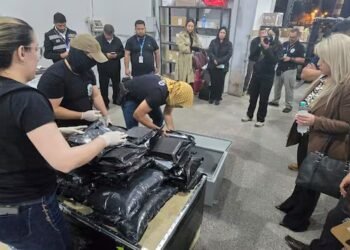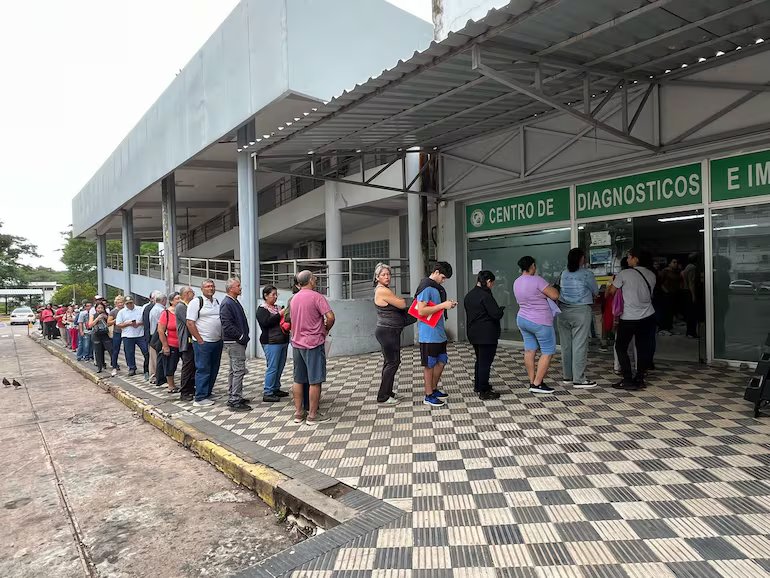
During a meeting with senators from the Finance and Budget Commission to analyze the bill that declares the IPS in a state of emergency due to the shortage of essential medicines, infrastructure problems and failures in elevators at the Central Hospital, the head of the IPS, Isaiah Freteslaunched a phrase that summarized the panorama: “Ivai la ore porte”when describing the economic difficulties inherited by the institution.
The initiative, which already has half a sanction from the Chamber of Deputies, in tomorrow’s ordinary session will be postponed for a month, at the request of the head of the IPS himself, with the objective that technical teams from the Senate and the pensions review the scope of the proposal and propose modifications.
“We have the machine gun, but without bullets”
Fretes maintained that the eventual declaration of emergency could become a useful tool to streamline administrative processes, but clarified that it will not solve the main underlying problem.
“It can be a good administrative tool, but not a financial one.. This is as if you had a machine gun, but without bullets,” he said.
Read more: IPS “is on its way to the precipice,” says its president
As detailed, the IPS collects more than one billion guaraníes per month and 44% of those resources are allocated to the health area. However, an important part ends up absorbed by financial commitments.
Data presented during the meeting reveal that The Health Fund corresponding to May reached G. 462,432 million, of which G. 170,617 million corresponded to financial obligations.
Only G. 42,268 million were used for medicines, far from the G. 150,000 million per month that, according to the current administration, would be necessary to adequately cover the needs of the insured. “Where does the rest go? To pay debts,” said Fretes.
80% of the budget is for oncological treatments
Another of the most shocking data presented by the president of the IPS was the pressure that cancer treatments exert on the pharmaceutical budget.
“80% of the money we have allocated for the purchase of medicines includes oncology. 20% is for geniusl, aspirin, ibuprofen, what is used every day,” he explained.
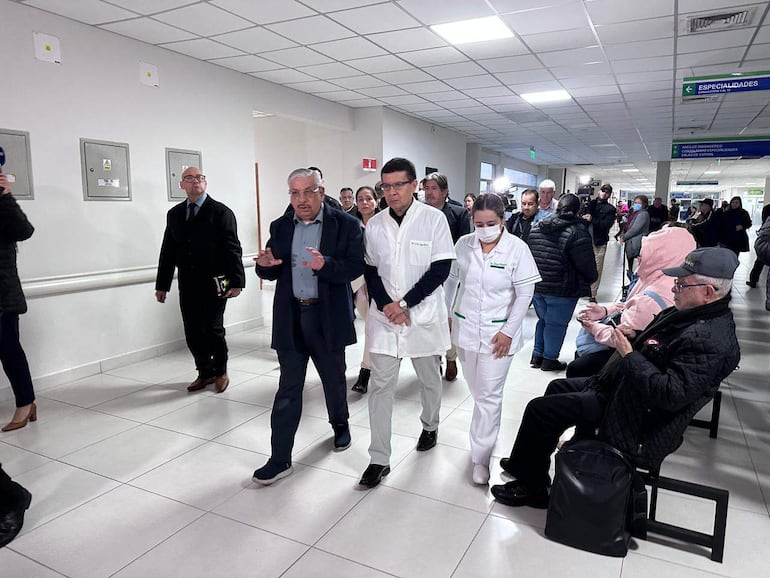
Fretes stressed that cancer patients have the full right to receive treatments, but warned that technological advances in medicine have considerably increased costs.
Given this situation, raised the need to strengthen the role of the National Fund of Solidarity Resources for Health (Fonaress) to centralize the acquisition of these high-cost medications.
Emergency would serve to accelerate purchases and repair elevators
Although he insisted that the law will not solve the lack of resources, Fretes pointed out that it could help reduce bureaucratic times to address urgent needs.
Read more: “We have been dying for eight months”: patients demand an answer from Santiago Peña
Among them, he mentioned the purchase of supplies for parenteral feeding of newborns admitted to neonatal intensive care, in addition to building and elevator repairs.
“It can greatly facilitate us purchasing supplies for parenteral feeding. of neonates. Today a process can last two or three months and that could be shortened quickly,” he said.
He also recalled that the IPS has the largest neonatal intensive care center in the country, with 73 beds, which implies high operating costs.
Fretes calls for strict controls and warns of risks
The head of the IPS also surprised the warn about the risks that a law that is too broad could generate if it does not incorporate oversight mechanisms.
“A law of this type of breadth can be a danger to a person who does not have transparency,” he said in reference to the bill that comes from Deputies and was presented by Yamil Esgaib (ANR, HC).
For this reason, it expressly requested that any regulations include strict control and accountability systems. “It is a non-negotiable point,” he insisted during the meeting.
Chartism considers the declaration of emergency unnecessary
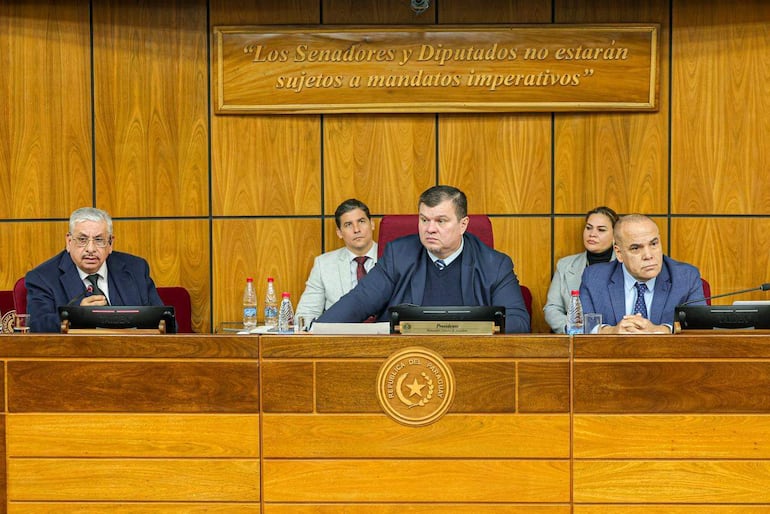
The leader of the official Honor Colorado bench, Senator Natalicio Chasequestioned the need for the project and argued that the IPS already has legal tools to carry out exceptional hiring.
“This bill is absolutely unnecessary.”he stated. According to Chase, the Public Procurement Law already allows for emergency calls and abbreviated procedures when duly justified urgent situations exist.
In his opinion, the declaration of emergency would be more of a symbolic manifestation of political support for Fretes’ management than a tool with concrete practical effects.
After extensive debate, the Finance Commission decided to postpone the ruling and open a technical working table to analyze possible modifications.
The decision was made considering that the project has until August 28 before the fictitious sanction takes effect, which allows adjustments related to controls, transparency, hiring of personnel and scope of extraordinary powers to be studied.
Meanwhile, Fretes insisted that the priority continues to be cleaning up the pension finances. “We are surviving by closing sources of corruption, leaks and waste. But we need financial reengineering to stop allocating hundreds of billions to paying debts and be able to invest them in health,” he concluded.