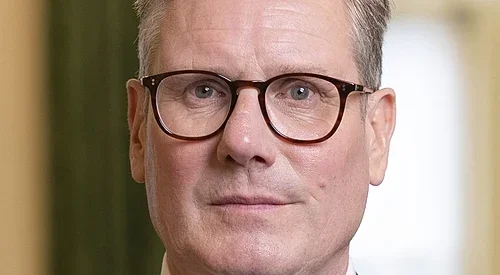

The United Kingdom is preparing for another change in leadership after Prime Minister Keir Starmer announced his resignation, paving the way for the country’s fifth prime minister in just four years.
Starmer’s departure had been widely anticipated following months of growing dissatisfaction within the governing Labour Party, say media reports. Although he led Labour to a decisive victory in the 2024 general election, pressure from party lawmakers intensified as concerns mounted over his leadership and the government’s declining popularity with voters.
Tim Bale, a professor of politics at Queen Mary University of London is quoted by Al Jazeera describing Starmer as a: “poor communicator who messed up his first few months in office” and lacked a vision “to inspire either his MPs or the public”.
According to the Guardian, his resignation comes as Labour struggles to respond to the growing influence of Reform UK, the anti-immigration party led by Nigel Farage. Many within Labour feared Starmer was unable to effectively counter the challenge posed by the populist-right movement, contributing to increasing unease among party members.
The article added that attention has now reportedly shifted to Andy Burnham, who is expected to succeed Starmer. Burnham, 56, is a veteran Labour politician who served in the governments of former prime ministers Tony Blair and Gordon Brown. He has also held the position of Mayor of Greater Manchester since 2017, after unsuccessful attempts to become Labour leader in 2010 and 2015.
Reports are that Burnham’s prospects were strengthened by his recent victory in the Makerfield constituency, where Labour regained significant support despite strong advances by Reform UK during local elections held in May.
Before making his announcement to the public on Monday morning, Starmer formally informed King Charles III of his intention to resign, following established constitutional convention.
Meanwhile, the Guardian says that Starmer has reportedly met with his replacement to discuss issues related to the power transition.
If no rival emerges to challenge him, Burnham is expected to become Labour leader on July 17 or 18.