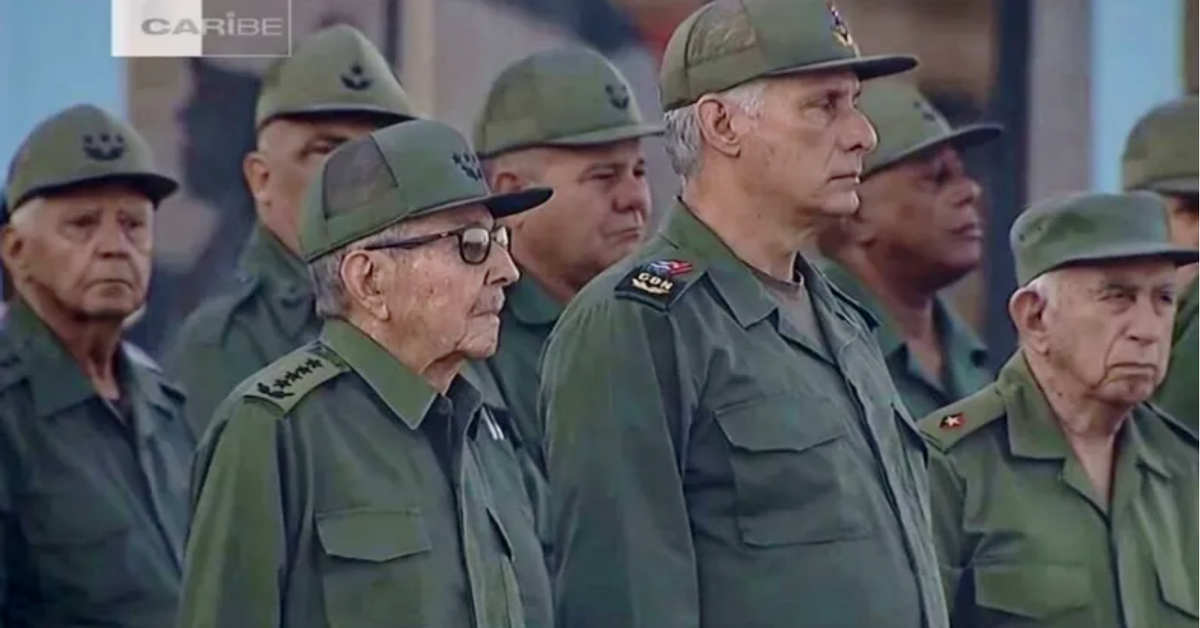
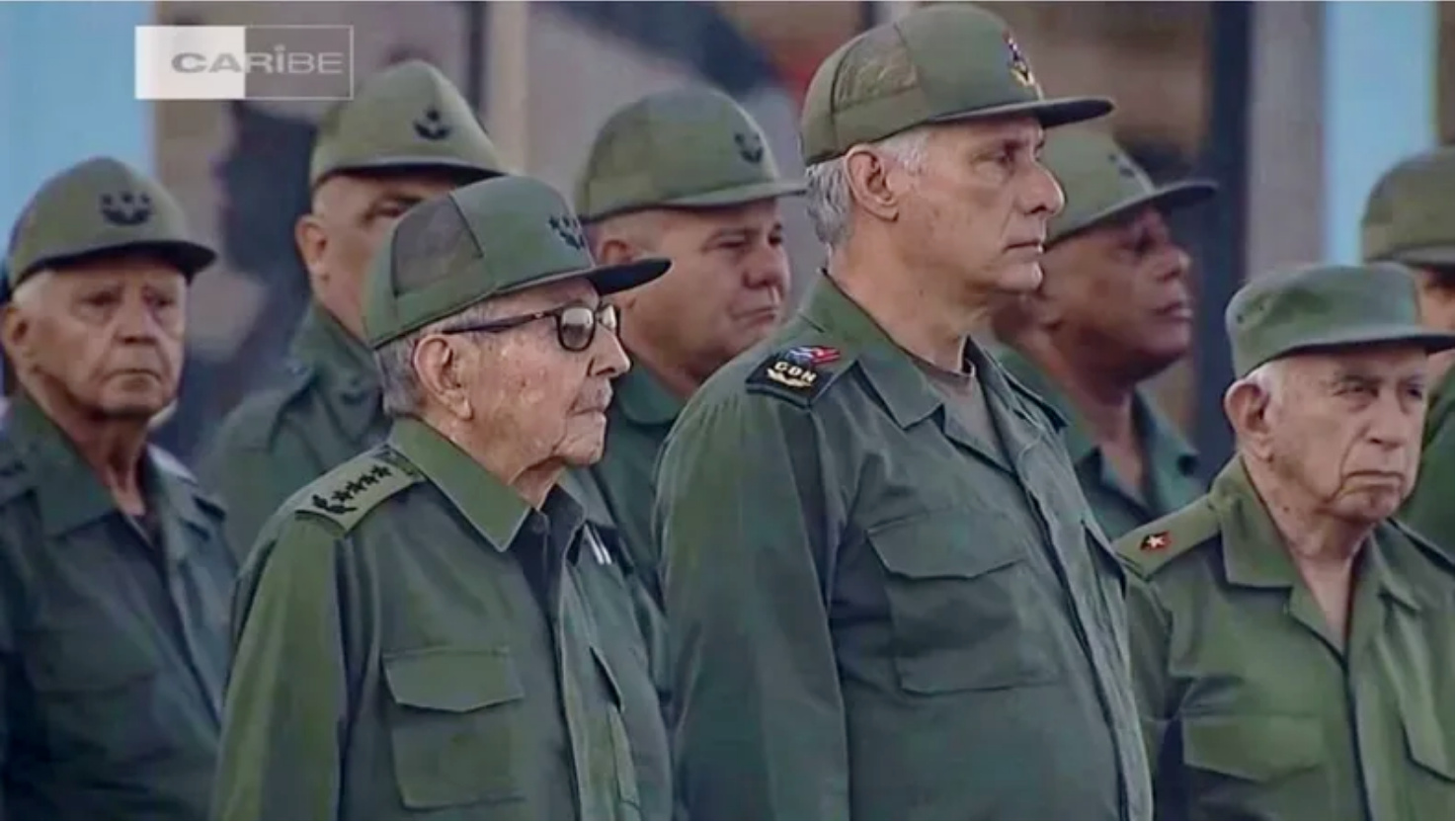
Madrid/The last time Raúl Castro appeared in public was to attend the tribute prior to the funeral for the 32 Cuban soldiers who died in the US military operation to capture Nicolás Maduro. The event took place on January 15 and the general, who will turn 95 in just over a month, stood tall despite looking considerably older than just a month before, when he appeared at the National Assembly for the regular session in 2025.
His handwriting, more shaky than usual, is not shown in better condition in the signature of the letter he sent this Tuesday to congratulate the Eastern Army on the 65th anniversary of its founding, only “two days after the great victory in the sands of Playa Girón and in the midst of the revolutionary effervescence that we all felt after giving the empire its first defeat in America.”
In his message, broadcast by the official press, Castro recalls the “order given” by his older brother, who said: “‘If we save the East, we save the Revolution,'” convinced of the strategic importance of that historically and geographically crucial region.” The text includes mentions of this “Lord Army”, which he calls this because of “its military power”, “its combative history” and the “decided confrontation with enemy provocations and aggressions”, in addition to its “proven selflessness in the glorious internationalist missions.”
Castro also points out the Army’s contribution to the concept of war of all the people, “especially in these times of constant threat to the socialist homeland”, although also its role in rescue and rescue missions, as in the recent case of Hurricane Melissa. In addition, it pays tribute to those who died in combat and sends a hug to the founders and combatants.
“May the daily honor of our heroes drive the firm conviction that the Eastern Army will firmly confront any enemy aggression, until achieving victory,” he indicates.
The letter is very similar to the one he already sent to the Central Army on April 3. Although each has its local and historical particularities, both contain a common idea: the epic of resistance against the American threat. Castro does not hesitate to exercise his role as ideological leader of the Revolution in these letters, despite the fact that at the same time – and in a more pragmatic way – he sends his grandson, Raúl Guillermo The Crab Rodríguez Castro, and a person of maximum trust, to negotiate with the United States the terms of a possible agreement that avoids an intervention that is more than difficult to resist.
This same Monday, Washington officially confirmed for the first time what had already been leaked to the American press for months: that it is directly the Castro family that is speaking with the White House. The last meeting, which included a private meeting between the general’s grandson and a senior US official, was held on April 10 in Havana and, according to the press in that country, there was an ultimatum from the State Department to release high-level political prisoners in two weeks, a period that would end this Saturday.
This Tuesday, the Spanish newspaper The Country spoke in a very brief call with Maykel Castillo Osorboone of the clear objectives of this release that the White House requires as a gesture of good will to continue negotiating broader issues. “I am calm, in my corner, waiting,” the artist told the media. “If I leave here alive, I will continue to be what I already am, a musician, a Cuban who had a difficult life and stood up a thousand times. But if they decide, out of malice, that I should remain imprisoned, then they will have to kill me.”
Among the issues that the United States wants to negotiate with the regime are also guarantees of a process that includes economic and political freedoms, as well as foreign investment, and permission to offer internet through Starlink, from the company SpaceX, owned by Elon Musk, which already has a clandestine presence on the Island.
A senior State Department official explained to the EFE agency this Tuesday that the initiative seeks to offer a “free, reliable and fast connection throughout the Island,” breaking Etecsa’s state monopoly on the service.