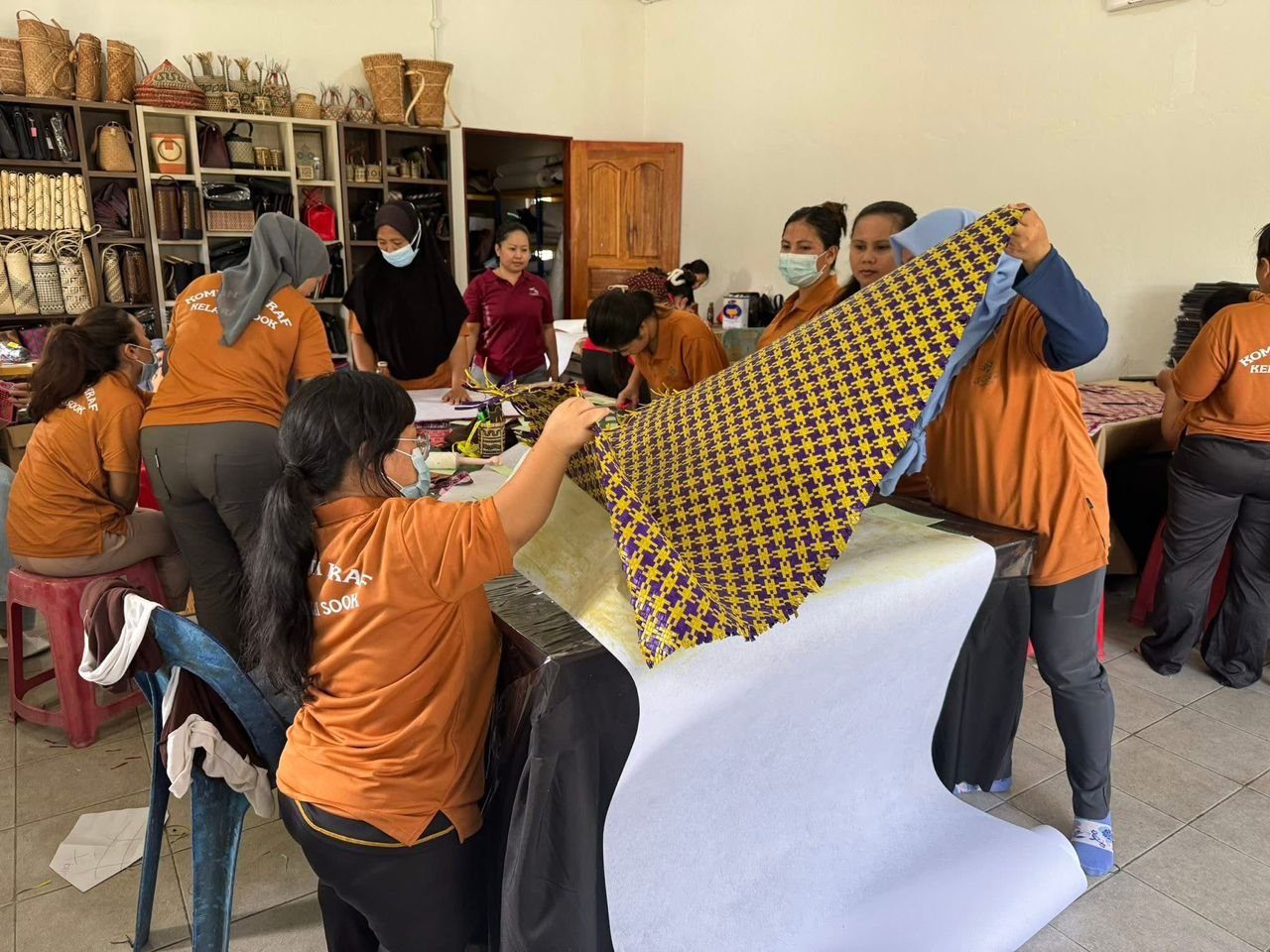

Cooperative members during a weaving session.
KOTA KINABALU (June 22): A rural bamboo weaving initiative led by artisan Emily Jeneble has emerged as a proven income-generation model in Sabah, with participants now earning between RM1,700 and RM3,000 a month.
Encouraged by its success, Emily is calling on government agencies and non-governmental organisations (NGOs) to expand similar programmes to benefit more rural communities.
Emily, who grew up in Kampung Batu Lunguyan, Sook, said the Salingkawang bamboo craft ecosystem has already delivered measurable economic benefits, particularly for women, single mothers and unemployed residents.
The Batu Lunguyan Craft Cooperative currently operates three village-based production sites, comprising a design and research and development (R&D) studio managed with local homemakers, as well as a training centre scheduled to be officially opened later this year.
About 10 workers are directly involved in production and workshops, while the cooperative has grown to 55 members.

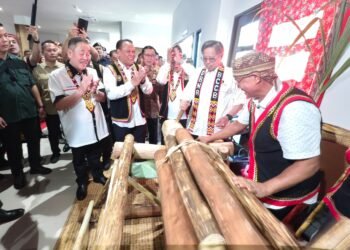
Emily (third left) and several members of the community cooperative.
Emily said the initiative has evolved beyond a pilot project into a functioning rural enterprise model.
“This is already helping communities. People who had no income before are now consistently earning monthly wages through craft production and upskilling. The market is there.
“The system works. The income is there. The only question is how many more villages we are willing to support,” she said.
She added that the model has demonstrated how structured craft-based industries, supported by training, coordinated production and market access, can play an effective role in reducing rural poverty.
Emily, who established her enterprise in 2010 and has nearly 29 years of experience in the craft industry, said the biggest challenge is no longer capability but scaling up operations and securing stronger institutional support.
She urged government agencies and NGOs to play a greater role in expanding infrastructure, logistics and market access so more villages can replicate the model.

Finished products include baskets, bags, wallets, keychains, gift boxes and other woven bamboo items under the Salingkawang tradition.
“What we need now is support to expand this system. The demand exists, even internationally. We just need the right support to scale it into more communities,” she said.
Her team recently showcased its products at SME Fest held at the Sabah International Convention Centre (SICC), securing additional orders from government ministries and private-sector clients, reinforcing growing demand for rural-made craft products.
The cooperative produces a wide range of Salingkawang bamboo products that are sold throughout Malaysia and have also reached international markets and exhibitions in Scotland, Italy, Germany, Shanghai and Turkey.
Emily is also documenting five generations of traditional weaving knowledge to preserve the craft while adapting it for modern digital platforms and direct-to-consumer markets.