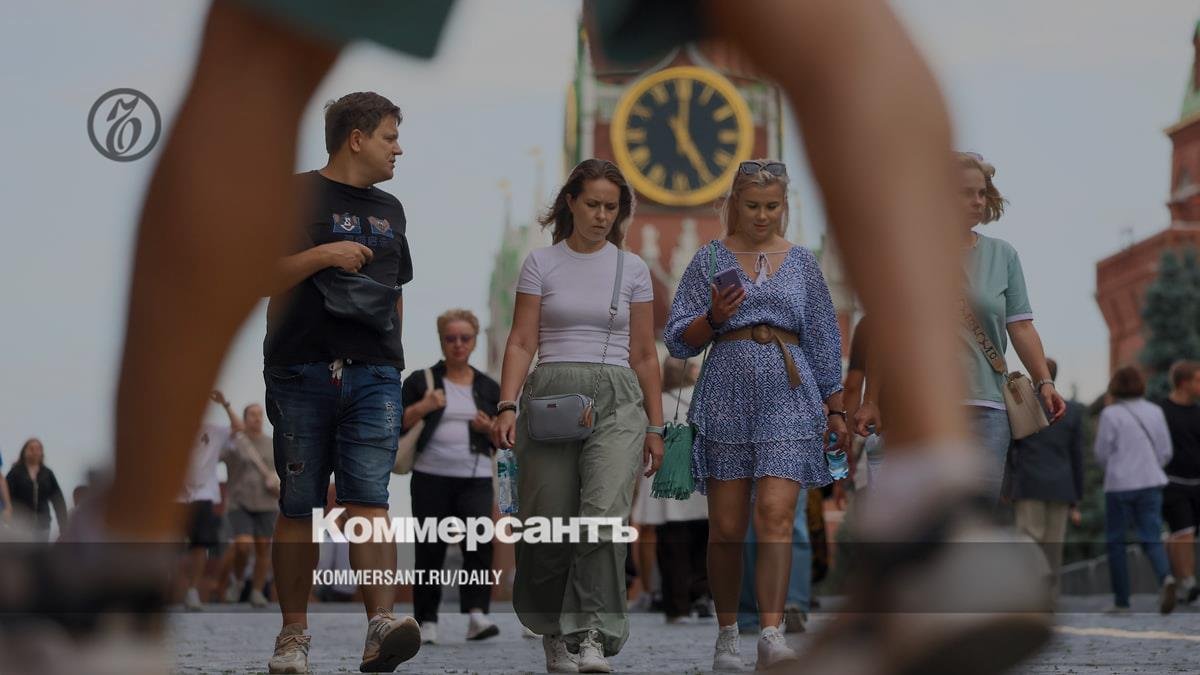
The demand for tourist trips around Russia is declining, as is the depth of bookings. This is primarily due to a drop in sales of key resort destinations – Crimea and Sochi. An additional factor is the strong ruble, which makes foreign holidays more and more affordable, and the lifting of the moratorium on the sale of tours to the countries of the Middle East. Tourists who remain in the country prefer short tours to neighboring regions.
The total volume of holiday bookings in Russia from June 1–18 decreased by 12% year-on-year, according to estimates from the tour operator Alean. The Travelata.ru booking system recorded a 25% drop in sales. Sletat.ru talks about a decrease without specific figures. Vice-President of the Association of Tour Operators of Russia (ATOR) Sergei Romashkin believes that the total number of bookings on the domestic market in January-June decreased by 5-6% year-on-year.
Sergey Romashkin adds that the average depth of bookings on beach destinations has decreased by a quarter and is now 14–17 days instead of the usual 20–30. OneTwoTrip also talks about the wait-and-see attitude of tourists. The company notes that 68% of hotel bookings in Russia require check-in within seven days of the order. 21% plan to travel in 8–30 days. The remaining 11% – more than a month later. Travelline data indicates that 28% of hotel bookings for June 7-20 were cancelled.
Alean explains that the market is being pressured by a decrease in interest in trips to Crimea and Sochi. Demand on the peninsula, according to a company representative, fell by 50% in June compared to May.
The trend was formed due to negative information backgroundassociated with interruptions in fuel supplies, electricity supplies, railway communications and forced restrictions on traffic on the Crimean Bridge.
Sochi, according to a representative of Alean, is losing tourists due to the unstable operation of the airport. Traveleta.ru Marketing Director Oleg Kozyrev recorded a 30% year-on-year decline in demand for Sochi. Sergei Romashkin speaks of a decline of 13–14%. He recalls that due to the difficult section of the Dzhubga-Sochi road, the city traditionally does not have a very large flow of auto tourists.
Oleg Kozyrev believes that a significant part of tourists could reorient themselves from domestic holidays to trips to Turkey, Egypt, Thailand or Vietnam.
This is facilitated by the strengthening ruble. Sergei Romashkin believes that foreign resorts have taken away approximately 1 million people from Russian ones. This is about 10% of the outbound tourist flow and 1–2% of the domestic one.
The figure may increase in light of the return to the range of tour operators in the Middle East: on June 19, the Ministry of Economy lifted the existing restrictions on the sale of tours to countries previously affected by the conflict.
After that, the minimum cost of a tour for two to the UAE for seven days was 117 thousand rubles. based on breakfast and 134 thousand rubles. according to the all-inclusive system, noted in ATOR. Sergei Vasin, head of the domestic tourism and CIS department of tour operator Let’s Fly, speaks of growing demand for Georgia, suggesting that the destination can be considered as an alternative to domestic resorts.
Sergei Romashkin doubts that the situation with demand for holidays in Russia will change noticeably this season. The expert recalls that 63% of trips have already been planned and a lag of 5–6% from last year’s figures is likely to remain for the entire period. Alean’s weighted forecast is a 7% year-on-year decline in summer. In any case, these expectations are worse than the initial ones: two or three months ago, tour operators did not rule out that the demand for domestic tourism this year will increase by 1% compared to last year (see “Kommersant” dated April 7).
The travel geography of travelers remaining in the country may also be adjusted. Ostrovka notes that over the past two and a half weeks, the number of bookings in the Amur region has increased year-on-year by 20%, in the Nizhny Novgorod region by 15%, and in the Kaliningrad region by 9%. Alean notes that interest in trips to the Tula, Ivanovo, Tver, Kostroma and Yaroslavl regions has increased by an average of 15% year on year. Analysts suggest that tourists may make several short-term trips to neighboring regions, abandoning long-term vacations. Russian Express also sees that clients have begun to more often book short visits to locations with simple logistics: St. Petersburg, Moscow, Kazan, Nizhny Novgorod, and the cities of the Golden Ring.