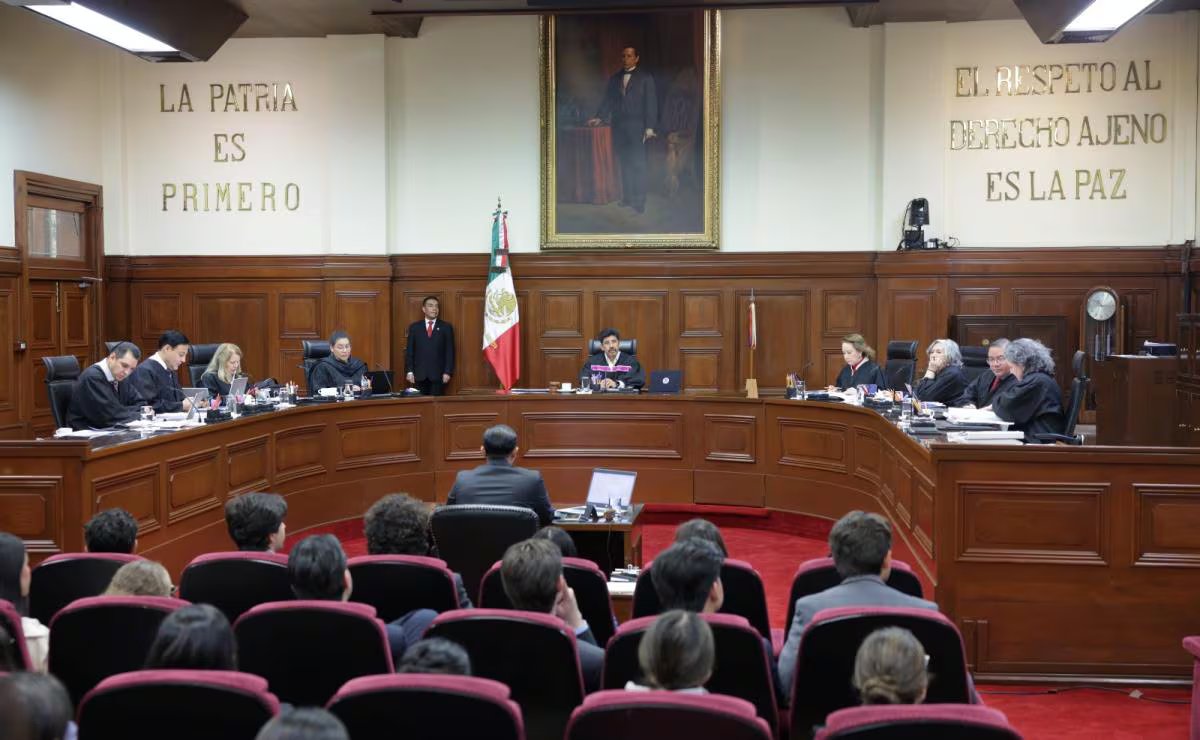
The Supreme Court of Justice of the Nation (SCJN) ruled out protecting Google against the deadlines provided for in the Federal Economic Competition Law (LFCE) to provide information during investigations for possible monopolistic practices.
The company questioned article 73, second paragraph, of the Federal Economic Competition Law, which sets a period of 10 days to meet the requirements, extendable on a single occasion for up to another 10 days.
He considered that the design was rigid and disproportionate to high-volume information requirements.
A district court considered that the rule was constitutional, so an appeal for review was filed that reached the Supreme Court.
By unanimous vote, the Plenary of the highest court confirmed the validity of article 73 of the LFCE, concluding that the company’s arguments focused on the particular characteristics of the information request it received, but did not demonstrate that the law was unconstitutional nor did it violate principles such as legal certainty or proportionality.
The authorities determined the constitutionality of the rule and left it to the competent collegiate circuit court to analyze the aspects of legality related to the imposition of the fine in the specific case.
Google was accused of establishing a effective advertising monopoly digital in the Mexican territory by the Federal Economic Competition Commission (Coffee), now called National Antitrust Commissionin 2023.

Join our channel EL UNIVERSAL is now on Whatsapp! From your mobile device, find out the most relevant news of the day, opinion articles, entertainment, trends and more
aov/bmc