Loading Text-to-Speech…
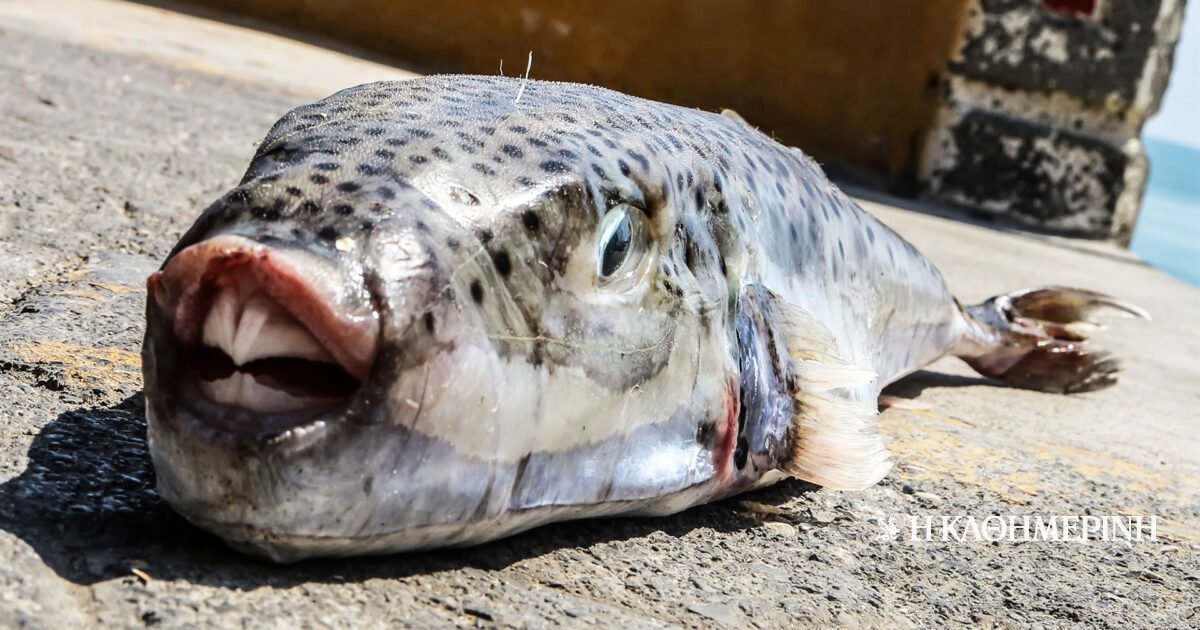
The 29-year-old Stathis Evangelou he has been fishing in the waters of Astypalea since he was 9 years old. For about three years now, however, every day he has been confronted by a marine enemy: the hare’s head. “We produce 100 to 200 pieces a day,” says to “K”. “They tear our nets, destroy our gear, eat the fish we have to sell, and sometimes attack them on the bottom before we even catch them,” he says. He lists some parts of the Dodecanese island that are currently teeming with gannets, the Lessepsian migrant that crossed the Red Sea into the Eastern Mediterranean and has been recorded in Greece since at least 2005. “In Livadi, in Agios Konstantinos, in Steno there are many thousands – 10 days ago I caught 100 hares at a distance of 50 meters”, he adds.
According to his announcement yesterday Hellenic Center for Marine Researchthe jackknife has a negative impact on ecosystems because it destroys fishermen’s fishing gear and eats valuable catches. At the same time, his tissues contain tetrodotoxin, a powerful neurotoxin for which, as ELKETHE says, there is no known antidote. “Its consumption can even be fatal. Due to this, and the relevant European legislation, the specific species and its relatives are forbidden to be used for human consumption”, emphasizes ELKETHE.

The Ministry of Agricultural Development and Foodin agreement with Ministry of Environment and Energyhas drawn up a draft proposal for a pilot program – based on the one in Cyprus – for targeted, subsidized culling of sea bass by coastal fishermen, in areas with high abundance of these fish, ELKETHE reports. The specific plan has been sent to the European Commission for negotiation and approval. In addition, a meeting was held at the Ministry of Rural Development yesterday, but no final decision was taken.
What do the fishermen say about the unwanted sea bass that migrated from the Red Sea – Announcement by ELKETHE on the effects on ecosystems.
THE Stathis Evangelou however, he agrees with the proposal. “To give us something to make the proper tools to exterminate them.” Dolphins and seals cause even more damage, he says. “But we love these. We want to exterminate the hare-headed people”, he emphasizes, “we want them to leave”. Other fishermen feel the same way. On the initiative of the fisherman Michael Karpodini in Rhodes, today the hunt for sea bream begins with the aim of clear seas. THE “1st Panhellenic Open Sea Bass Fishing Competition” will expire on August 30.

Those fishermen who speak to “K” agree with the ministerial plan for the targeted, subsidized eradication of toxic fish. “They have plundered the octopuses, they catch them in the nets and cut them too, they do a lot of damage,” says Nicholas Sclavosa 60-year-old fisherman from Fournos, Ikaria. According to him Yannis Boudoukoa fisherman from Volos, who mainly fishes in the Sporades, this particular fish is found more in the southern part of the country. “From the middle of Greece and above it is not yet so intense, it has reached Crete and the Dodecanese and is rising”, he adds.
Although he doesn’t consider it as dangerous as it sounds – “it’s not even a piranha”, he says – this fish has no predators. “That’s why it reproduces uncontrollably and indeed its targeted eradication should be subsidized”, comments on “K”. According to COMEpoisoning by cephalopods has been recorded only once in Greece. “In an incident involving the consumption of the fish by five foreign sailors who did not know the species, while to this day there is no recorded death from eating sea bass in our country,” the Center notes. He emphasizes, at the same time, that at the moment there is no predetermined, central and official system for recording incidents related to attacks or poisoning from the consumption of hare’s head in Greece. “Nor, from what we know, in any other Mediterranean country,” they add, “so it is not possible to have enough, reliable data about similar incidents. As ELKETHE, we have only been informed of one incident of an attack on a bather in Crete in 2022”.