Submissions to a parliamentary committee inquiry have highlighted the inhumanity of the Albanese Labor government’s incarceration of refugees, potentially for life, on the tiny remote Pacific island of Nauru, and the government’s extraordinary measures to shroud its operation in secrecy.
Of the more than 100 submissions to the Senate Legal and Constitutional Affairs Committee, many were from refugee and legal groups condemning and calling for the abolition of the cruel detention regime. Currently just over 100 people are estimated to be detained in Nauru, mostly from operations to turn back or capture asylum seeker boats.
The government is stepping up its efforts to also consign about 350 people there, including refugees, whom Labor had been forced release from immigration detention in November 2023 as the result of a High Court case known as NZYQ, which ruled indefinite detention to be unconstitutional.
Last year, the Albanese government announced that it would try to dodge the NZYQ ruling by dumping the ex-detainees in Nauru, whose government agreed to place them on 30-year visas in return for an upfront payment exceeding $400 million, plus $70 million a year. The exact terms of this Memorandum of Understanding (MOU) remain secret.
So far, six ex-detainees are reported to have been removed to Nauru, with another estimated 40 taken into immigration detention, or soon to be, pending their removal.
The Albanese government reopened the imprisonment facility in Nauru, a former British, Australian and New Zealand colony, in 2023 despite years of reports documenting the harsh living conditions and abuse, physical and mental ill-health, self-harm and neglect during the previous two decades of the “Pacific solution” to deal with asylum seekers, which was first imposed by the Howard Liberal-National Coalition government in 2001.
Since the previous Gillard Labor government reintroduced this “offshore processing” of refugees in 2012, at least 14 people have died as a result, according to the Human Rights Law Centre submission. “The causes of their deaths include murder, suicide, and denial or delay of medical treatment,” it stated.
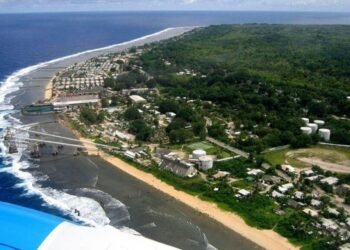
The submission documented the appalling conditions for detainees in Nauru, which is an impoverished island of about 12,000 to 13,000 residents. By the time Nauru was granted nominal independence in 1968, decades of aggressive strip-mining had left about 80 percent of the 21-square-kilometre island an uninhabitable wasteland of jagged limestone pinnacles. Rising sea levels caused by global climate change are forecast to force 90 percent of its residents to relocate in coming years.
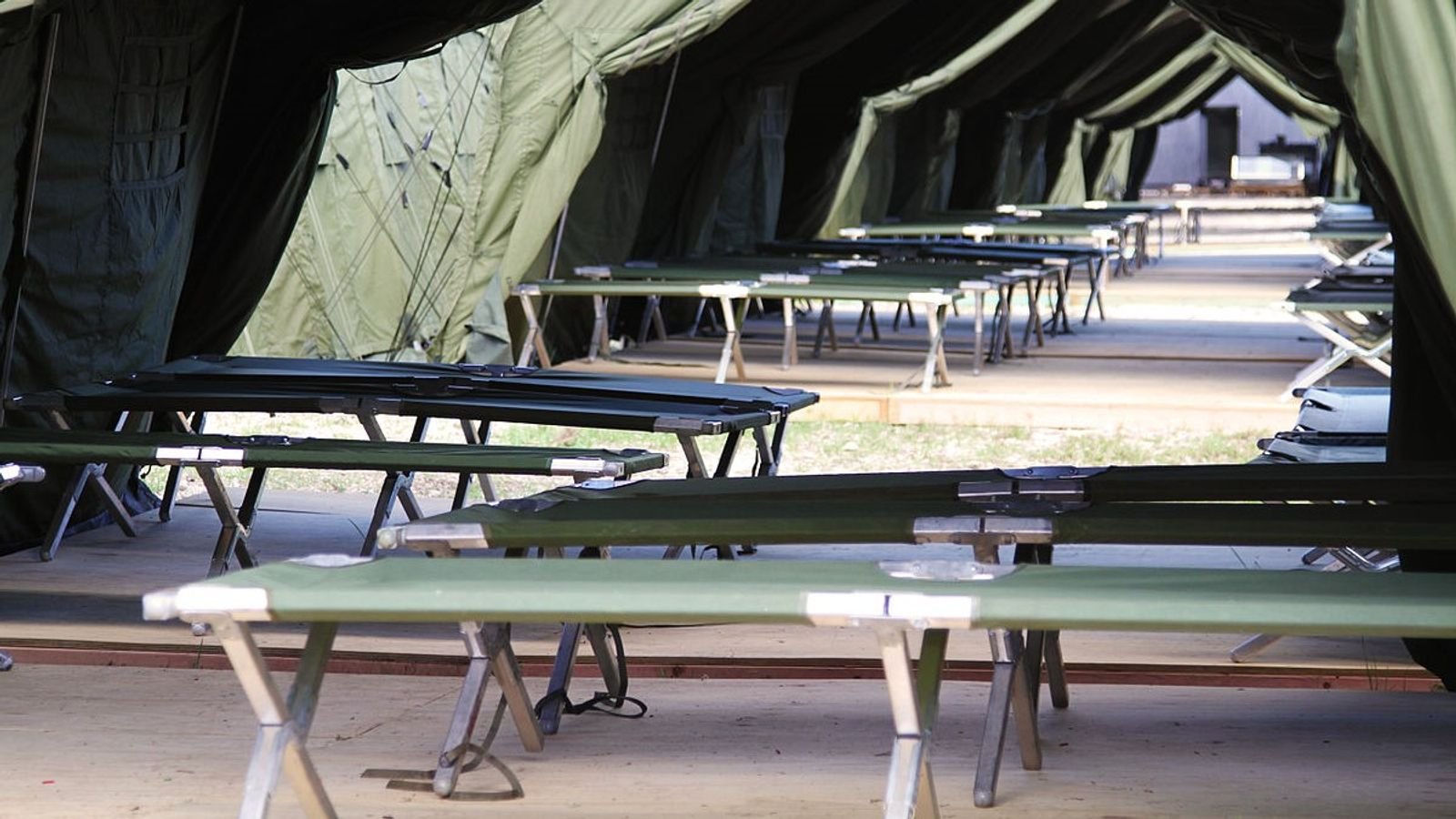
The Human Rights Centre submission reported: “Despite the $581 million the Labor Government has allocated for offshore processing in 2025-26, people held in Nauru report food insecurity, lack of access to clean water, and substandard accommodation including residences infested with pests.
“There continues to be no adequate healthcare, including limited access to specialist assessment and treatment, limited and delayed access to dental care, no inpatient psychiatric care facilities, no MRI equipment, no after hours or weekend primary care, no emergency care and no air ambulance stationed on the island. These limitations are exacerbated by a telehealth ban which prohibits foreign health practitioners from providing telemedicine to people in Nauru.”
The submission denounced the way in which ex-detainees are being re-imprisoned, facing deportation to Nauru, after the Labor government last year passed legislation removing their right to procedural fairness—the right to a hearing—before being taken into custody.
“A person is only notified that a LTSV [Nauruan visa] has been granted to them when Australian Border Force officers arrive at their home and take the person into immigration detention, often in the early hours of the morning and with no advance notice.”
The submission added that the detainees are being denied legal appeal rights and access to critical medical services: “Contrary to the claims made by the Labor Government, based on our experience many of the people threatened with deportation—including those who have been granted LTSVs—have appeal pathways available in relation to their permanent visas or other ongoing legal matters.
“Based on estimates from frontline legal services, 70 percent of people facing deportation suffer from chronic health conditions and 90 percent live with a mental health condition.”
Amnesty International Australia’s (AIA) submission pointed to the many reports, both government and non-government, that have provided detailed accounts of the shocking conditions in the detention facilities, including its 2016 Island of Despair report.
“These abuses include violence from private contractors and police, prolonged, indefinite detention causing poor mental health, leading to loss of life, and other abuses, that Amnesty ultimately found to constitute torture.
“Evidence shows that refugee children and families resettled in Nauru experienced serious harm, fear, and insecurity, including threats of violence and barriers to education.”
Such reports have been published for years. They include the Australian Human Rights Commission Forgotten Children Report (2014), documenting the harms to children detained in Nauru, the Guardian newspaper’s Nauru Files (2016), which documented 2,000 reported cases of abuse in the detention centre on Nauru, and the Asylum Seeker Resource Centre’s Cruelty By Design report: Health Crisis in Offshore Detention (2024).
A submission by the Law Council of Australia, representing the legal profession, drew attention to the unanswered questions surrounding the Nauruan MOU, including the potential for refugees to be further deported to countries where they could face death or persecution, in violation of the 1951 international refugee convention.
The Senate committee is a tri-partisan affair, consisting of Labor, Liberal and Greens senators. Its inquiry terms of reference relate to the “integrity” and “value for money for Australian taxpayers” in payments made by the Australian government to the contractors and subcontractors involved.
The government has a contract for “garrison services” in Nauru worth $786 million until September 2027 with Management and Training Corporation (MTC) Australia—a subsidiary of a US prison services provider. It has a contract worth much less—$106 million over five years with International Health and Medical Services (IHMS)—to provide medical services.
Despite requests from Senate committees and the media, the details of the Nauruan MOU and these contracts have never been revealed. The Albanese government has repeatedly invoked public interest immunity, citing justifications such as national security, foreign relations and commercial interests.
Labor’s response marks further blatant violations of basic legal and democratic rights, and neo-colonial bullying of the Nauruan government, whose revenue largely depends on the Australian payments.
The 2023 NZYQ ruling overturned a notorious regime—maintained for nearly two decades by Labor and Coalition governments alike and sanctioned by the High Court itself—of incarcerating non-citizens indefinitely if they could not be deported, usually because they were stateless or their previous home countries would not accept them.
Since the NZYQ case, the Labor government has gone to ever-greater lengths to demonise, re-detain or deport the people it had been forced to release. It introduced legislation six times to evade the ruling, including by imposing curfews, shackling and preventative detention, defying High Court rulings that these measures also violated the separation of powers in the 1901 Australian Constitution, which reserves to the courts the power to inflict criminal punishment.
This is in line with Labor’s record. In 1992, the Keating Labor government was the first to impose mandatory detention of asylum seekers. That paved the way for the “Pacific solution” of offshore detention in 2001, which Labor also backed, creating an Australian “model” that other capitalist governments have since emulated.
Prime Minister Anthony Albanese’s government is now going further, matching regimes being implemented by governments across Europe and internationally, spearheaded by the Trump administration’s fascistic Immigration and Customs Enforcement (ICE) raids, detentions and mass deportations in the US.
In March, having supported the illegal US and Israeli war against Iran and in Lebanon, killing thousands of people, the Labor government also rushed a bill through parliament to block entry to anyone trying to flee to safety, even if they hold a valid visiting visa.
Amid an ongoing cost-of-living and housing crisis, and facing growing working-class disaffection, Labor is trying to blame refugees, together with other immigrants and international students for the deteriorating social conditions, just like the far-right anti-immigrant One Nation and the Coalition.
On every continent, the media and political establishments are seeking to whip up anti-immigrant sentiment, nationalism and patriotism to divide the working class globally and divert the discontent away from the staggering accumulation of wealth by the billionaires and the underlying capitalist profit system itself.
Against this poison, workers and young people must defend the basic democratic right of people to live and work wherever they choose, with full social and citizenship rights. This is essential for a unified mass movement of the working class worldwide to take power to reorganise society on a socialist basis, for human and social need, not corporate profit.