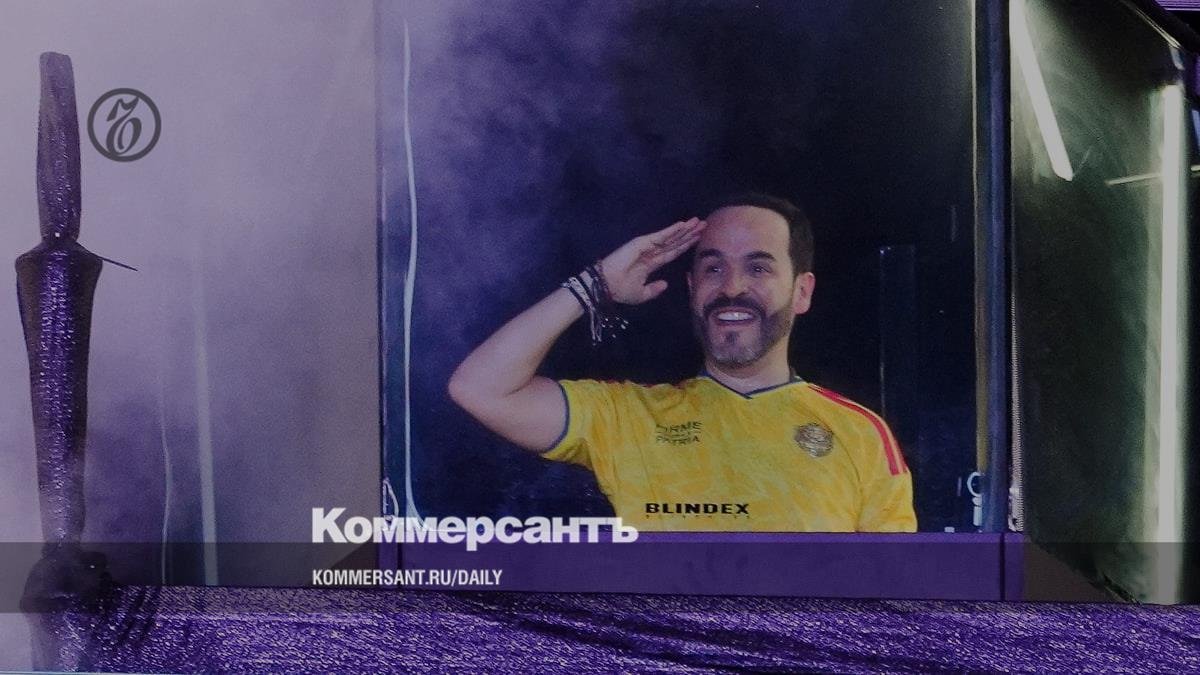
The new president of Colombia will be a multimillionaire lawyer and admirer of Donald Trump, 47-year-old Abelardo de la Espriella, who called himself an anti-establishment candidate and went to the elections with a far-right program, especially regarding security. His victory brings to an end the four years of rule of Colombia’s first and only left-wing president, Gustavo Petro, and strengthens the trend of a radical right-wing tilt in Latin America.
Until recently, de la Espriella, 47, had no political experience and was not known to the general public. For many years he was a successful lawyer, and then also the owner of a vast business empire involved in the trade of wine and rum, men’s clothing and real estate. True, as La Silla Vacia discovered, in 2024 many of his businesses turned out to be unprofitable and were liquidated, but the law firm remained the most profitable business.
One way or another, last summer, a businessman-lawyer who, in addition to Colombian, has American and Italian citizenship, announced his intention to run for president and by the beginning of this year began to rapidly gain popularity. At the end of May, he won the first round of elections, receiving 43.7% of the vote.
According to the results of the second round on June 21, Abelardo de la Espriella emerged victorious. True, his advantage over his rival, left-leaning senator Iván Cepeda, supported by the outgoing head of state Gustavo Petro, turned out to be quite modest. De la Espriella received 49.6% of the vote, while Cepeda received 48.7%, about 250 thousand votes behind.
In many ways, the popularity of the far-right candidate and, as he dubbed himself, a representative of the anti-establishment, was associated with his tough position on the fight against crime and his plan for market reforms.
For example, he promised to resume oil exploration, cut taxes and cut the public sector by 40%, entrusting these tasks to a competent and respected person – José Manuel Restrepo, who served as finance minister under Petro Ivan Duque’s conservative predecessor. The current winner has made Restrelo his vice president.
De la Espriella also planned quite radical changes in the security sphere. While President Petro adhered to the “total peace” plan, which included negotiations on the self-destruction of all criminal groups, de la Espriella, nicknamed the Tiger by his supporters, promised to return to a full-scale war against illegal armed groups and drug cartels. He threatened to kill criminals “like rats and cockroaches” and said he would seek US support for airstrikes on coca plantations.
Finally, de la Espriella proposed building ten mega-prisons in Colombia. Because of this, given the future president’s appearance – expensive watches, designer sunglasses and a well-groomed beard – he has been compared more than once to Salvadoran President Nayib Bukele, who calls himself “the coolest dictator in the world.” It was Bukele who was the first in the region to authorize the construction of mega-prisons to reduce crime rates, calling on other Central American countries to follow his example.
The Colombian politician has consistently denied that he is imitating the Salvadoran leader. But he did not hide his admiration for the head of the White House – and was supported during the campaign by Donald Trump, who invariably favors far-right politicians around the world.
After the first round, Trump called de la Espriella a “smart, strong and tough leader” who would challenge the “radical left-wing Marxist,” and on June 21, the future Colombian leader received a congratulatory call from Trump.
He also spoke with US Secretary of State Marco Rubio, who assured him of his intention to work closely “to develop regional security cooperation, stop illegal immigration into the United States and strengthen our economic ties.” “Colombia’s best days are yet to come,” Marco Rubio wrote, reporting on the conversation.
However, not all Colombians are sure of this. During the election campaign, the future head of state said that he would “tear” the left into pieces, but after his victory he promised that he would “gover the country for all Colombians – for those who voted for me and for those who chose another candidate.” Supporters of the “other candidate” were not very impressed. After the announcement of the election results, many of Cepeda’s leftist electorate staged protests in a number of cities. In Cali, Colombia’s third largest city, for example, demonstrators decided to express their dissatisfaction by burning American flags.
De la Espriella’s victory marks Colombia’s return to the right and strengthens the trend toward a rightward turn in the region.
Suffice it to recall the recent presidential victories of Nasri Asfura in Honduras and José Antonio Casta in Chile and the supposed victory of Keiko Fujimori in Peru (where votes are still being counted after the second round on June 7). When Colombia’s new leader officially takes office on August 7, only Mexico, Brazil, Uruguay and Guatemala will be left under leftist governments in Latin America.