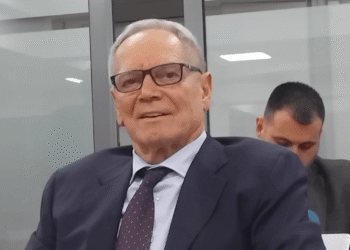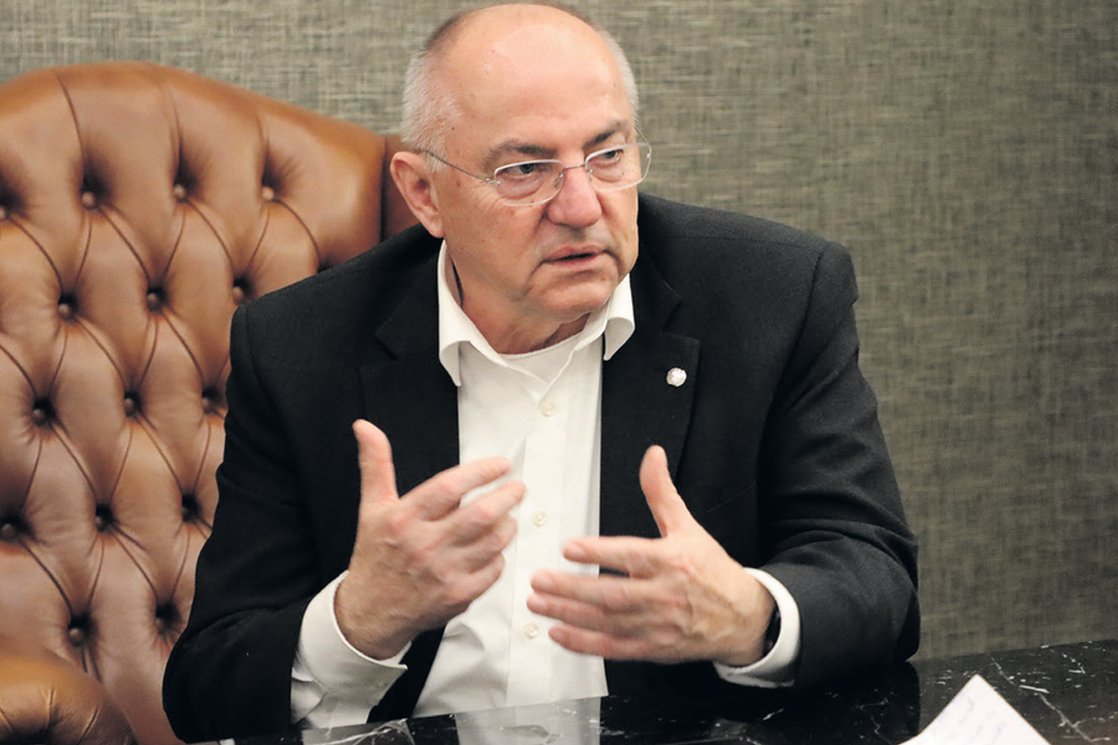
Raising such issues as the land border on Prevlaca at a time like this usually means either that you do not want Montenegro to join the European Union or that you want to please radical political circles. Both lead to the loss of political credibility of the president of the country whose entry into the EU is of vital importance. I consider it completely unnecessary to open such topics in relations with a country that decides with its vote on joining the EU. It only benefits radicals and Eurosceptics on both sides – he says in an interview with Victory Josip Juratović, member of the German Bundestag.
He points out that such disputes represent only an additional argument for opponents of European Union expansion in future referendums.
Germany, France, Belgium, the Netherlands and Luxembourg are asking the European Union to consider the possibility of temporarily restricting the right to vote in certain cases for future new members and to foresee more protective mechanisms to ensure the rule of law. If that scenario is realistic, what would it mean for Montenegro?
JURATOVIC: The fact is that after the accession of the Republic of Croatia to the European Union, any further enlargement in France, as well as in some other member states, must pass a referendum. EU citizens, unfortunately, due to socio-political events and developments in the Western Balkans during the last three decades, and especially due to increasingly pronounced Euroscepticism within the Union itself, are not particularly enthusiastic about new enlargements, at least not when it comes to the Western Balkans.
In the EU, the unanimity principle of all 27 member states is still valid for making certain decisions, which is already causing major problems. It is enough to recall Viktor Orbán’s government in Hungary. I have been warning for years that much more attention should be paid to the socio-political image of the Western Balkans. The EU already has one Orban, who further encourages Euroscepticism, and does not want new similar challenges from the Western Balkans.
Therefore, Montenegro can succeed in the referendums in the member states only if it convinces the citizens of the EU that its entry is a matter of security for the European Union from the outside and that it does not represent a threat to the stability of the Union from the inside. This is possible only if Montenegro closes all negotiation chapters and participates in all EU processes without the right to vote and veto, until it credibly implements the obligations from the closed chapters. In my opinion, that would be a correct approach for both sides, especially considering the fact that the EU has been talking about the European perspective of the Western Balkans for thirteen years without significant results.
Montenegro closed 16 chapters. Our officials announce that all the remaining ones could be closed by the end of the year. Is this possible with such a heterogeneous Government?
JURATOVIC: I know too little about the real internal political relations between the key actors of the Montenegrin political elite to be able to comment on them professionally enough. However, starting from the fact that Montenegro’s entry into the EU is of vital importance for the vast majority of its citizens for several reasons, I believe that no political option can allow itself to be an obstacle on that path.
Aleksandar Vučić disgraced himself by trying to destabilize Montenegro in Tivat. However, this does not mean that he will give it up. Did Montenegro manage to resist his pressures?
JURATOVIC: Considering that Aleksandar Vučić has serious problems due to the difficult situation in Serbia, where he maintains his power mainly through repressive measures against his own people, and that he is trying to portray himself as the protector of all Serbs with his last political strength, I do not believe that he will miss the opportunity to stage or use every incident that can help him maintain that narrative.
However, I sincerely hope that with the entry of Montenegro into the European Union, the divisions on the national issue will gradually be overcome and that the political competition in the future will be focused on who can offer citizens a better, safer and better life, regardless of their nationality or religious affiliation.
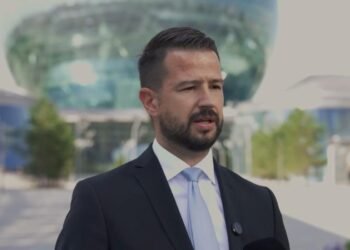
Montenegrin President Jakov Milatović reopens the issue of the land border on Prevlaca. How wrong is this move at the end of the negotiations?
JURATOVIC: Since I am a long-term politician myself, I know from my own experience that raising such issues at a time like this usually means either that you do not want Montenegro to join the EU or that you want to please radical political circles. Both lead to the loss of political credibility of the president of the country whose entry into the European Union is of vital importance.
I consider it completely unnecessary to open such topics in relations with a country that decides with its vote on joining the EU. It only benefits radicals and Eurosceptics on both sides. After all, such disputes represent only an additional argument for opponents of European Union enlargement in future referendums.
How will Croatia position itself, which itself had to swallow a lot in bilateral relations with Slovenia before joining the EU? Do you think that Montenegro should learn from that experience?
JURATOVIC: Following the work of the Government of the Republic of Croatia, I am convinced that Croatia will not stand in the way of the entry of Montenegro or any other country in the region after fulfilling all the necessary conditions and closing the negotiation chapters. On the contrary, the Government of Croatia at all levels advocates speeding up the pre-accession processes of the countries of the region, primarily for security reasons.
However, it is also true that there are not only friends on that path, neither in Croatia nor in the European Union. That is why it is extremely important that sensitive issues are resolved among experts, without unnecessary media noise, instead of serving to collect petty political points that harm the general interest of citizens.
After all, who is still interested in the border between Slovenia and Croatia on some insignificant shoal, when the citizens of both countries travel freely in Europe without border controls?