Of Jovan Palalić
Taking up a reflection of Pope Benedict XVI, according to which Europe, starting from the Enlightenment, has progressively developed a culture which has excluded God from the public sphere, denying his existence or claiming that it cannot be demonstrated and thus relegating faith to a purely subjective and private dimension, we cannot help but ask ourselves, in light of the events of recent weeks, whether the strength of faith – for a long time marginalized by the main cultural and political paradigms of our continent and confined to the hearts and homes of Europeans – has not returned today with vigor to the public space.
Two events we have witnessed in the last month seem to indicate that, within the consolidated institutional and ideological frameworks of secularism, individualism and atheism, profound social dynamics are developing that escape the interpretations of the rigidly rationalistic thought structures on which much of modern European culture has been built.
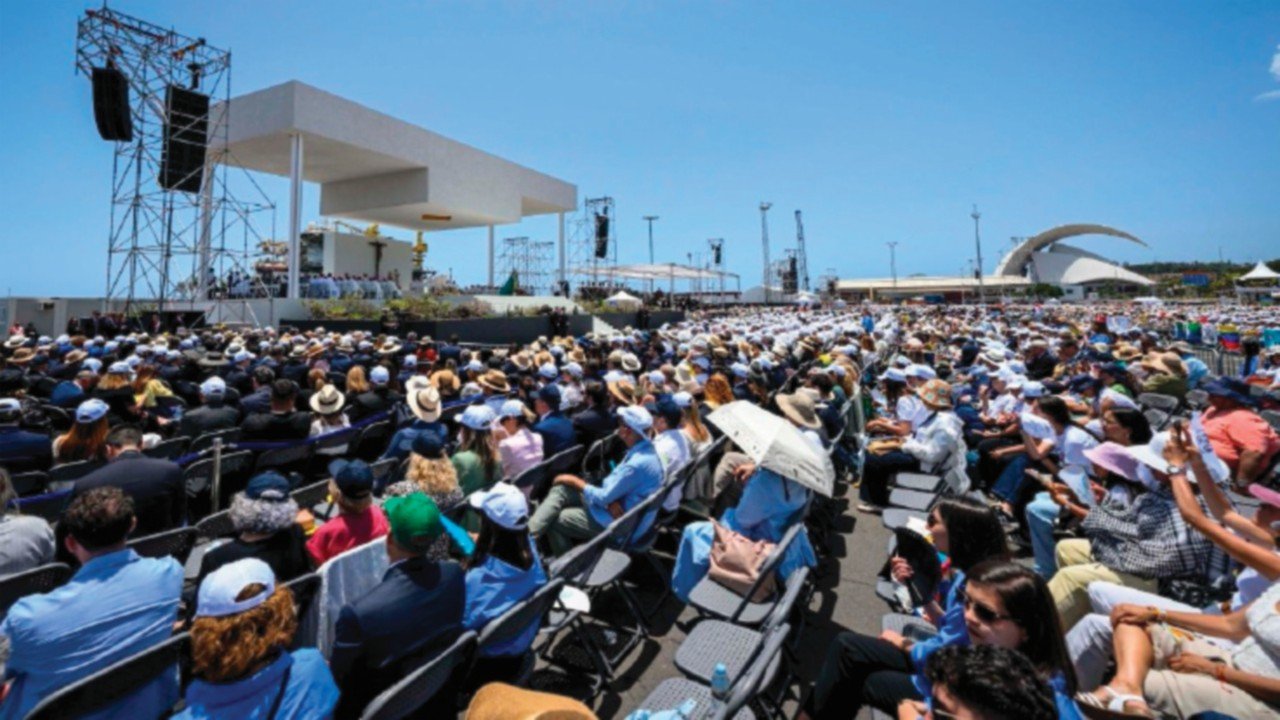
Almost simultaneously, in Belgrade, in Serbia, and in Spain, from Madrid to Tenerife, an intense and moving testimony of faith was manifested which poses numerous questions especially to those who deny its relevance on the basis of purely rationalistic interpretative schemes, rather than to those who keep it in their hearts and live it daily, perhaps without being fully aware of its extraordinary strength.
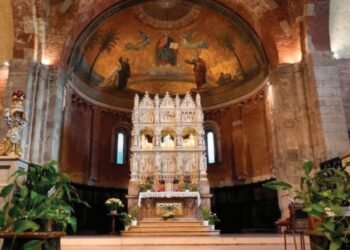
The Sacred Belt of the Most Holy Mother of God, a relic which tradition considers to have belonged to the Virgin Mary, arrived in Belgrade from Mount Athos, from the Vatopedi monastery.
In the largest church of the Serbian capital, over the course of about ten days, an extraordinary pilgrimage took place: around a million people of all generations waited patiently, day and night, even for ten consecutive hours, to venerate the relic, demonstrating the depth of their devotion to the Mother of God.
After these extraordinary images experienced around the great temple of Belgrade, in the heart of the Christian East, the majestic apostolic visit of Pope Leo
In Madrid itself, on the occasion of the welcome given to Pope Leo
What is particularly striking is also the extraordinary sensitivity shown towards these popular processes both by Pope Leo XIV in Spain and by Patriarch Porfirije in Belgrade. Their availability towards every person, the blessing imparted, the word spoken and the meekness expressed in gestures and gaze testify to the strength of the bond between the Church and the people, a bond that many believed had now almost dissolved after numerous internal difficulties and after often openly hostile cultural campaigns.
The very rapid acceleration of technological development, and in particular of artificial intelligence, today places man faced with the challenge of preserving his own identity, but also with the risk of growing alienation and closure within the logic of earthly success and consumerism. Yet these processes, which largely represent the result of that same European cultural evolution described by Benedict XVI, seem incapable of completely extinguishing the transcendent spark present in the heart and mind of man: that eternal bond that unites the creature to its Creator.
Just when it seemed that progress was irreversibly leading to the dissolution of the last bonds between man and God, the events described above, authentic pilgrimages of the people, showed that this bond remains alive, profound and indestructible.
In Europe, the continent in which the Christian faith has reached one of its most complete historical expressions, its vitality is today witnessed above all by the young generations, those most exposed to the challenges and transformations of technological progress.
In this sense, the encyclical Magnificent humanity of Pope Leo XIV seems to grasp with particular clarity the fundamental questions and decisive challenges of our time.
The reflections contained in this pontifical document seem to have reached the hearts and minds of many people, as could be observed during the Holy Father’s visit to Spain.
If we start from Benedict XVI’s reflection on the evolution of European culture from the Renaissance to the present day, perhaps we can grasp some signs of this possible Christian rebirth precisely in the symbolic coincidences that take us back to the period immediately preceding the advent of the Renaissance age.
The great Christian 13th century was marked by extraordinary figures.
This year marks the eight hundred years since the death of Saint Francis of Assisi and the seven hundred and ninety years since the death of Saint Sava of Serbia.
Operating in the same historical period, the first in the Christian West and the second in the Christian East, they knew how to open the hearts of the people to whom they dedicated their spiritual mission through the strength of their example and their testimony.
At that time, European Christianity was experiencing a season of full flowering. The people were animated by great spiritual movements, made up of internal conversion and pilgrimage.
Could the images seen in the streets of Belgrade and Spanish cities be the signs of a new time?
May the prayers of these great Christian saints, in the year in which we celebrate their memory with solemn commemorations, become the spiritual force of a Christian rebirth in Europe, the first signs of which attentive eyes and open hearts already seem to be able to glimpse today.