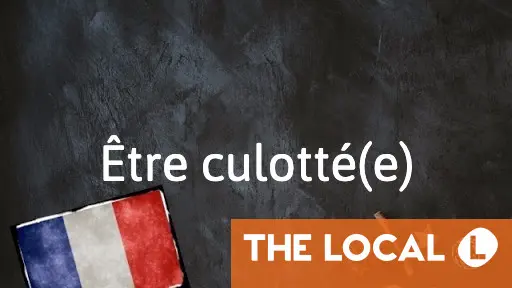
This French expression doesn’t actually mean your underpants are on.
Why do I need to know être culotté?
This French expression should not be confused with actually wearing culotte (knickers).
What does it mean?
The expression être culotté (être culottée with an e for a woman), roughly pronounced etr kew-loh-tay (listen here), literally translates to “to be wearing knickers”.
In reality, it means to be cheeky, to have a lot of nerve or to be audacious, sometimes shamelessly so. It is often used when someone says or does something surprisingly bold, especially when they really shouldn’t have the confidence to do so.
You may already have come across the French expression avoir du culot, which can feel similar to être culotté. The two are related, but there is a subtle difference.
Avoir du culot refers to someone’s general audacity, confidence, or nerve. Depending on the context, it can be either admirable or irritating. Être culotté, on the other hand, is usually used in reaction to a specific action, remark, or behaviour that strikes people as particularly cheeky or shameless.
But where does this reference to culottes come from?
Historically, culottes were short trousers that stopped at the knee and were typically worn by aristocrats and members of the bourgeoisie in the 17th and 18th centuries – hence the sans coulottes during the French Revolution were people who did not wear the clothes of the upper or middle class (ie the poor), not people who were going commando.
Until the 16th century, women generally did not wear them, which made activities such as horse riding more difficult. Later, the expression porter la culotte (to wear the trousers) emerged to describe a woman who dominated the relationship – a phrase still used today.
The idea of the culotte gradually became associated with authority, confidence, and self-assurance. From there developed the expression être culotté.
Use it like this
Il est quand même culotté de demander une augmentation après cette erreur. – He’s got some nerve asking for a raise after that mistake.
C’est culotté venant de sa part. – That’s a bit rich coming from him.
Elle a osé lui demander de l’argent alors qu’elle lui en doit déjà. C’est culotté. – She actually asked him for money when she still owes him. That’s pretty bold.